 Uri dinozore iyihe? Umukino w'ibibazo
 Intambara ya dinozore
 Isiganwa rya dinozore
 Imikino mito ya dinozore
 Alubumu ya sitikeri
 Intonde za TOP za dinozore
 Ntungura!
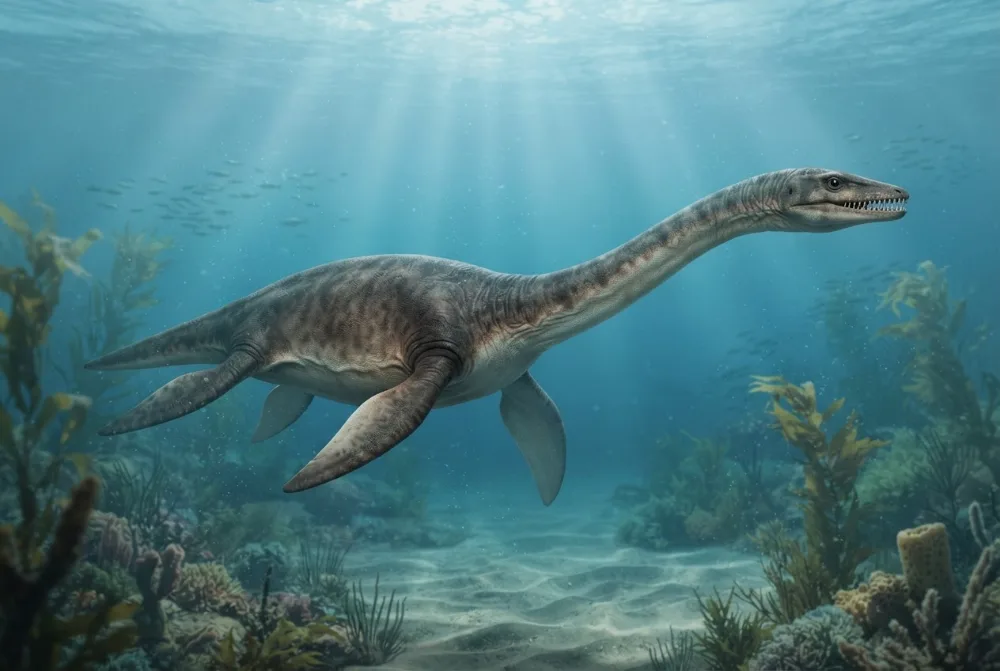
Nichollssaura
Nichollssaura was a small, fast-swimming marine reptile that lived in the ancient seas of North America. It had a long neck, four flippers, and a mouth full of sharp teeth for catching fish.1
Yabayeho ryari?
Yanganaga ite?
Yari ndende ite?
Yari iremereye ite?
 ndende nk'imbwa 3 zikurikiranye🍌ndende nk'imineke 16 ikurikiranye🍉iremereye nk'imbuto 27 za watermelon🧸iremereye nk'abana 7 bo mu ishuri ry'incuke🎒iremereye nk'abanyeshuri 4🏊yashoboraga koga uburebure bwa pisine nini (50 m) mu masegonda 6,4
Nichollssaura yanganaga ite ugereranyije NAWE?
Ni imibare gusa ibarirwa muri mushakisha yawe. Nta kintu kibikwa cyangwa cyoherezwa ahandi.
Yihutaga ite?


Utuntu dushimishije
Nichollssaura fills a 40-million-year gap in the fossil record of North American plesiosaurs, meaning no plesiosaur fossils from that time were known before its discovery.1
The only known skeleton was accidentally discovered by a 100-ton electric shovel operator in an oilsand mine near Fort McMurray, Alberta, in 1994.1
The fossil is almost complete, missing only a few bones like the left forelimb and some ribs, which were lost when the shovel hit the skeleton.1
Inside the stomach of the Nichollssaura fossil, scientists found 165 gastroliths (stomach stones) made of chert and quartzite, which may have helped it digest food.1
The gastroliths in Nichollssaura are similar to those found in another plesiosaur from the same area, Wapuskanectes, suggesting both animals collected stones from the same ancient beaches.1
Ku bazobereye muri dinozore
- Izina rya siyansi
- Nichollssaura
- Yiswe na
- Druckenmiller and Russell 20092
- Itsinda
- Plesiyozore
- Umuryango / ishami
- Leptocleididae2
- Ishyirwa mu byiciro
- Plesiosauria > Sauropterygia2
- Imyaka y'amabuye
- imyaka miliyoni 113 kugeza 100 (Albian)2
- Inzego z'amabuye
- Clearwater2
- Ibihugu
- Kanada2
- Ibisigazwa byanditswe
- 1 muri The Paleobiology Database2
- Ivumburwa
- The fossil was discovered in 1994 by shovel operators Greg Fisher and Lorne Cundal in an oilsand mine near Fort McMurray, Alberta. It was named Nichollsia borealis in 2008 by Druckenmiller and Russell, but renamed Nichollssaura borealis in 2009 because the original name was already taken.12
- Biracyagibwaho impaka
- Scientists are not sure exactly where Nichollssaura collected its stomach stones, but they think it may have swum westward to gather rocks from the Cadomin Formation, which is 8 to 10 million years older than the plesiosaur itself.1
Aho amakuru yakuwe
- Nichollssaura (en.wikipedia.org)
- Nichollssaura in The Paleobiology Database (CC BY 4.0): imyaka, ahantu, inzego z'amabuye, ishyirwa mu byiciro.
Buri kintu kiri kuri uru rupapuro gifite nimero yerekana aho cyakuwe. Niba hari icyo twibeshye, tubabarire, turi abakunzi ba dinozore, ntituri ikinyamakuru cya siyansi. Tubwire kuri [email protected] tuzagikosora.
 Rex arashonje! Dino Wiki ni umushinga wa papa umwe yakoreye umuhungu we ukunda dinozore, ni ubuntu, nta matangazo kandi nta bigukurikirana. Abantu bakuru bashobora guha Rex akantu ko kurya kugira ngo Dino Wiki ikomeze kuboneka kuri interineti.Gaburira Rex
 Elasmosaurus
 Pliosaurus
 Plesiosaurus
 Cimoliasaurus
 Colymbosaurus
 Trinacromerum
 Stegosaurus
 Iguanodon
 Archaeopteryx
 Giganotosaurus
 Microraptor
 Deinonychus