 Uri dinozore iyihe? Umukino w'ibibazo
 Intambara ya dinozore
 Isiganwa rya dinozore
 Imikino mito ya dinozore
 Alubumu ya sitikeri
 Intonde za TOP za dinozore
 Ntungura!
Yabayeho ryari?

Yanganaga ite?
Yari ndende ite?
Ubutumburuke bwayo bwanganaga iki?
igereranya
Yari iremereye ite?

 ndende nk'imbwa 6 zikurikiranye🍌ndende nk'imineke 36 ikurikiranyeiremereye nk'imbwa 200🍉iremereye nk'imbuto 800 za watermelon🎒iremereye nk'ibyumba 5 by'amashuri byuzuye abana🐻❄️iremereye nk'idubu 9 zo mu rubura🏃yashoboraga kwiruka metero 100 mu masegonda 20 (umuntu wihuta kurusha abandi akenera 9,6)
Niobrarasaurus yanganaga ite ugereranyije NAWE?
Ni imibare gusa ibarirwa muri mushakisha yawe. Nta kintu kibikwa cyangwa cyoherezwa ahandi.
Yihutaga ite?


Utuntu dushimishije
Niobrarasaurus lived in a shallow sea called the Western Interior Seaway. Its body sometimes washed out to sea after death, and sharks may have nibbled on its bones.2
Its skeleton was discovered in 1930 by geologist Virgil Cole. At first, scientists thought it was a baby because it was small.1
The first fossils of this dinosaur were mistaken for turtle shell pieces. Later, experts realized they belonged to an armored dinosaur.1
Niobrarasaurus had a long, narrow skull, more like the dinosaur Pawpawsaurus than the wider-headed Edmontonia.3
It was a nodosaurid, a type of ankylosaur that had spikes on its shoulders and bony plates on its back, but no tail club.1
The name Niobrarasaurus means 'Niobrara lizard,' after the rock formation where its bones were found.1
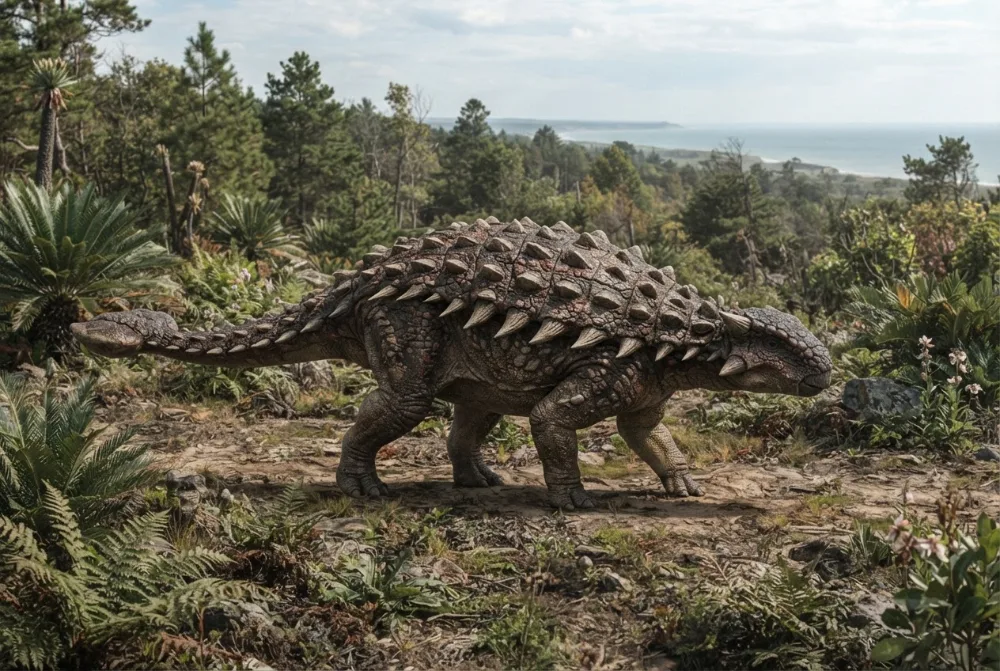
Ibibazo bibazwa cyane kuri Niobrarasaurus
?How big was Niobrarasaurus?
Scientists estimate it was about 5 metres (16 ft) long and weighed between 227 and 453 kilograms (500 to 999 lb). One expert gave a larger estimate of 6.5 metres (21 ft) and 4 tonnes (4.4 short tons).1
?What did Niobrarasaurus eat?
It was a plant-eating dinosaur. It had teeth and a beak for eating plants.14
?Did Niobrarasaurus have a tail club?
No, it did not. Niobrarasaurus was a nodosaurid, a type of armored dinosaur that had spikes on its shoulders and bony plates on its back, but no tail club.1
Ku bazobereye muri dinozore
- Izina rya siyansi
- Niobrarasaurus
- Yiswe na
- Carpenter et al. 19955
- Itsinda
- Dinozore zifite igikingira
- Umuryango / ishami
- Nodosauridae5
- Ishyirwa mu byiciro
- Ornithischia > Ankylosauria > Nodosauridae > Thyreophora5
- Imyaka y'amabuye
- imyaka miliyoni 90 kugeza 84 (Coniacian / Santonian)5
- Inzego z'amabuye
- Niobrara5
- Ibihugu
- Amerika5
- Ibisigazwa byanditswe
- 2 muri The Paleobiology Database5
- Ivumburwa
- Virgil Cole dug up the first bones in 1930 in Kansas. Maurice Mehl named it Hierosaurus coleii in 1936, and Kenneth Carpenter gave it the new name Niobrarasaurus in 1995.1
- Biracyagibwaho impaka
- Scientists are not sure exactly how big Niobrarasaurus was. Different experts give very different estimates, from about 5 metres to 6.5 metres long.1
Aho amakuru yakuwe
- Niobrarasaurus (en.wikipedia.org)
- The Dinosaurs of the Niobrara Chalk Formation (Upper Cretaceous, Kansas) (researchgate.net)
- Skull of the ankylosaur Niobrarasaurus coleu (Ankylosauria: Nodosauridae) from the Smoky Hill Chalk (Coniacian) of western Kansas (bioone.org)
- Niobrarasaurus | GeoKansas (geokansas.ku.edu)
- Niobrarasaurus in The Paleobiology Database (CC BY 4.0): imyaka, ahantu, inzego z'amabuye, ishyirwa mu byiciro.
Buri kintu kiri kuri uru rupapuro gifite nimero yerekana aho cyakuwe. Niba hari icyo twibeshye, tubabarire, turi abakunzi ba dinozore, ntituri ikinyamakuru cya siyansi. Tubwire kuri [email protected] tuzagikosora.
 Rex arashonje! Dino Wiki ni umushinga wa papa umwe yakoreye umuhungu we ukunda dinozore, ni ubuntu, nta matangazo kandi nta bigukurikirana. Abantu bakuru bashobora guha Rex akantu ko kurya kugira ngo Dino Wiki ikomeze kuboneka kuri interineti.Gaburira Rex
 Ankylosaurus
 Sauropelta
 Pinacosaurus
 Scutellosaurus
 Struthiosaurus
 Euoplocephalus
 Tyrannosaurus
 Triceratops
 Velociraptor
 Spinosaurus
 Parasaurolophus
 Pteranodon