 Uri dinozore iyihe? Umukino w'ibibazo
 Intambara ya dinozore
 Isiganwa rya dinozore
 Imikino mito ya dinozore
 Alubumu ya sitikeri
 Intonde za TOP za dinozore
 Ntungura!
Ophthalmosaurus
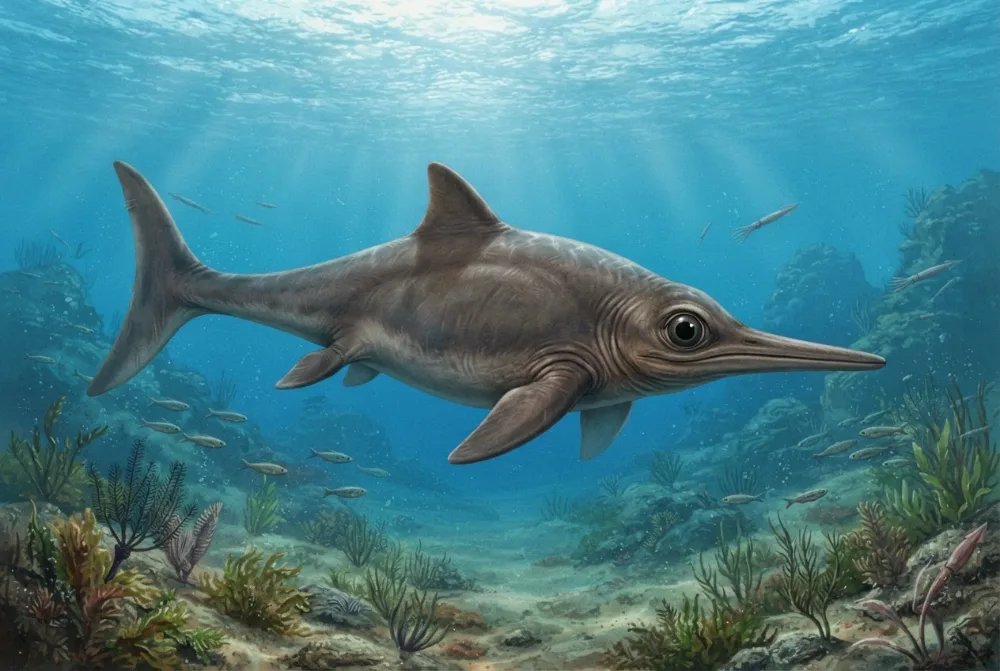
Ophthalmosaurus was a sleek, fast-swimming marine reptile with enormous eyes, almost as big as dinner plates. It lived in the warm seas of the Jurassic period and hunted small fish and squid. Even though it looked like a dolphin, it was actually an ichthyosaur, not a dinosaur.1
Yabayeho ryari?
Yanganaga ite?
Yari ndende ite?
Yari iremereye ite?
 ndende nk'imbwa 4 zikurikiranye🍌ndende nk'imineke 22 ikurikiranye🍉iremereye nk'imbuto 190 za watermelon🧸iremereye nk'abana 50 bo mu ishuri ry'incuke🎒iremereye nk'abanyeshuri 30🐻❄️iremereye nk'idubu 2 zo mu rubura🏊yashoboraga koga uburebure bwa pisine nini (50 m) mu masegonda 4
Ophthalmosaurus yanganaga ite ugereranyije NAWE?
Ni imibare gusa ibarirwa muri mushakisha yawe. Nta kintu kibikwa cyangwa cyoherezwa ahandi.
Yihutaga ite?


Utuntu dushimishije
Ophthalmosaurus had eyes that measured about 22 to 23 centimetres (8.7 to 9.1 inches) across, which is bigger than a human head.1
It could dive to depths of 600 metres (2,000 feet) or more, reaching the twilight zone of the ocean, and stay underwater for about 20 minutes.1
Its tail ended in a two-lobed fin, with the lower half supported by the backbone and the upper half made only of soft tissue, helping it swim fast.1
Ophthalmosaurus had short, rounded limbs, with the front ones bigger than the back ones, which it used for steering rather than paddling.1
Fossils show it lived in shallow seas, like the Oxford Clay in England, which was only about 50 metres (160 feet) deep at the time.1
Some scientists think Ophthalmosaurus could swim at about 2 metres per second (6.6 feet per second) when chasing prey.1
Gusenya ibinyoma
Ibivugwa: Ophthalmosaurus was a dinosaur that lived in the water.
Ukuri: Ophthalmosaurus was an ichthyosaur, a marine reptile, not a dinosaur. Ichthyosaurs were a different group of reptiles that lived in the oceans.1
Ku bazobereye muri dinozore
- Izina rya siyansi
- Ophthalmosaurus
- Yiswe na
- Seeley 18742
- Itsinda
- Iktiyozore
- Umuryango / ishami
- Ophthalmosauridae2
- Ishyirwa mu byiciro
- Ichthyosauria > Ichthyosauromorpha2
- Imyaka y'amabuye
- imyaka miliyoni 201 kugeza 133 (Hettangian / Valanginian)2
- Inzego z'amabuye
- Oxford Clay, Sundance, Vaca Muerta2
- Ibihugu
- Ubwongereza, Arijantine, Amerika, Uburusiya, Ubufaransa, Gerenilande2
- Ibisigazwa byanditswe
- 27 muri The Paleobiology Database2
- Izwi kandi ku izina rya
- Ancanamunia, Yasykovia (amazina ya kera ubu abarwa nk'inyamaswa imwe)2
- Ivumburwa
- Ophthalmosaurus was first described by Harry Seeley in 1874, based on fossils from the Oxford Clay in England. He focused on the shape of the collarbone bones.12
- Biracyagibwaho impaka
- Scientists still debate whether some species, like Ophthalmosaurus natans from North America, are really separate species or just close relatives.1
Aho amakuru yakuwe
- Ophthalmosaurus (en.wikipedia.org)
- Ophthalmosaurus in The Paleobiology Database (CC BY 4.0): imyaka, ahantu, inzego z'amabuye, ishyirwa mu byiciro.
Buri kintu kiri kuri uru rupapuro gifite nimero yerekana aho cyakuwe. Niba hari icyo twibeshye, tubabarire, turi abakunzi ba dinozore, ntituri ikinyamakuru cya siyansi. Tubwire kuri [email protected] tuzagikosora.
 Rex arashonje! Dino Wiki ni umushinga wa papa umwe yakoreye umuhungu we ukunda dinozore, ni ubuntu, nta matangazo kandi nta bigukurikirana. Abantu bakuru bashobora guha Rex akantu ko kurya kugira ngo Dino Wiki ikomeze kuboneka kuri interineti.Gaburira Rex
 Ichthyosaurus
 Platypterygius
 Stenopterygius
 Khudiakovia
 Chonespondylus
 Cymbospondylus
 Pterodactylus
 Peloneustes
 Rhamphocephalus
 Gongbusaurus
 Shunosaurus
 Bishanopliosaurus