 Uri dinozore iyihe? Umukino w'ibibazo
 Intambara ya dinozore
 Isiganwa rya dinozore
 Imikino mito ya dinozore
 Alubumu ya sitikeri
 Intonde za TOP za dinozore
 Ntungura!
Yabayeho ryari?

Yanganaga ite?
Yari ndende ite?
Ubutumburuke bwayo bwanganaga iki?
Yari iremereye ite?

 ndende nk'imbwa 7 zikurikiranye🍌ndende nk'imineke 39 ikurikiranyeiremereye nk'imbwa 80🍉iremereye nk'imbuto 320 za watermelon🧸iremereye nk'abana 84 bo mu ishuri ry'incuke🎒iremereye nk'abanyeshuri 50🐻❄️iremereye nk'idubu 4 zo mu rubura🏃yashoboraga kwiruka metero 100 mu masegonda 22 (umuntu wihuta kurusha abandi akenera 9,6)
Panoplosaurus yanganaga ite ugereranyije NAWE?
Ni imibare gusa ibarirwa muri mushakisha yawe. Nta kintu kibikwa cyangwa cyoherezwa ahandi.
Yihutaga ite?


Utuntu dushimishije
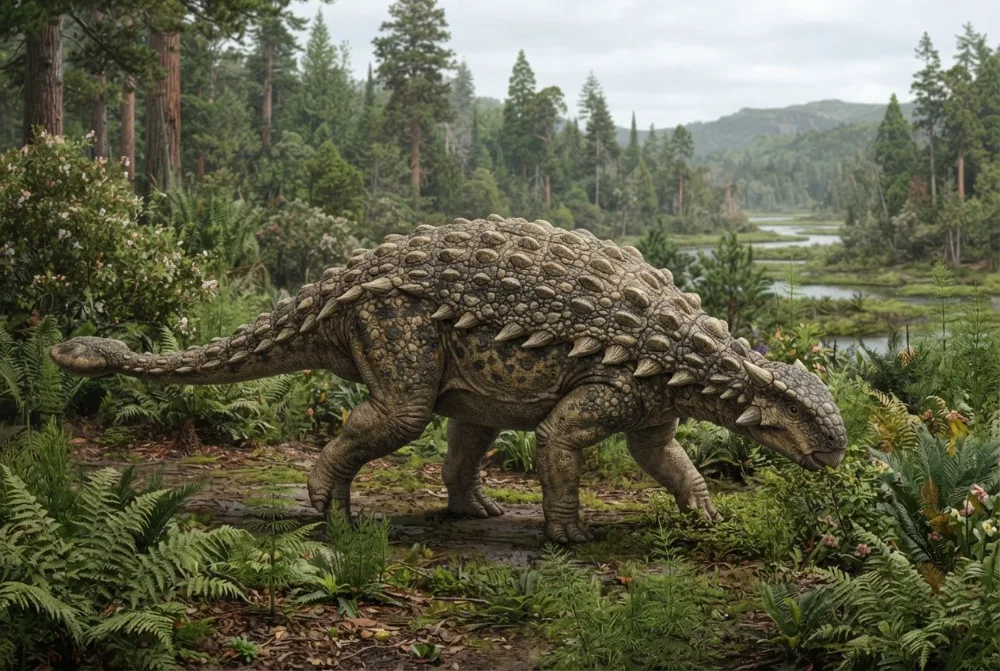
Panoplosaurus had no big spikes on its body, unlike many other armoured dinosaurs. Instead, it had smooth, regularly shaped plates and small bony bumps.1
Its shoulder blade was completely fused to the coracoid bone, which is a rare feature among ankylosaurs.1
The hand of Panoplosaurus may have had only three fingers, fewer than most other armoured dinosaurs.1
Its skull had a very domed top and a bony plate covering the cheek, which might be unique to this species.1
Panoplosaurus lived about 76 to 75 million years ago, during the Late Cretaceous, in what is now Alberta, Canada.12
Scientists think Panoplosaurus may have swallowed small stones to help grind up plants in its stomach, but the evidence is not certain.1
Ibibazo bibazwa cyane kuri Panoplosaurus
?How big was Panoplosaurus?
About 5 metres (16 feet) long and weighed around 1,600 kilograms (3,500 pounds).1
?What did Panoplosaurus eat?
It was an herbivore, meaning it ate plants like ferns and cycads.4
?Did Panoplosaurus have a tail club?
No, it did not have a tail club. It was a nodosaurid ankylosaur with no tail club.4
?When did Panoplosaurus live?
It lived during the Late Cretaceous period, about 76 to 75 million years ago.12
Gusenya ibinyoma
Ibivugwa: Many people think all armoured dinosaurs had big spikes or clubs on their tails.
Ukuri: Panoplosaurus had no prominent spikes anywhere on its body, and its tail lacked a club, unlike some other ankylosaurs.1
Ku bazobereye muri dinozore
- Izina rya siyansi
- Panoplosaurus
- Yiswe na
- Lambe 19195
- Itsinda
- Dinozore zifite igikingira
- Umuryango / ishami
- Nodosauridae5
- Ishyirwa mu byiciro
- Ornithischia > Ankylosauria > Nodosauridae > Thyreophora5
- Imyaka y'amabuye
- imyaka miliyoni 84 kugeza 66 (Campanian / Maastrichtian)5
- Inzego z'amabuye
- Dinosaur Park, Ferris, Two Medicine5
- Ibihugu
- Amerika, Kanada5
- Ibisigazwa byanditswe
- 15 muri The Paleobiology Database5
- Ivumburwa
- In 1917, Charles M. Sternberg found a nearly complete skull and skeleton in Alberta, Canada. Lawrence Lambe named it Panoplosaurus mirus in 1919, but he died before his work was published.1
- Biracyagibwaho impaka
- Scientists debate which fossils belong to Panoplosaurus and which belong to its close relative Edmontonia, because their remains are very similar.1
Aho amakuru yakuwe
- Panoplosaurus (en.wikipedia.org)
- Panoplosaurus | Natural History Museum (nhm.ac.uk)
- Panoplosaurus (dcfs.developer.istanbul)
- enchantedlearning.com (enchantedlearning.com)
- Panoplosaurus in The Paleobiology Database (CC BY 4.0): imyaka, ahantu, inzego z'amabuye, ishyirwa mu byiciro.
Buri kintu kiri kuri uru rupapuro gifite nimero yerekana aho cyakuwe. Niba hari icyo twibeshye, tubabarire, turi abakunzi ba dinozore, ntituri ikinyamakuru cya siyansi. Tubwire kuri [email protected] tuzagikosora.
 Rex arashonje! Dino Wiki ni umushinga wa papa umwe yakoreye umuhungu we ukunda dinozore, ni ubuntu, nta matangazo kandi nta bigukurikirana. Abantu bakuru bashobora guha Rex akantu ko kurya kugira ngo Dino Wiki ikomeze kuboneka kuri interineti.Gaburira Rex
 Ankylosaurus
 Sauropelta
 Pinacosaurus
 Scutellosaurus
 Struthiosaurus
 Euoplocephalus
 Tyrannosaurus
 Triceratops
 Velociraptor
 Spinosaurus
 Parasaurolophus
 Pteranodon