 Uri dinozore iyihe? Umukino w'ibibazo
 Intambara ya dinozore
 Isiganwa rya dinozore
 Imikino mito ya dinozore
 Alubumu ya sitikeri
 Intonde za TOP za dinozore
 Ntungura!
Plioplatecarpus
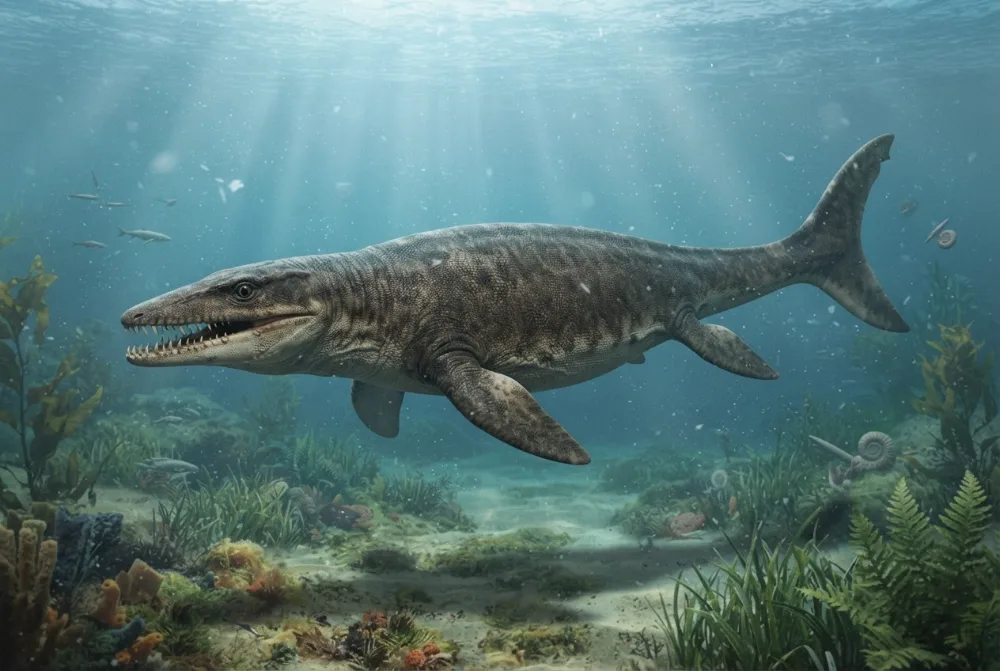
Plioplatecarpus was a medium-sized mosasaur, a giant marine lizard that lived in the late Cretaceous seas. It had big eyes and fewer, sharply curved teeth than other mosasaurs, perfect for grabbing small, slippery prey. Fossils of this ocean hunter have been found all over the world, from North America to Europe and even Antarctica.14
Yabayeho ryari?
Yanganaga ite?
Yari ndende ite?
 ndende nk'imbwa 6 zikurikiranye🍌ndende nk'imineke 33 ikurikiranye🏊yashoboraga koga uburebure bwa pisine nini (50 m) mu masegonda 4,7
Plioplatecarpus yanganaga ite ugereranyije NAWE?
Ni imibare gusa ibarirwa muri mushakisha yawe. Nta kintu kibikwa cyangwa cyoherezwa ahandi.
Yihutaga ite?


Utuntu dushimishije
Plioplatecarpus had bigger eyes than most other mosasaurs, which may have helped it see in dark, deep water.1
Its teeth were fewer but strongly curved backward, so it could grab small prey very precisely.1
Some scientists think Plioplatecarpus could swim into rivers and estuaries, not just the open ocean.1
Plioplatecarpus used its front flippers for underwater flight, like a bird flaps its wings, to move through weedy or coral reef areas.2
The first Plioplatecarpus fossil was found in Belgium and named by Louis Dollo in 1882.1
Plioplatecarpus lived about 82 to 66 million years ago, during the late Cretaceous period.1
Ibibazo bibazwa cyane kuri Plioplatecarpus
?How big was Plioplatecarpus?
About 5.5 to 6 metres long, depending on the species.1
?What did Plioplatecarpus eat?
It ate small, slippery prey like fish and squid, grabbing them with its sharply curved teeth.13
?Could Plioplatecarpus swim in freshwater?
Some scientists think it could, because a fossil was found in a non-marine deposit, suggesting it entered rivers and estuaries.1
?When did Plioplatecarpus live?
It lived in the late Cretaceous period, about 82 to 68 million years ago.1
Gusenya ibinyoma
Ibivugwa: Plioplatecarpus was a dinosaur.
Ukuri: Plioplatecarpus was a mosasaur, a type of marine lizard that lived in the sea, not a dinosaur.1
Ku bazobereye muri dinozore
- Izina rya siyansi
- Plioplatecarpus
- Yiswe na
- Dollo 18824
- Itsinda
- Mozazore
- Umuryango / ishami
- Mosasauridae4
- Ishyirwa mu byiciro
- Mosasauroidea4
- Imyaka y'amabuye
- imyaka miliyoni 100 kugeza 62 (Cenomanian / Danian)4
- Inzego z'amabuye
- Bearpaw Shale, Pierre Shale, Fox Hills4
- Ibihugu
- Amerika, Kanada, Antaragitika, Suwede, Danimarike, Uburusiya4
- Ibisigazwa byanditswe
- 28 muri The Paleobiology Database4
- Ivumburwa
- The first Plioplatecarpus fossil was found in Belgium and named by paleontologist Louis Dollo in 1882. Later, fossils from North America that were first called Mosasaurus were reclassified as Plioplatecarpus.1
- Biracyagibwaho impaka
- Scientists still debate whether some North American Plioplatecarpus fossils belong to separate species or are just variations of the same species found in Europe.2
Aho amakuru yakuwe
- Plioplatecarpus (en.wikipedia.org)
- Plioplatecarpus (Reptilia, Mosasauridae) from the Upper (biblio.naturalsciences.be)
- Plioplatecarpus (prehistoric-wildlife.com)
- Plioplatecarpus in The Paleobiology Database (CC BY 4.0): imyaka, ahantu, inzego z'amabuye, ishyirwa mu byiciro.
Buri kintu kiri kuri uru rupapuro gifite nimero yerekana aho cyakuwe. Niba hari icyo twibeshye, tubabarire, turi abakunzi ba dinozore, ntituri ikinyamakuru cya siyansi. Tubwire kuri [email protected] tuzagikosora.
 Rex arashonje! Dino Wiki ni umushinga wa papa umwe yakoreye umuhungu we ukunda dinozore, ni ubuntu, nta matangazo kandi nta bigukurikirana. Abantu bakuru bashobora guha Rex akantu ko kurya kugira ngo Dino Wiki ikomeze kuboneka kuri interineti.Gaburira Rex
 Mosasaurus
 Prognathodon
 Tylosaurus
 Platecarpus
 Clidastes
 Globidens
 Tyrannosaurus
 Triceratops
 Velociraptor
 Spinosaurus
 Ankylosaurus
 Parasaurolophus