 Uri dinozore iyihe? Umukino w'ibibazo
 Intambara ya dinozore
 Isiganwa rya dinozore
 Imikino mito ya dinozore
 Alubumu ya sitikeri
 Intonde za TOP za dinozore
 Ntungura!
Pycnonemosaurus
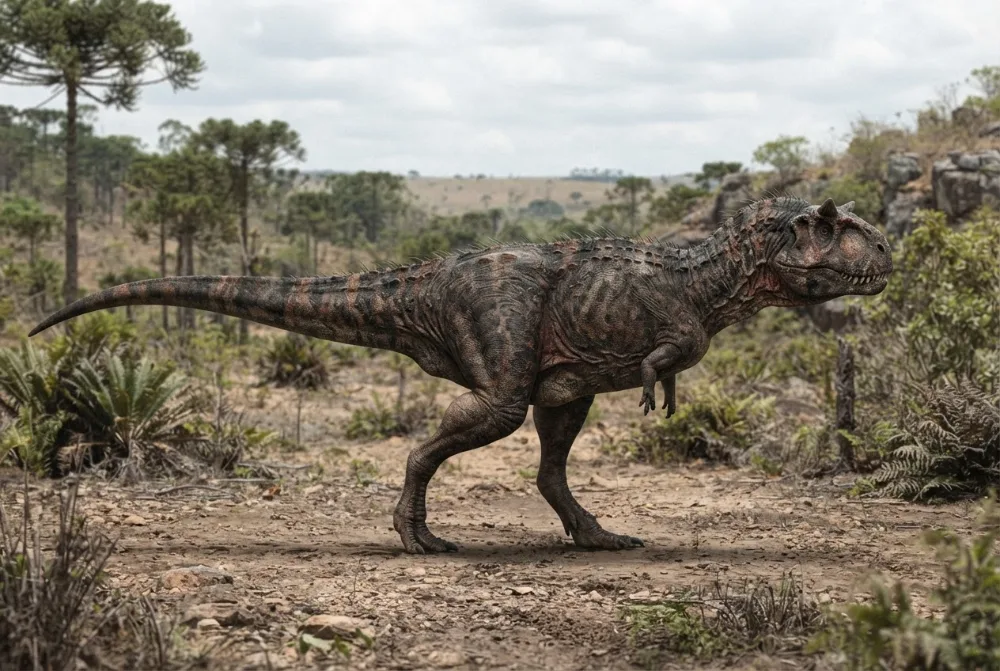
Pycnonemosaurus was a big meat-eating dinosaur with sharp teeth and strong legs. It lived in what is now Brazil, about 72 million years ago. It was one of the largest abelisaurids, a group of short-snouted predators.1
Yabayeho ryari?
Yanganaga ite?
Yari ndende ite?
Ubutumburuke bwayo bwanganaga iki?
igereranya
Yari iremereye ite?
 ndende nk'imodoka 2 ziparitse ku murongo🍌ndende nk'imineke 50 ikurikiranye
 iremereye nk'imbwa 180🍉iremereye nk'imbuto 720 za watermelon🎒iremereye nk'ibyumba 4 by'amashuri byuzuye abana🐻❄️iremereye nk'idubu 8 zo mu rubura🏃yashoboraga kwiruka metero 100 mu masegonda 12 (umuntu wihuta kurusha abandi akenera 9,6)
Pycnonemosaurus yanganaga ite ugereranyije NAWE?
Ni imibare gusa ibarirwa muri mushakisha yawe. Nta kintu kibikwa cyangwa cyoherezwa ahandi.
Yihutaga ite?


Utuntu dushimishije
Pycnonemosaurus is the largest formally described abelisaurid, with later estimates reaching about 8.9 metres (29.2 ft) long.1
Its bones were found in red conglomeratic sandstone, and the surface was abraded, meaning the bones were partly exposed before being collected.1
The only known skeleton is incomplete, including five teeth, parts of seven tail vertebrae, a right pubis, a right tibia, and part of a right fibula.12
It had a small pubic foot and a hatchet-shaped cnemial crest on its tibia, which are unique features among abelisaurs.12
The specimen is thought to be from an immature individual, probably a subadult, so adults might have been even larger.1
Its tail vertebrae have fan-shaped transverse processes and forward projections, typical of abelisaurids, but these projections become smaller towards the end of the tail.1
Ibibazo bibazwa cyane kuri Pycnonemosaurus
?How big was Pycnonemosaurus?
It was about 8.9 metres long and weighed around 3.6 tonnes. That makes it the largest formally described abelisaurid.1
?What did Pycnonemosaurus eat?
It was a predator that probably ate titanosaurs, which were huge long-necked dinosaurs found in the same area. Its small, sharp teeth helped it grip struggling prey.1
?Where was Pycnonemosaurus found?
Its bones were found in Brazil, in the state of Mato Grosso, in red conglomeratic sandstone of the Cachoeira do Bom Jardim Formation.1
?When did Pycnonemosaurus live?
It lived during the Late Cretaceous, about 72 million years ago, in the late Campanian to early Maastrichtian stages.1
?Was Pycnonemosaurus a dinosaur?
Yes, it was a carnivorous theropod dinosaur, part of the group Abelisauridae.1
?Is Pycnonemosaurus bigger than Carnotaurus?
Yes, Pycnonemosaurus was larger. It reached about 8.9 metres long, while Carnotaurus was about 7.8 metres long.3
Gusenya ibinyoma
Ibivugwa: Pycnonemosaurus was a small dinosaur.
Ukuri: It was actually one of the largest abelisaurids, with length estimates up to 9 metres (29.5 ft) and weight up to 3.6 tonnes (4.0 short tons).1
Ku bazobereye muri dinozore
- Izina rya siyansi
- Pycnonemosaurus
- Yiswe na
- Kellner and Campos 20024
- Itsinda
- Dinozore zirya inyama
- Umuryango / ishami
- Abelisauridae4
- Ishyirwa mu byiciro
- Theropoda > Ceratosauria > Abelisauridae4
- Imyaka y'amabuye
- imyaka miliyoni 100 kugeza 66 (Cenomanian / Maastrichtian)4
- Ibihugu
- Burezili4
- Ibisigazwa byanditswe
- 1 muri The Paleobiology Database4
- Ivumburwa
- The fossils were collected in 1952 to 1953 by Llewellyn Ivor Price at a farm called Roncador in Mato Grosso, Brazil. The species was named by Kellner and Campos in 2002.14
- Biracyagibwaho impaka
- Scientists are not sure about its exact size because the only skeleton is incomplete and from a young individual, so estimates range from 6 to 9 metres long.1
Aho amakuru yakuwe
- Pycnonemosaurus (en.wikipedia.org)
- On a theropod dinosaur (Abelisauria) from the continental Cretaceous of Brazil (eurekamag.com)
- Allometry and body length of abelisauroid theropods: Pycnonemosaurus nevesi is the new king (sciencedirect.com)
- Pycnonemosaurus in The Paleobiology Database (CC BY 4.0): imyaka, ahantu, inzego z'amabuye, ishyirwa mu byiciro.
Buri kintu kiri kuri uru rupapuro gifite nimero yerekana aho cyakuwe. Niba hari icyo twibeshye, tubabarire, turi abakunzi ba dinozore, ntituri ikinyamakuru cya siyansi. Tubwire kuri [email protected] tuzagikosora.
 Rex arashonje! Dino Wiki ni umushinga wa papa umwe yakoreye umuhungu we ukunda dinozore, ni ubuntu, nta matangazo kandi nta bigukurikirana. Abantu bakuru bashobora guha Rex akantu ko kurya kugira ngo Dino Wiki ikomeze kuboneka kuri interineti.Gaburira Rex
 Allosaurus
 Carnotaurus
 Dilophosaurus
 Giganotosaurus
 Compsognathus
 Paronychodon
 Tyrannosaurus
 Triceratops
 Velociraptor
 Spinosaurus
 Ankylosaurus
 Parasaurolophus