 Uri dinozore iyihe? Umukino w'ibibazo
 Intambara ya dinozore
 Isiganwa rya dinozore
 Imikino mito ya dinozore
 Alubumu ya sitikeri
 Intonde za TOP za dinozore
 Ntungura!
Rajasaurus
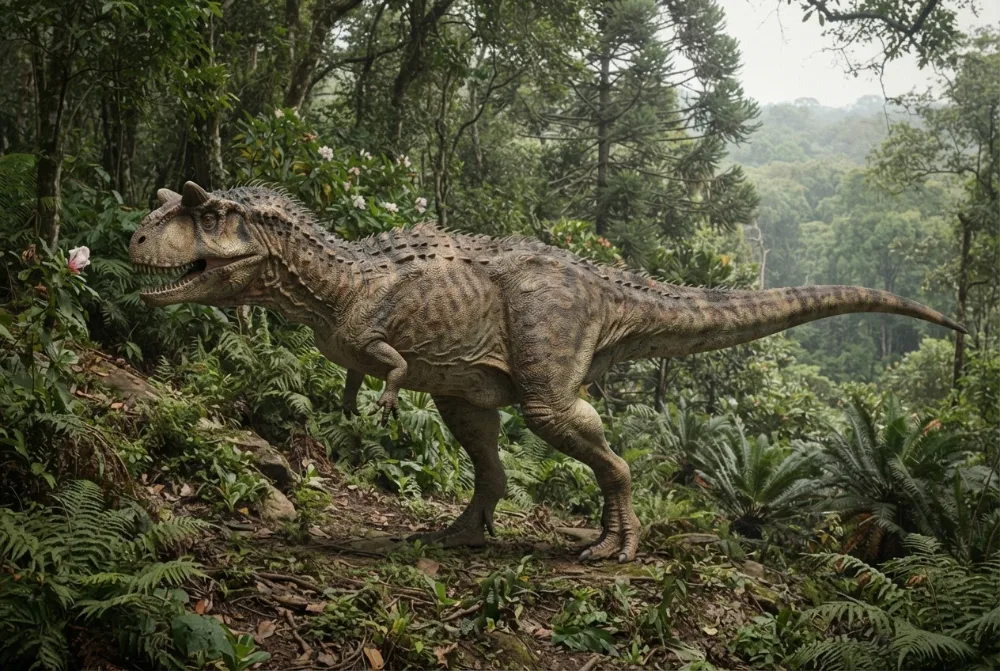
Rajasaurus was a meat-eating dinosaur that lived in India near the end of the Cretaceous Period. It had a single short horn on its forehead and used its strong neck and jaws to catch prey. This dinosaur was an ambush predator, hiding and then pouncing on its food.1
Yabayeho ryari?
Yanganaga ite?
Yari ndende ite?
Ubutumburuke bwayo bwanganaga iki?
Yari iremereye ite?

 ndende nk'imbwa 7 zikurikiranye🍌ndende nk'imineke 37 ikurikiranyeiremereye nk'imbwa 200🍉iremereye nk'imbuto 800 za watermelon🎒iremereye nk'ibyumba 5 by'amashuri byuzuye abana🐻❄️iremereye nk'idubu 9 zo mu rubura🏃yashoboraga kwiruka metero 100 mu masegonda 14 (umuntu wihuta kurusha abandi akenera 9,6)
Rajasaurus yanganaga ite ugereranyije NAWE?
Ni imibare gusa ibarirwa muri mushakisha yawe. Nta kintu kibikwa cyangwa cyoherezwa ahandi.
Yihutaga ite?


Utuntu dushimishije
Rajasaurus had a single low horn on its forehead made mostly of nasal bone, unlike the horn of its relative Majungasaurus.2
It was one of the larger abelisaurids, measuring about 6.6 metres (22 feet) long.1
Rajasaurus lived on the island of India during the Late Cretaceous, when India was isolated from other continents.1
Its fossils were found in the Lameta Formation, which was once a river valley with an arid or semi-arid climate.2
The horn on its head might have been used for display or for head-butting other Rajasaurus during fights.12
Rajasaurus had short arms and four fingers, so it relied on its powerful head and jaws to catch prey.2
It is the first Indian theropod dinosaur to have preserved bones from the spine, hips, legs, and tail.2
Ibibazo bibazwa cyane kuri Rajasaurus
?How big was Rajasaurus?
Rajasaurus was about 6.6 metres (22 feet) long, though one scientist estimated it at 11 metres (36 feet). It weighed around 4 metric tons (4.4 short tons).21
?What did Rajasaurus eat?
Rajasaurus was a carnivore that ate meat. It probably hunted large prey like sauropod dinosaurs and may have also scavenged for food.13
?Did Rajasaurus have feathers?
No one knows for sure. The fossils don't show feathers, and most abelisaurids are not known to have had them, but some scientists think many theropods might have had simple feathers.21
?Was Rajasaurus bigger than T. rex?
No, Rajasaurus was smaller. T. rex could reach about 12 metres (40 feet) long, while Rajasaurus was only about 6.6 metres (22 feet) long.12
?Why did Rajasaurus have a horn?
The horn was probably used for display to attract mates or for head-butting other Rajasaurus during fights. It was made mostly of nasal bone.12
?Could Rajasaurus swim?
Probably not. It was a land dinosaur with strong legs for walking and running, not swimming. It lived near rivers but likely stayed on land.21
Ku bazobereye muri dinozore
- Izina rya siyansi
- Rajasaurus
- Yiswe na
- Wilson et al. 20034
- Itsinda
- Dinozore zirya inyama
- Umuryango / ishami
- Abelisauridae4
- Ishyirwa mu byiciro
- Theropoda > Ceratosauria > Abelisauridae4
- Imyaka y'amabuye
- imyaka miliyoni 72 kugeza 66 (Maastrichtian)4
- Inzego z'amabuye
- Lameta4
- Ibihugu
- Ubuhinde4
- Ibisigazwa byanditswe
- 1 muri The Paleobiology Database4
- Ivumburwa
- Rajasaurus was named in 2003 by Jeffrey A. Wilson and colleagues. The fossils were found in the Lameta Formation of Gujarat, India, after dinosaur eggs were discovered there in 1981.24
- Biracyagibwaho impaka
- Scientists are not sure what the horn on its head was used for. It may have been for display or for head-butting, but no one knows for certain.1
Aho amakuru yakuwe
- Rajasaurus | Natural History Museum (nhm.ac.uk)
- Rajasaurus (en.wikipedia.org)
- Discoveries | Paul Sereno - Paleontologist | The University of Chicago (paulsereno.uchicago.edu)
- Rajasaurus in The Paleobiology Database (CC BY 4.0): imyaka, ahantu, inzego z'amabuye, ishyirwa mu byiciro.
Buri kintu kiri kuri uru rupapuro gifite nimero yerekana aho cyakuwe. Niba hari icyo twibeshye, tubabarire, turi abakunzi ba dinozore, ntituri ikinyamakuru cya siyansi. Tubwire kuri [email protected] tuzagikosora.
 Rex arashonje! Dino Wiki ni umushinga wa papa umwe yakoreye umuhungu we ukunda dinozore, ni ubuntu, nta matangazo kandi nta bigukurikirana. Abantu bakuru bashobora guha Rex akantu ko kurya kugira ngo Dino Wiki ikomeze kuboneka kuri interineti.Gaburira Rex
 Allosaurus
 Carnotaurus
 Dilophosaurus
 Giganotosaurus
 Compsognathus
 Paronychodon
 Tyrannosaurus
 Triceratops
 Velociraptor
 Spinosaurus
 Ankylosaurus
 Parasaurolophus