 Uri dinozore iyihe? Umukino w'ibibazo
 Intambara ya dinozore
 Isiganwa rya dinozore
 Imikino mito ya dinozore
 Alubumu ya sitikeri
 Intonde za TOP za dinozore
 Ntungura!
Shingopana
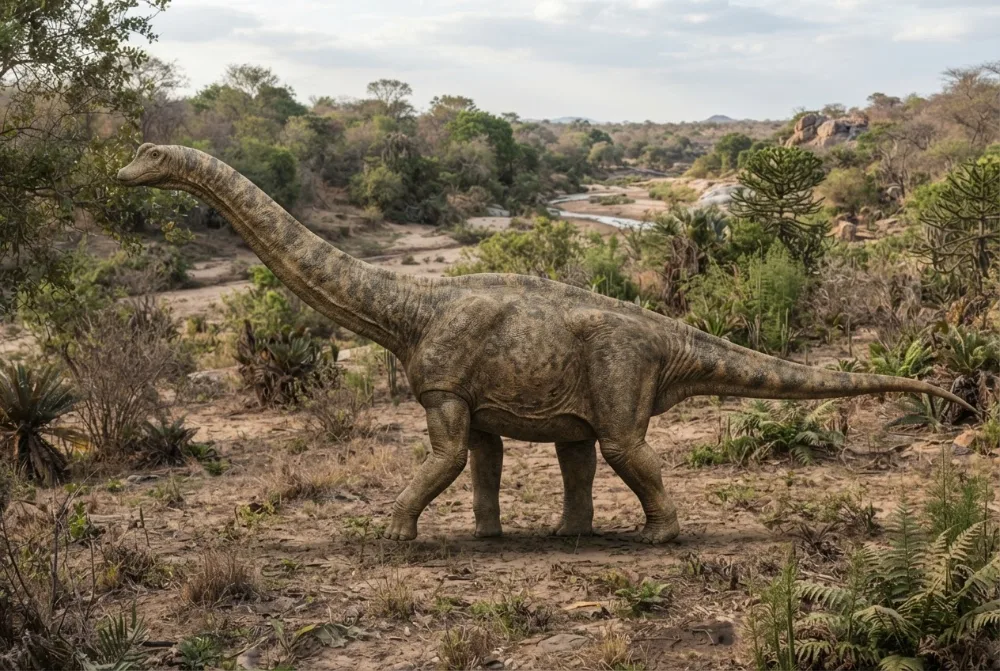
Shingopana was a long-necked dinosaur that munched on plants in ancient Tanzania. It was a titanosaur, a type of sauropod, but smaller than many of its giant cousins. Shingopana lived about 74 to 71 million years ago.12
Yabayeho ryari?
Yanganaga ite?
Yari ndende ite?
Ubutumburuke bwayo bwanganaga iki?
igereranya
 ndende nk'imbwa 8 zikurikiranye🍌ndende nk'imineke 44 ikurikiranye🏃yashoboraga kwiruka metero 100 mu masegonda 13 (umuntu wihuta kurusha abandi akenera 9,6)
Shingopana yanganaga ite ugereranyije NAWE?
Ni imibare gusa ibarirwa muri mushakisha yawe. Nta kintu kibikwa cyangwa cyoherezwa ahandi.
Yihutaga ite?


Utuntu dushimishije
Shingopana's fossils had holes from insect bites that happened shortly after the dinosaur died.1
Scientists think Shingopana was more closely related to South American titanosaurs than to other African ones.1
Shingopana lived alongside other dinosaurs like Rukwatitan and Mnyamawamtuka, as well as crocodile-like reptiles and lungfish.1
The name Shingopana means 'wide neck' in Swahili, because of the bulbous parts on its neck bones.1
Shingopana is known from a partial jaw, neck bones, ribs, a shoulder bone, and a partial hip bone.1
Shingopana's ribs had flanged edges, but scientists are not sure what these were for.1
Ibibazo bibazwa cyane kuri Shingopana
?How big was Shingopana?
Shingopana was about 8 metres (26 feet) long, which is smaller than many other sauropods.1
?What did Shingopana eat?
Shingopana was a plant-eater, munching on leaves and other vegetation.1
?Where did Shingopana live?
Shingopana lived in what is now Tanzania, in Africa, about 74 to 71 million years ago.1
Ku bazobereye muri dinozore
- Izina rya siyansi
- Shingopana
- Yiswe na
- Gorscak et al. 20172
- Itsinda
- Izifite amajosi maremare
- Umuryango / ishami
- Lithostrotia2
- Ishyirwa mu byiciro
- Sauropodomorpha > Sauropoda > Titanosauria > Macronaria2
- Imyaka y'amabuye
- imyaka miliyoni 100 kugeza 72 (Cenomanian / Campanian)2
- Inzego z'amabuye
- Galula2
- Ibihugu
- Tanzaniya2
- Ibisigazwa byanditswe
- 1 muri The Paleobiology Database2
- Ivumburwa
- The first fossils of Shingopana were found in 2002 by scientists from the Rukwa Rift Basin Project. It was named Shingopana songwensis in 2017 by Gorscak and colleagues.12
- Biracyagibwaho impaka
- Scientists are not sure why the ribs had flanged edges or what the bulbous parts on the neck bones were for.1
Aho amakuru yakuwe
- Shingopana (en.wikipedia.org)
- Shingopana in The Paleobiology Database (CC BY 4.0): imyaka, ahantu, inzego z'amabuye, ishyirwa mu byiciro.
Buri kintu kiri kuri uru rupapuro gifite nimero yerekana aho cyakuwe. Niba hari icyo twibeshye, tubabarire, turi abakunzi ba dinozore, ntituri ikinyamakuru cya siyansi. Tubwire kuri [email protected] tuzagikosora.
 Rex arashonje! Dino Wiki ni umushinga wa papa umwe yakoreye umuhungu we ukunda dinozore, ni ubuntu, nta matangazo kandi nta bigukurikirana. Abantu bakuru bashobora guha Rex akantu ko kurya kugira ngo Dino Wiki ikomeze kuboneka kuri interineti.Gaburira Rex
 Brachiosaurus
 Diplodocus
 Brontosaurus
 Argentinosaurus
 Camarasaurus
 Morosaurus
 Tyrannosaurus
 Triceratops
 Velociraptor
 Spinosaurus
 Ankylosaurus
 Parasaurolophus