 Uri dinozore iyihe? Umukino w'ibibazo
 Intambara ya dinozore
 Isiganwa rya dinozore
 Imikino mito ya dinozore
 Alubumu ya sitikeri
 Intonde za TOP za dinozore
 Ntungura!
Taleta
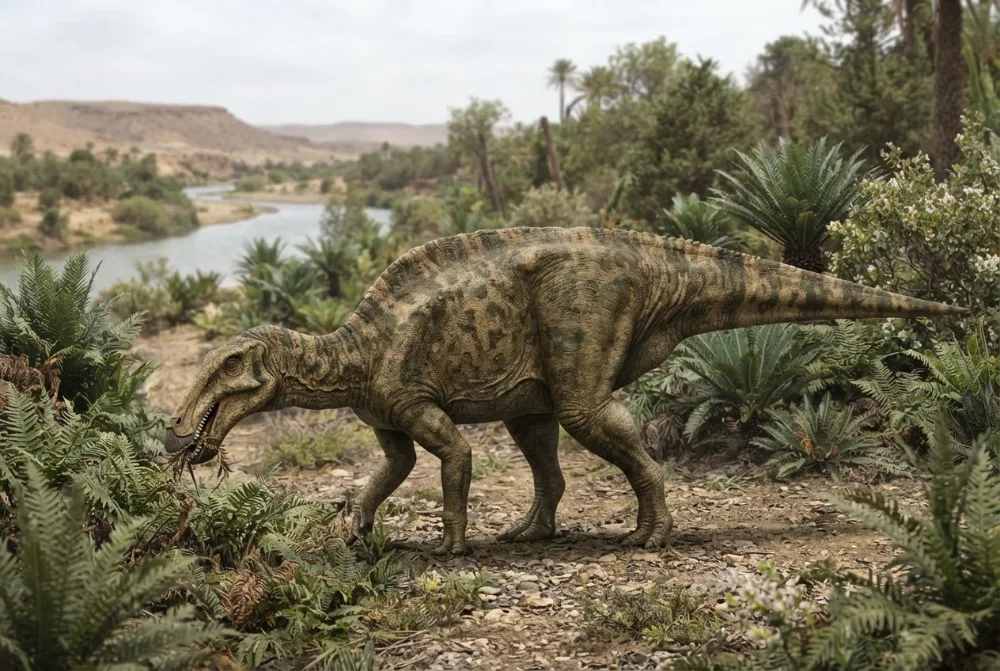
Taleta was a small duck-billed dinosaur that lived in what is now Morocco. It had huge, blade-like teeth that gave it a wicked grin. This dinosaur was one of several duckbills that crossed the ocean to reach Africa and then quickly evolved into many different species.1
Yabayeho ryari?
Yanganaga ite?
Yari ndende ite?
Ubutumburuke bwayo bwanganaga iki?
igereranya
Yari iremereye ite?
 ndende nk'imbwa 6 zikurikiranye🍌ndende nk'imineke 31 ikurikiranye🍉iremereye nk'imbuto 100 za watermelon🧸iremereye nk'abana 26 bo mu ishuri ry'incuke🎒iremereye nk'abanyeshuri 16🏃yashoboraga kwiruka metero 100 mu masegonda 9,2 (umuntu wihuta kurusha abandi akenera 9,6)
Taleta yanganaga ite ugereranyije NAWE?
Ni imibare gusa ibarirwa muri mushakisha yawe. Nta kintu kibikwa cyangwa cyoherezwa ahandi.
Yihutaga ite?


Utuntu dushimishije
Taleta is known from only two upper jaw bones (maxillae).2
Its teeth were huge for such a small animal, with tall, blade-like ridges on the crown.1
Unlike most duckbills, Taleta had only one tooth per tooth socket instead of several teeth stacked together.1
Taleta belonged to a group of lambeosaurine duckbills called Arenysaurini, which spread from Europe to Africa.62
It lived about 70 to 66 million years ago, near the very end of the Age of Dinosaurs.6
Ibibazo bibazwa cyane kuri Taleta
?How big was Taleta?
Taleta was a small duck-billed dinosaur, about the size of a pony. It was similar in size to Minqaria, which has been estimated at 3.5 metres long.31
?What did Taleta eat?
Taleta was a plant-eater. Like other duck-billed dinosaurs, it used its wide beak and rows of teeth to chew tough plants.3
?Did Taleta have feathers?
Nobody knows for sure. Duck-billed dinosaurs like Taleta are not usually shown with feathers in fossils, but some related dinosaurs had simple feathers, so it is possible.3
Ku bazobereye muri dinozore
- Izina rya siyansi
- Taleta
- Yiswe na
- Longrich et al. 20256
- Itsinda
- Iminwa y'imbata
- Umuryango / ishami
- Hadrosauridae6
- Ishyirwa mu byiciro
- Ornithischia > Ornithopoda > Iguanodontia > Hadrosauridae6
- Imyaka y'amabuye
- imyaka miliyoni 72 kugeza 66 (Maastrichtian)6
- Inzego z'amabuye
- Couche III6
- Ibihugu
- Maroke6
- Ibisigazwa byanditswe
- 1 muri The Paleobiology Database6
- Ivumburwa
- Taleta was named in 2025 by Nick Longrich and colleagues. It was discovered in the phosphate mines of Morocco, where the bones were first mistaken for fish remains.61
- Biracyagibwaho impaka
- Scientists are not sure how many species of duckbills lived in Africa. Limb bones hint at a fourth, larger species that has not yet been named.1
Aho amakuru yakuwe
- Nick Longrich - Blog (nicklongrich.com)
- A new hadrosaurid dinosaur from the late Maastrichtian Phosphates of Morocco provides evidence for an African radiation of lambeosaurines - the University of Bath's research portal (researchportal.bath.ac.uk)
- Taleta (en.wikipedia.org)
- Taleta taleta | Dinosaur Database by DinoAnimals.com (dinoanimals.com)
- Nick Longrich - Blog (nicklongrich.com)
- Taleta in The Paleobiology Database (CC BY 4.0): imyaka, ahantu, inzego z'amabuye, ishyirwa mu byiciro.
Buri kintu kiri kuri uru rupapuro gifite nimero yerekana aho cyakuwe. Niba hari icyo twibeshye, tubabarire, turi abakunzi ba dinozore, ntituri ikinyamakuru cya siyansi. Tubwire kuri [email protected] tuzagikosora.
 Rex arashonje! Dino Wiki ni umushinga wa papa umwe yakoreye umuhungu we ukunda dinozore, ni ubuntu, nta matangazo kandi nta bigukurikirana. Abantu bakuru bashobora guha Rex akantu ko kurya kugira ngo Dino Wiki ikomeze kuboneka kuri interineti.Gaburira Rex
 Parasaurolophus
 Edmontosaurus
 Saurolophus
 Hypacrosaurus
 Corythosaurus
 Kritosaurus
 Tyrannosaurus
 Triceratops
 Velociraptor
 Spinosaurus
 Ankylosaurus
 Pteranodon