 Uri dinozore iyihe? Umukino w'ibibazo
 Intambara ya dinozore
 Isiganwa rya dinozore
 Imikino mito ya dinozore
 Alubumu ya sitikeri
 Intonde za TOP za dinozore
 Ntungura!
Tarchia
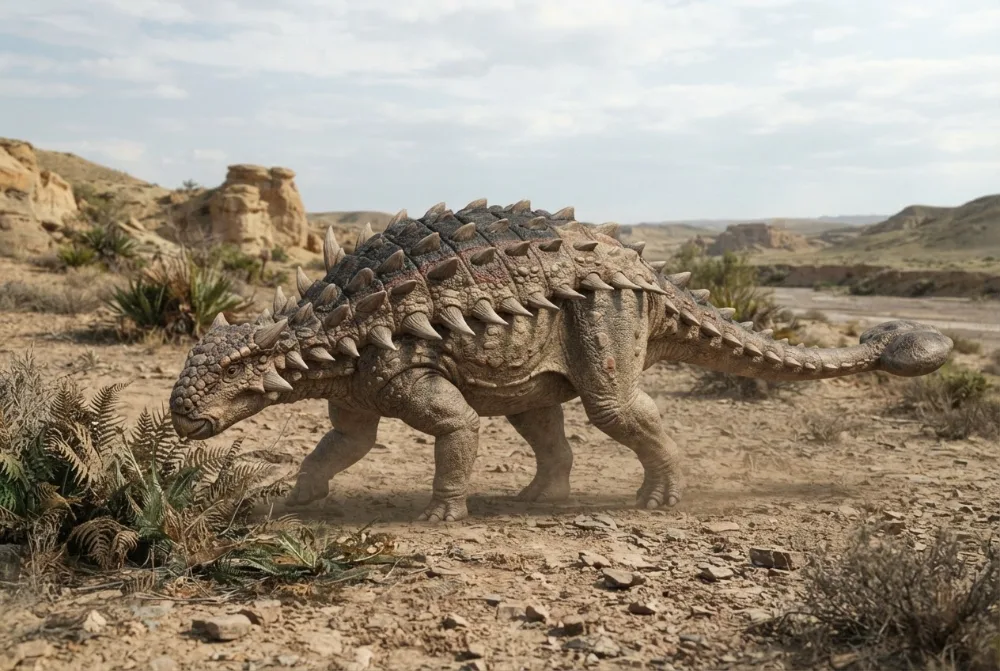
Tarchia was a tank-like dinosaur covered in bony armour and armed with a heavy club at the end of its tail. It lived in the deserts of Mongolia near the end of the Age of Dinosaurs. Despite its tough appearance, it was a gentle plant-eater.1
Yabayeho ryari?
Yanganaga ite?
Yari ndende ite?
Ubutumburuke bwayo bwanganaga iki?
igereranya
Yari iremereye ite?

 ndende nk'imbwa 6 zikurikiranye🍌ndende nk'imineke 33 ikurikiranyeiremereye nk'imbwa 150🍉iremereye nk'imbuto 600 za watermelon🎒iremereye nk'ibyumba 4 by'amashuri byuzuye abana🐻❄️iremereye nk'idubu 7 zo mu rubura🏃yashoboraga kwiruka metero 100 mu masegonda 26 (umuntu wihuta kurusha abandi akenera 9,6)
Tarchia yanganaga ite ugereranyije NAWE?
Ni imibare gusa ibarirwa muri mushakisha yawe. Nta kintu kibikwa cyangwa cyoherezwa ahandi.
Yihutaga ite?


Utuntu dushimishije
Tarchia's name means 'brainy one' because its skull had a relatively large brain case compared to other ankylosaurs.1
It is the youngest known Asian ankylosaurid dinosaur, living right at the end of the Cretaceous Period.1
The tail club of Tarchia was made of fused vertebrae and could be swung as a weapon against predators.1
Fossils of Tarchia have been found in ancient desert environments with dunes and seasonal streams.1
Scientists think Tarchia may have relied on hindgut fermentation to digest tough plants, similar to modern cows.1
Three species of Tarchia are known: T. kielanae, T. teresae, and T. tumanovae.1
Ibibazo bibazwa cyane kuri Tarchia
?How big was Tarchia?
About 5.5 to 6 metres long and weighed up to 2.5 to 3 metric tons. Some specimens may have been up to 6.7 metres long.12
?What did Tarchia eat?
It was a herbivore that ate low-growing plants. It had a broad muzzle and was a selective feeder, probably eating ground-level plants.12
?Did Tarchia have any predators?
Yes. Tarbosaurus, a large meat-eating dinosaur related to Tyrannosaurus, hunted Tarchia. Tooth marks from Tarbosaurus have been found on a Tarchia skull.21
?How did Tarchia defend itself?
It had a heavy bony club at the end of its tail that it could swing at attackers. Its body was also covered in bony armour called osteoderms.21
Gusenya ibinyoma
Ibivugwa: Tarchia was a slow, stupid dinosaur.
Ukuri: Tarchia had a relatively large brain for an ankylosaur, and its tail club shows it could defend itself actively.1
Ku bazobereye muri dinozore
- Izina rya siyansi
- Tarchia
- Yiswe na
- Maryanska 19773
- Itsinda
- Dinozore zifite igikingira
- Umuryango / ishami
- Ankylosauridae3
- Ishyirwa mu byiciro
- Ornithischia > Ankylosauria > Ankylosauridae > Thyreophora3
- Imyaka y'amabuye
- imyaka miliyoni 84 kugeza 66 (Campanian / Maastrichtian)3
- Inzego z'amabuye
- Nemegt, Baruungoyot3
- Ibihugu
- Mongoliya3
- Ibisigazwa byanditswe
- 4 muri The Paleobiology Database3
- Ivumburwa
- Tarchia was named in 1977 by Polish paleontologist Teresa Maryańska based on a skull found by a Polish-Mongolian expedition in 1970 near Khulsan, Mongolia.1
- Biracyagibwaho impaka
- Scientists still debate whether some fossils belong to Tarchia or to its close relative Saichania.1
Aho amakuru yakuwe
- Tarchia (en.wikipedia.org)
- Tarchia | Natural History Museum (nhm.ac.uk)
- Tarchia in The Paleobiology Database (CC BY 4.0): imyaka, ahantu, inzego z'amabuye, ishyirwa mu byiciro.
Buri kintu kiri kuri uru rupapuro gifite nimero yerekana aho cyakuwe. Niba hari icyo twibeshye, tubabarire, turi abakunzi ba dinozore, ntituri ikinyamakuru cya siyansi. Tubwire kuri [email protected] tuzagikosora.
 Rex arashonje! Dino Wiki ni umushinga wa papa umwe yakoreye umuhungu we ukunda dinozore, ni ubuntu, nta matangazo kandi nta bigukurikirana. Abantu bakuru bashobora guha Rex akantu ko kurya kugira ngo Dino Wiki ikomeze kuboneka kuri interineti.Gaburira Rex
 Ankylosaurus
 Sauropelta
 Pinacosaurus
 Scutellosaurus
 Struthiosaurus
 Euoplocephalus
 Tyrannosaurus
 Triceratops
 Velociraptor
 Spinosaurus
 Parasaurolophus
 Pteranodon