 Uri dinozore iyihe? Umukino w'ibibazo
 Intambara ya dinozore
 Isiganwa rya dinozore
 Imikino mito ya dinozore
 Alubumu ya sitikeri
 Intonde za TOP za dinozore
 Ntungura!
Tlatolophus
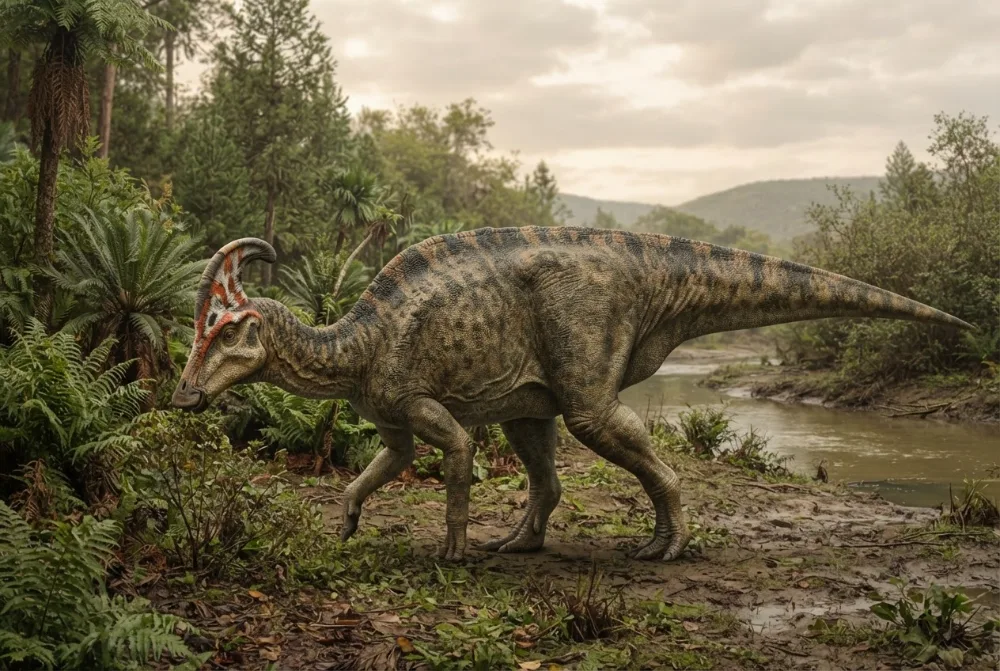
Tlatolophus was a big, plant-eating duck-billed dinosaur with a fancy crest on its head that looked like a comma or a word symbol. It lived in what is now Mexico during the Late Cretaceous, about 73 to 72.5 million years ago. This dinosaur is special because it's one of the most complete duck-billed dinosaurs ever found in Mexico!12
Yabayeho ryari?
Yanganaga ite?
Yari ndende ite?
Ubutumburuke bwayo bwanganaga iki?
Yari iremereye ite?

 ndende nk'imbwa 8 zikurikiranye🍌ndende nk'imineke 44 ikurikiranyeiremereye nk'imbwa 150🍉iremereye nk'imbuto 600 za watermelon🎒iremereye nk'ibyumba 4 by'amashuri byuzuye abana🐻❄️iremereye nk'idubu 7 zo mu rubura🏃yashoboraga kwiruka metero 100 mu masegonda 14 (umuntu wihuta kurusha abandi akenera 9,6)
Tlatolophus yanganaga ite ugereranyije NAWE?
Ni imibare gusa ibarirwa muri mushakisha yawe. Nta kintu kibikwa cyangwa cyoherezwa ahandi.
Yihutaga ite?


Utuntu dushimishije
Tlatolophus's crest was hollow and shaped like an upside-down comma, which may have been used for making sounds or showing off.1
The name Tlatolophus comes from the Nahuatl word 'tlatolli' meaning 'word', because its crest looks like the Aztec symbol for 'word'.1
The first fossil was a tail found in 2005, but it took until 2013 for scientists to dig out the whole skeleton, including the skull.1
Tlatolophus is the most complete lambeosaurine (crested duck-billed dinosaur) ever found in Mexico.2
Its skull was tall, and the crest was made of bones from the nose and upper jaw, not just a separate bone.1
Scientists think Tlatolophus was about 8 meters long and weighed nearly 3 metric tons, as heavy as a small elephant.1
Ibibazo bibazwa cyane kuri Tlatolophus
?What did Tlatolophus eat?
It was a plant-eater, like all duck-billed dinosaurs. It likely ate leaves, ferns, and other plants with its wide beak.1
?How big was Tlatolophus?
About 8 metres long and weighed nearly 3 metric tons, as heavy as a small elephant.1
?Did Tlatolophus have feathers?
No, duck-billed dinosaurs like Tlatolophus did not have feathers. They were covered in scaly skin.1
?When did Tlatolophus live?
It lived during the Late Cretaceous period, about 73 to 72.5 million years ago.1
Gusenya ibinyoma
Ibivugwa: Some people think Tlatolophus could swim in the ocean.
Ukuri: No, Tlatolophus was a land dinosaur that walked on four legs or two, and it ate plants on land.4
Ku bazobereye muri dinozore
- Izina rya siyansi
- Tlatolophus
- Yiswe na
- Ramírez-Velasco et al. 20214
- Itsinda
- Iminwa y'imbata
- Umuryango / ishami
- Hadrosauridae4
- Ishyirwa mu byiciro
- Ornithischia > Ornithopoda > Iguanodontia > Hadrosauridae4
- Imyaka y'amabuye
- imyaka miliyoni 84 kugeza 72 (Campanian)4
- Inzego z'amabuye
- Cerro del Pueblo4
- Ibihugu
- Megizike4
- Ibisigazwa byanditswe
- 1 muri The Paleobiology Database4
- Ivumburwa
- The first Tlatolophus fossil was found in 2005 in Mexico, but it wasn't until 2013 that a team from INAH and UNAM started digging it out. They named it Tlatolophus galorum in 2021.12
- Biracyagibwaho impaka
- Scientists still debate what the crest was used for, whether for making sounds, attracting mates, or something else.1
Aho amakuru yakuwe
- Tlatolophus (en.wikipedia.org)
- Tlatolophus galorum, gen. et sp. nov., a parasaurolophini dinosaur from the upper Campanian of the Cerro del Pueblo Formation, Coahuila, northern Mexico (sciencedirect.com)
- El ‘Tlatolophus galorum’, la nueva especie de dinosaurio hallada en México | EL PAÍS México (elpais.com)
- Tlatolophus in The Paleobiology Database (CC BY 4.0): imyaka, ahantu, inzego z'amabuye, ishyirwa mu byiciro.
Buri kintu kiri kuri uru rupapuro gifite nimero yerekana aho cyakuwe. Niba hari icyo twibeshye, tubabarire, turi abakunzi ba dinozore, ntituri ikinyamakuru cya siyansi. Tubwire kuri [email protected] tuzagikosora.
 Rex arashonje! Dino Wiki ni umushinga wa papa umwe yakoreye umuhungu we ukunda dinozore, ni ubuntu, nta matangazo kandi nta bigukurikirana. Abantu bakuru bashobora guha Rex akantu ko kurya kugira ngo Dino Wiki ikomeze kuboneka kuri interineti.Gaburira Rex
 Parasaurolophus
 Edmontosaurus
 Saurolophus
 Hypacrosaurus
 Corythosaurus
 Kritosaurus
 Tyrannosaurus
 Triceratops
 Velociraptor
 Spinosaurus
 Ankylosaurus
 Pteranodon