 Uri dinozore iyihe? Umukino w'ibibazo
 Intambara ya dinozore
 Isiganwa rya dinozore
 Imikino mito ya dinozore
 Alubumu ya sitikeri
 Intonde za TOP za dinozore
 Ntungura!
Yabayeho ryari?

Yanganaga ite?
Yari ndende ite?
Ubutumburuke bwayo bwanganaga iki?
igereranya
Yari iremereye ite?
 ndende nk'imbwa 6 zikurikiranye🍌ndende nk'imineke 31 ikurikiranye🍉iremereye nk'imbuto 140 za watermelon🧸iremereye nk'abana 37 bo mu ishuri ry'incuke🎒iremereye nk'abanyeshuri 22🏃yashoboraga kwiruka metero 100 mu masegonda 9,2 (umuntu wihuta kurusha abandi akenera 9,6)
Viavenator yanganaga ite ugereranyije NAWE?
Ni imibare gusa ibarirwa muri mushakisha yawe. Nta kintu kibikwa cyangwa cyoherezwa ahandi.
Yihutaga ite?


Utuntu dushimishije
Viavenator belongs to a group called Furileusauria, which means 'stiff back lizard' in the Mapudungun language, because their backbones were very rigid.2
It lived during the Santonian age, about 85.7 to 83.6 million years ago, filling a gap in the fossil record between earlier and later abelisaurids.32
The only known species is Viavenator exxoni, named after ExxonMobil for helping preserve fossils in the La Invernada area.12
Its skeleton shows special features like a deep notch in the skull bones and a downturned crest on the shin bone, which helped scientists identify it as a new species.2
Viavenator had a very stiff backbone with extra connections between the vertebrae, making its spine almost like a single rod.2
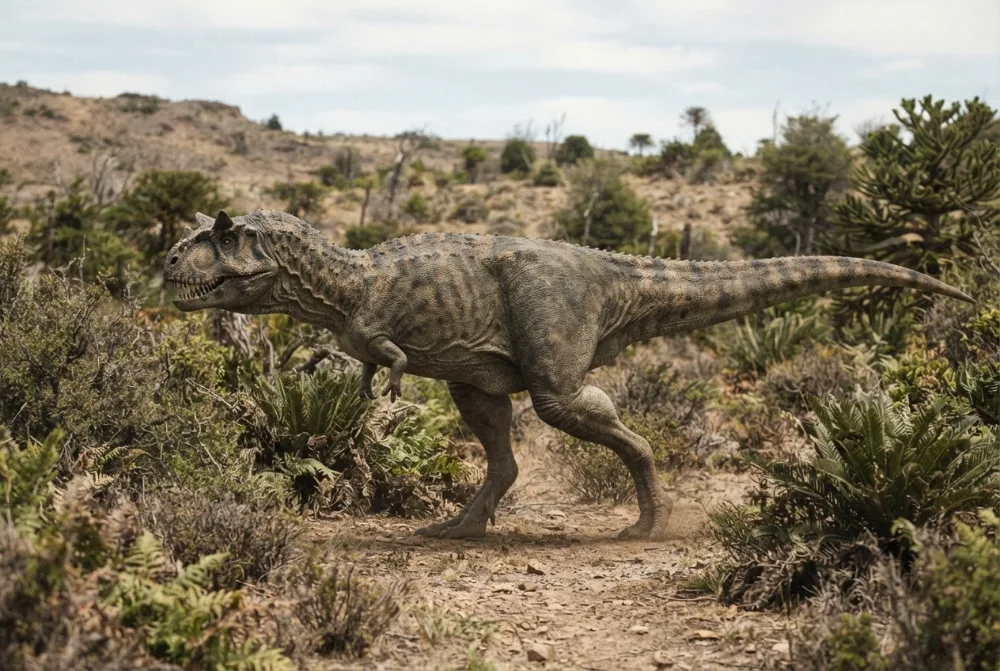
It was a medium to big sized theropod, part of the abelisaurid family that lived in the southern continents during the Cretaceous.2
Ibibazo bibazwa cyane kuri Viavenator
?How big was Viavenator?
About 5.6 metres (18 feet) long.1
?What did Viavenator eat?
It was a carnivore, so it ate meat.1
?Why did Viavenator have a stiff back?
Its backbone was very rigid, with extra connections between vertebrae, which helped it move like a seesaw pivoting on its hips.2
?When did Viavenator live?
It lived during the Santonian age of the Late Cretaceous, about 85.7 to 83.6 million years ago.1
Ku bazobereye muri dinozore
- Izina rya siyansi
- Viavenator
- Yiswe na
- Filippi et al. 20165
- Itsinda
- Dinozore zirya inyama
- Umuryango / ishami
- Abelisauridae5
- Ishyirwa mu byiciro
- Theropoda > Ceratosauria > Abelisauridae5
- Imyaka y'amabuye
- imyaka miliyoni 86 kugeza 84 (Santonian)5
- Inzego z'amabuye
- Bajo de la Carpa5
- Ibihugu
- Arijantine5
- Ibisigazwa byanditswe
- 1 muri The Paleobiology Database5
- Ivumburwa
- Viavenator was named and described in 2016 by Filippi and colleagues based on a partial skeleton found in the Bajo de la Carpa Formation of Argentina.13
- Biracyagibwaho impaka
- Scientists are still debating exactly how Viavenator is related to other abelisaurids, as it seems to be a transitional form between earlier and later species.2
Aho amakuru yakuwe
- Viavenator (en.wikipedia.org)
- A new brachyrostran with hypertrophied axial structures reveals an unexpected radiation of latest Cretaceous abelisaurids (corporate.exxonmobil.com)
- PBDB Taxon (paleobiodb.org)
- Viavenator exxoni | Dinosaur Database by DinoAnimals.com (dinoanimals.com)
- Viavenator in The Paleobiology Database (CC BY 4.0): imyaka, ahantu, inzego z'amabuye, ishyirwa mu byiciro.
Buri kintu kiri kuri uru rupapuro gifite nimero yerekana aho cyakuwe. Niba hari icyo twibeshye, tubabarire, turi abakunzi ba dinozore, ntituri ikinyamakuru cya siyansi. Tubwire kuri [email protected] tuzagikosora.
 Rex arashonje! Dino Wiki ni umushinga wa papa umwe yakoreye umuhungu we ukunda dinozore, ni ubuntu, nta matangazo kandi nta bigukurikirana. Abantu bakuru bashobora guha Rex akantu ko kurya kugira ngo Dino Wiki ikomeze kuboneka kuri interineti.Gaburira Rex
 Allosaurus
 Carnotaurus
 Dilophosaurus
 Giganotosaurus
 Compsognathus
 Paronychodon
 Tyrannosaurus
 Triceratops
 Velociraptor
 Spinosaurus
 Ankylosaurus
 Parasaurolophus