 Uri dinozore iyihe? Umukino w'ibibazo
 Intambara ya dinozore
 Isiganwa rya dinozore
 Imikino mito ya dinozore
 Alubumu ya sitikeri
 Intonde za TOP za dinozore
 Ntungura!
Xiongguanlong
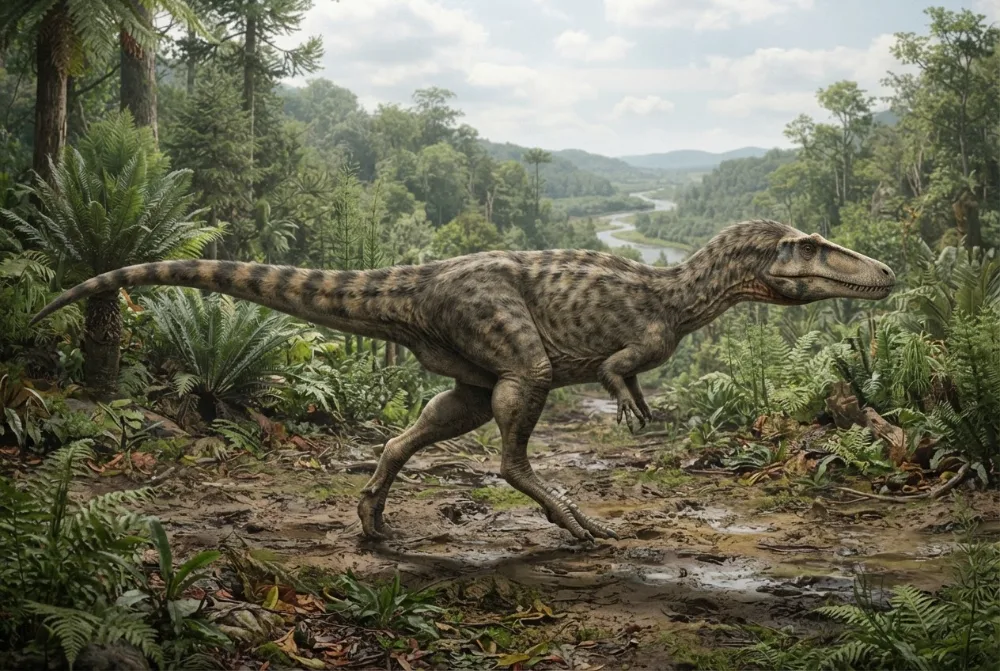
Xiongguanlong was an early cousin of the mighty T. rex. It had a long, narrow snout and lived in what is now China about 120 million years ago. It was a meat-eater that could run after its prey.12
Yabayeho ryari?
Yanganaga ite?
Yari ndende ite?
Ubutumburuke bwayo bwanganaga iki?
igereranya
Yari iremereye ite?
 ndende nk'imbwa 5 zikurikiranye🍌ndende nk'imineke 28 ikurikiranye🍉iremereye nk'imbuto 54 za watermelon🧸iremereye nk'abana 14 bo mu ishuri ry'incuke🎒iremereye nk'abanyeshuri 8🏃yashoboraga kwiruka metero 100 mu masegonda 7,5 (umuntu wihuta kurusha abandi akenera 9,6)
Xiongguanlong yanganaga ite ugereranyije NAWE?
Ni imibare gusa ibarirwa muri mushakisha yawe. Nta kintu kibikwa cyangwa cyoherezwa ahandi.
Yihutaga ite?


Utuntu dushimishije
Xiongguanlong had a narrow and long muzzle, similar to the later tyrannosaur Alioramus.1
It is the sister taxon to Tyrannosauridae plus Appalachiosaurus, meaning it is closely related to the family that includes T. rex.1
Xiongguanlong shows several features that later became hallmarks of tyrannosaurids, like a sharp crest on the top of its skull and a boxy braincase.1
Its premaxillary teeth had a ridge on the inner side, a feature seen in later tyrannosaurids.1
The slender, unornamented nasals of Xiongguanlong suggest that the evolution of tyrannosaur feeding adaptations was more complex than previously thought.1
Xiongguanlong lived during the Aptian to Albian stages, about 121.4 to 113.2 million years ago.2
Ibibazo bibazwa cyane kuri Xiongguanlong
?How big was Xiongguanlong?
About 5 metres (16 feet) long and weighed around 270 kilograms (600 pounds).34
?What did Xiongguanlong eat?
It was a meat-eater that hunted small- to medium-sized animals.4
Ku bazobereye muri dinozore
- Izina rya siyansi
- Xiongguanlong
- Yiswe na
- Li et al. 20095
- Itsinda
- Tiranozore
- Umuryango / ishami
- Tyrannosauroidea5
- Ishyirwa mu byiciro
- Theropoda > Tyrannosauroidea5
- Imyaka y'amabuye
- imyaka miliyoni 121 kugeza 113 (Aptian)5
- Inzego z'amabuye
- Xiagou5
- Ibihugu
- Ubushinwa5
- Ibisigazwa byanditswe
- 1 muri The Paleobiology Database5
- Ivumburwa
- Xiongguanlong was named by Daqing Li and colleagues in 2009 based on a fossil found in the Xinminpu Group of Gansu, China.1
- Biracyagibwaho impaka
- Scientists are still debating how body size evolved in tyrannosauroids, and whether the trend of increasing size seen in North American tyrannosaurids extends through the whole group.1
Aho amakuru yakuwe
- A longirostrine tyrannosauroid from the Early Cretaceous of China (royalsocietypublishing.org)
- PBDB Taxon (paleobiodb.org)
- Xiongguanlong (en.wikipedia.org)
- Dinosaur - Xiongguanlong baimoensis - The Australian Museum (australian.museum)
- Xiongguanlong in The Paleobiology Database (CC BY 4.0): imyaka, ahantu, inzego z'amabuye, ishyirwa mu byiciro.
Buri kintu kiri kuri uru rupapuro gifite nimero yerekana aho cyakuwe. Niba hari icyo twibeshye, tubabarire, turi abakunzi ba dinozore, ntituri ikinyamakuru cya siyansi. Tubwire kuri [email protected] tuzagikosora.
 Rex arashonje! Dino Wiki ni umushinga wa papa umwe yakoreye umuhungu we ukunda dinozore, ni ubuntu, nta matangazo kandi nta bigukurikirana. Abantu bakuru bashobora guha Rex akantu ko kurya kugira ngo Dino Wiki ikomeze kuboneka kuri interineti.Gaburira Rex
 Tyrannosaurus
 Tarbosaurus
 Albertosaurus
 Daspletosaurus
 Gorgosaurus
 Alectrosaurus
 Stegosaurus
 Iguanodon
 Archaeopteryx
 Giganotosaurus
 Microraptor
 Deinonychus