 Uri dinozore iyihe? Umukino w'ibibazo
 Intambara ya dinozore
 Isiganwa rya dinozore
 Imikino mito ya dinozore
 Alubumu ya sitikeri
 Intonde za TOP za dinozore
 Ntungura!
Yamatosaurus
Yamatosaurus was a duck-billed dinosaur that lived in Japan near the end of the age of dinosaurs. It had a special jaw with only one tooth at a time in each spot, which is different from most other duck-billed dinosaurs. This plant-eater probably lived in coastal areas.21
Yabayeho ryari?
Yanganaga ite?
Yari ndende ite?
Ubutumburuke bwayo bwanganaga iki?
Yari iremereye ite?
 ndende nk'imodoka 2 ziparitse ku murongo🍌ndende nk'imineke 56 ikurikiranye
 iremereye nk'imbwa 85🍉iremereye nk'imbuto 340 za watermelon🧸iremereye nk'abana 89 bo mu ishuri ry'incuke🎒iremereye nk'abanyeshuri 53🐻❄️iremereye nk'idubu 4 zo mu rubura🏃yashoboraga kwiruka metero 100 mu masegonda 13 (umuntu wihuta kurusha abandi akenera 9,6)
Yamatosaurus yanganaga ite ugereranyije NAWE?
Ni imibare gusa ibarirwa muri mushakisha yawe. Nta kintu kibikwa cyangwa cyoherezwa ahandi.
Yihutaga ite?


Utuntu dushimishije
Yamatosaurus had only one tooth in each tooth socket at a time, which is very unusual for a duck-billed dinosaur.2
It lived about 72 to 66 million years ago during the Maastrichtian stage of the Late Cretaceous.3
The fossils were found in marine rocks, meaning the dinosaur's body was washed into the sea after it died.2
Yamatosaurus is one of the oldest known hadrosaurids, or duck-billed dinosaurs, from Japan.2
Its shoulder bone, the coracoid, lacks a bump called the biceps tubercle, which is a primitive feature.2
The name Yamatosaurus comes from Yamato, an ancient name for Japan.1
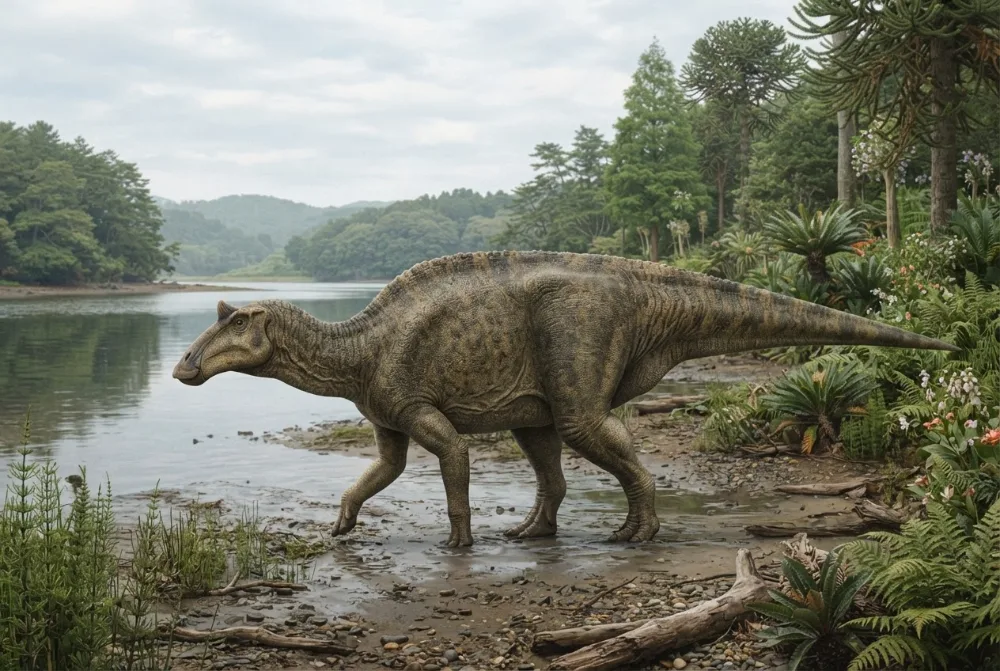
Ibibazo bibazwa cyane kuri Yamatosaurus
?How big was Yamatosaurus?
Scientists do not know its exact size because only a partial skeleton has been found, including parts of the jaw, neck bones, and shoulder bone.12
?What did Yamatosaurus eat?
It was a plant-eater, like other duck-billed dinosaurs. Its teeth were adapted for chewing plants.1
Ku bazobereye muri dinozore
- Izina rya siyansi
- Yamatosaurus
- Yiswe na
- Kobayashi et al. 20215
- Itsinda
- Iminwa y'imbata
- Umuryango / ishami
- Hadrosauridae5
- Ishyirwa mu byiciro
- Ornithischia > Ornithopoda > Iguanodontia > Hadrosauridae5
- Imyaka y'amabuye
- imyaka miliyoni 72 kugeza 66 (Maastrichtian)5
- Inzego z'amabuye
- Kita-ama5
- Ibihugu
- Ubuyapani5
- Ibisigazwa byanditswe
- 1 muri The Paleobiology Database5
- Ivumburwa
- An amateur fossil collector named Shingo Kishimoto discovered the partial skeleton in May 2004 on Awaji Island, Japan. Scientists Yoshitsugu Kobayashi and colleagues named it Yamatosaurus izanagii in 2021.12
- Biracyagibwaho impaka
- Scientists are not sure exactly how Yamatosaurus is related to other duck-billed dinosaurs, but they think it is a very early member of the group.2
Aho amakuru yakuwe
- Yamatosaurus (en.wikipedia.org)
- nature.com (nature.com)
- PBDB Taxon (paleobiodb.org)
- Yamatosaurus izanagii | Dinosaur Database by DinoAnimals.com (dinoanimals.com)
- Yamatosaurus in The Paleobiology Database (CC BY 4.0): imyaka, ahantu, inzego z'amabuye, ishyirwa mu byiciro.
Buri kintu kiri kuri uru rupapuro gifite nimero yerekana aho cyakuwe. Niba hari icyo twibeshye, tubabarire, turi abakunzi ba dinozore, ntituri ikinyamakuru cya siyansi. Tubwire kuri [email protected] tuzagikosora.
 Rex arashonje! Dino Wiki ni umushinga wa papa umwe yakoreye umuhungu we ukunda dinozore, ni ubuntu, nta matangazo kandi nta bigukurikirana. Abantu bakuru bashobora guha Rex akantu ko kurya kugira ngo Dino Wiki ikomeze kuboneka kuri interineti.Gaburira Rex
 Parasaurolophus
 Edmontosaurus
 Saurolophus
 Hypacrosaurus
 Corythosaurus
 Kritosaurus
 Tyrannosaurus
 Triceratops
 Velociraptor
 Spinosaurus
 Ankylosaurus
 Pteranodon