 Uri dinozore iyihe? Umukino w'ibibazo
 Intambara ya dinozore
 Isiganwa rya dinozore
 Imikino mito ya dinozore
 Alubumu ya sitikeri
 Intonde za TOP za dinozore
 Ntungura!
Yungavolucris
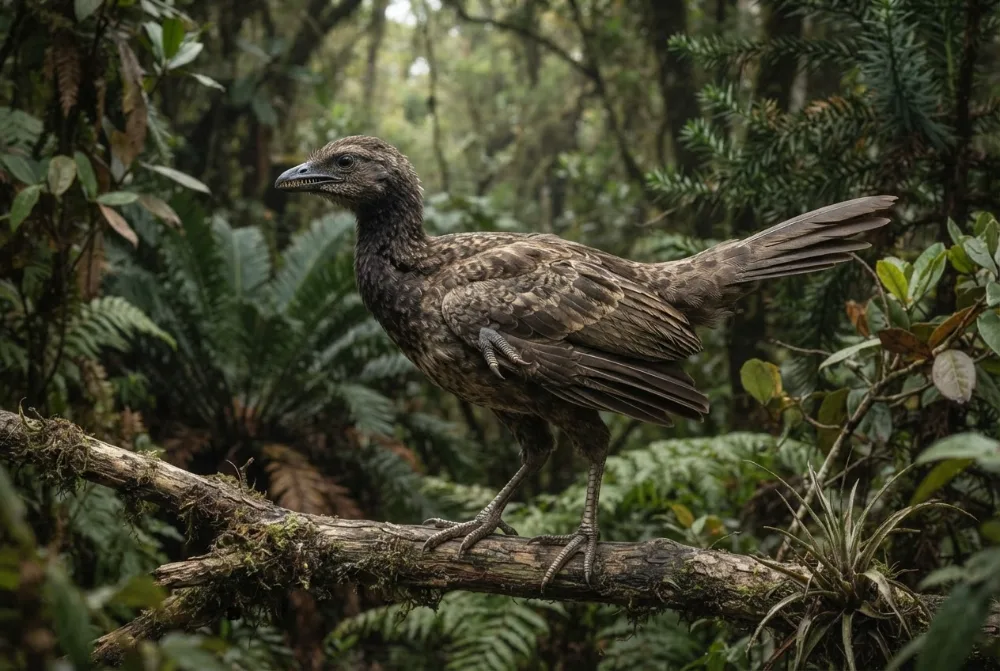
Yungavolucris was a small bird that lived about 70 to 66 million years ago, during the time of the dinosaurs. It had very short, wide feet, which made it look different from most other birds of its time.1
Yabayeho ryari?
Yanganaga ite?
Yari ndende ite?
Ubutumburuke bwayo bwanganaga iki?
Yari iremereye ite?
Yungavolucris yanganaga ite ugereranyije NAWE?
Ni imibare gusa ibarirwa muri mushakisha yawe. Nta kintu kibikwa cyangwa cyoherezwa ahandi.
Yihutaga ite?


Utuntu dushimishije
Yungavolucris is known only from a few foot bones, called tarsometatarsals. The most complete one is just over 4 centimeters (1.5 inches) long.1
Its foot bones were very wide, about twice as wide as those of its relatives Lectavis and Soroavisaurus, which lived at the same time and place.1
The outer toe bone (metatarsal IV) was very thin but as long as the middle toe bone, and the middle toe bone was bent outward, which is unusual.1
If its legs were short and wide, Yungavolucris might have been a slow, heavy bird that could not fly, about the size of a large chicken.1
Yungavolucris lived alongside other enantiornithean birds like Lectavis and Soroavisaurus, but it had much stouter feet than them.1
Ibibazo bibazwa cyane kuri Yungavolucris
?Was Yungavolucris a dinosaur?
Yes, Yungavolucris was a bird, and birds are a type of dinosaur called avialan dinosaurs. It lived about 70 to 66 million years ago.1
?How big was Yungavolucris?
Nobody knows for sure, but if its legs were short and wide, it might have been about 50 cm long, 25 cm tall at the hip, and weighed about 1.75 kg, about the size of a large chicken.1
?Could Yungavolucris fly?
Maybe not. If its legs were both short and wide, it might have been a heavy, sluggish bird that could not fly, like a large chicken.1
Gusenya ibinyoma
Ibivugwa: Some people think Yungavolucris was a dinosaur, but it was actually a bird.
Ukuri: Yungavolucris was a type of enantiornithean, which is a group of ancient birds. Birds are related to dinosaurs, but they are not the same as non-avian dinosaurs.1
Ku bazobereye muri dinozore
- Izina rya siyansi
- Yungavolucris
- Yiswe na
- Chiappe 19933
- Itsinda
- Inyoni za mbere
- Umuryango / ishami
- Enantiornithes3
- Ishyirwa mu byiciro
- Theropoda > Avialae3
- Imyaka y'amabuye
- imyaka miliyoni 72 kugeza 66 (Maastrichtian)3
- Inzego z'amabuye
- Lecho3
- Ibihugu
- Arijantine3
- Ibisigazwa byanditswe
- 1 muri The Paleobiology Database3
- Ivumburwa
- Yungavolucris was named by Luis M. Chiappe in 1993. The fossils were found in the Lecho Formation in Argentina, at a site called Estancia El Brete.12
- Biracyagibwaho impaka
- Scientists are not sure how Yungavolucris is related to other enantiornithean birds. Some studies place it close to avisaurids, but others do not, and it might even be the same species as another bird from the same site.1
Aho amakuru yakuwe
- Yungavolucris (en.wikipedia.org)
- PBDB Taxon (paleobiodb.org)
- Yungavolucris in The Paleobiology Database (CC BY 4.0): imyaka, ahantu, inzego z'amabuye, ishyirwa mu byiciro.
Buri kintu kiri kuri uru rupapuro gifite nimero yerekana aho cyakuwe. Niba hari icyo twibeshye, tubabarire, turi abakunzi ba dinozore, ntituri ikinyamakuru cya siyansi. Tubwire kuri [email protected] tuzagikosora.
 Rex arashonje! Dino Wiki ni umushinga wa papa umwe yakoreye umuhungu we ukunda dinozore, ni ubuntu, nta matangazo kandi nta bigukurikirana. Abantu bakuru bashobora guha Rex akantu ko kurya kugira ngo Dino Wiki ikomeze kuboneka kuri interineti.Gaburira Rex
 Archaeopteryx
 Hesperornis
 Ichthyornis
 Baptornis
 Jurapteryx
 Gobipteryx
 Tyrannosaurus
 Triceratops
 Velociraptor
 Spinosaurus
 Ankylosaurus
 Parasaurolophus