 Uri dinozore iyihe? Umukino w'ibibazo
 Intambara ya dinozore
 Isiganwa rya dinozore
 Imikino mito ya dinozore
 Alubumu ya sitikeri
 Intonde za TOP za dinozore
 Ntungura!
Yabayeho ryari?

Yihutaga ite?


Utuntu dushimishije
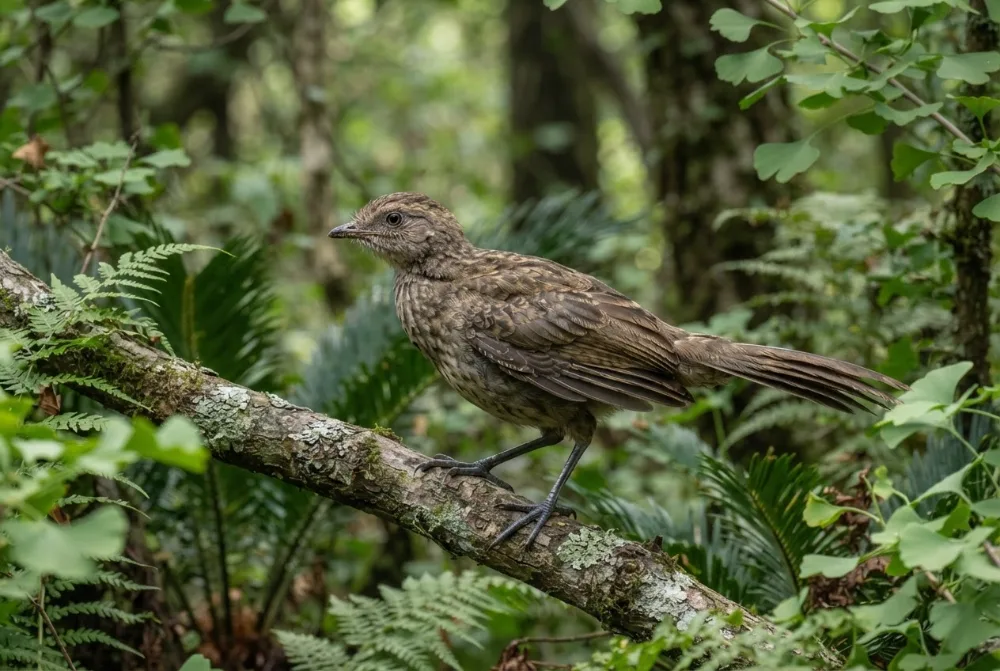
Yuornis is one of the most complete Late Cretaceous enantiornithine birds ever found, with a three-dimensionally preserved skull.1
Unlike most enantiornithines, Yuornis had no teeth. Its skull looked a lot like modern birds because it lost several bones, like the lacrimal and postorbital.1
The name Yuornis comes from 'Yu', the one-character abbreviation for Henan province in China, where it was discovered.1
Yuornis lived about 72 to 66 million years ago, during the very end of the Age of Dinosaurs.3
Its closest relative might be Gobipteryx, another toothless bird from the Late Cretaceous, but scientists are not sure because tooth loss evolved many times.1
Ku bazobereye muri dinozore
- Izina rya siyansi
- Yuornis
- Yiswe na
- Xu et al. 20213
- Itsinda
- Inyoni za mbere
- Umuryango / ishami
- Enantiornithes3
- Ishyirwa mu byiciro
- Theropoda > Avialae3
- Imyaka y'amabuye
- imyaka miliyoni 72 kugeza 66 (Maastrichtian)3
- Inzego z'amabuye
- Qiupa3
- Ibihugu
- Ubushinwa3
- Ibisigazwa byanditswe
- 1 muri The Paleobiology Database3
- Ivumburwa
- Yuornis was named in 2021 by Xu Li and colleagues. The species name junchangi honors paleontologist Lü Junchang. The fossil was found in the Qiupa Formation of Henan, China.12
- Biracyagibwaho impaka
- Scientists are not sure whether Yuornis belongs to the family Gobipterygidae, because the features linking it to that group are all related to tooth loss, which evolved many times separately.1
Aho amakuru yakuwe
- Yuornis (en.wikipedia.org)
- PBDB Taxon (paleobiodb.org)
- Yuornis in The Paleobiology Database (CC BY 4.0): imyaka, ahantu, inzego z'amabuye, ishyirwa mu byiciro.
Buri kintu kiri kuri uru rupapuro gifite nimero yerekana aho cyakuwe. Niba hari icyo twibeshye, tubabarire, turi abakunzi ba dinozore, ntituri ikinyamakuru cya siyansi. Tubwire kuri [email protected] tuzagikosora.
 Rex arashonje! Dino Wiki ni umushinga wa papa umwe yakoreye umuhungu we ukunda dinozore, ni ubuntu, nta matangazo kandi nta bigukurikirana. Abantu bakuru bashobora guha Rex akantu ko kurya kugira ngo Dino Wiki ikomeze kuboneka kuri interineti.Gaburira Rex
 Archaeopteryx
 Hesperornis
 Ichthyornis
 Baptornis
 Jurapteryx
 Gobipteryx
 Tyrannosaurus
 Triceratops
 Velociraptor
 Spinosaurus
 Ankylosaurus
 Parasaurolophus