 Uri dhino ripi? Kwizi
 Hondo yemadhino
 Mujaho wemadhino
 Mitambo midiki yemadhino
 Arubhamu yemasitika
 Rondedzero dzeTOP dzemadhino
 Ndishamise!
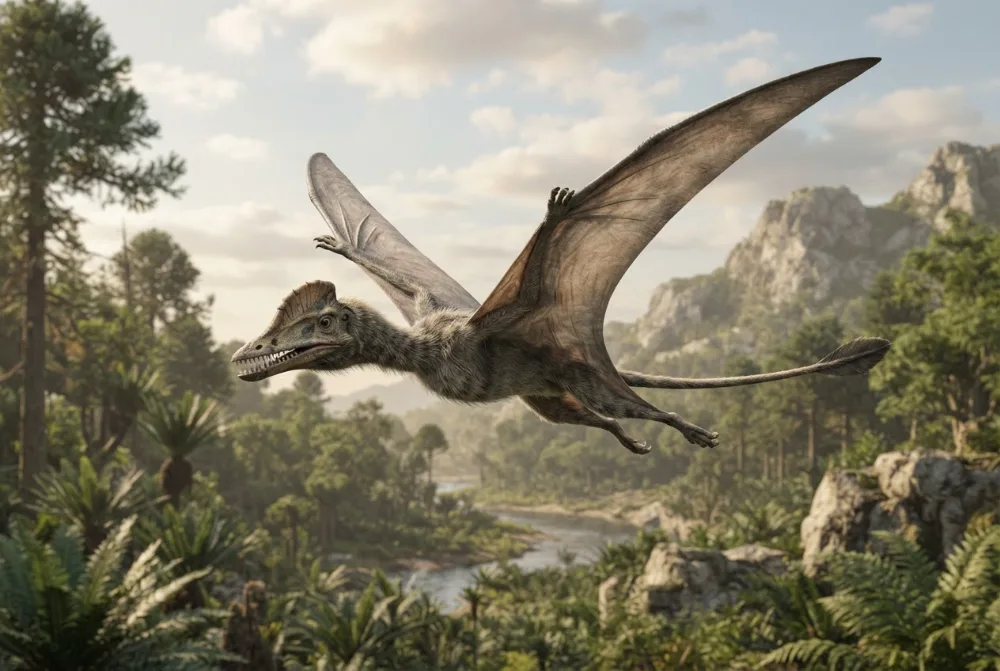
Austriadactylus
Austriadactylus was an early flying reptile with a long tail and a crest on its head. It lived about 215 million years ago in what is now Austria and Italy. This pterosaur had many different kinds of teeth, perfect for crunching hard-shelled bugs.12
Rairarama rini?
Raiva hombe sei?
Mapapiro aro aiva akapamhama zvakadii?
 kureba sekatsi dzemumba 2.5 kubva pamhino kusvika kumuswe⚽raigona kubhururuka richiyambuka nhandare yose yebhora mumasekonzi 9.7
Austriadactylus raiva hombe sei kana richienzaniswa NEWE?
Masvomhu chete mubrowser yako. Hapana chinochengetwa kana kutumirwa kupi zvako.
Raimhanya zvakadii?


Zvinonakidza
Austriadactylus had a bony crest on its head that started at the tip of its snout and went back to above its eye. The crest was about 2 cm tall.21
Its teeth were very different from each other. It had tall, pointed teeth at the front, blade-like teeth with tiny serrations in the middle, and triangular teeth with up to 12 small points at the back.2
Unlike many other long-tailed pterosaurs, Austriadactylus had a flexible tail without stiff rods made of bone.21
The only known fossil of Austriadactylus was found in an abandoned mine near Ankerschlag in Tyrol, Austria.21
Austriadactylus lived during the Late Triassic period, about 215 million years ago, in a shallow sea environment with islands.12
The name Austriadactylus cristatus means 'crested Austrian finger', referring to the wing finger and the crest on its head.1
Mibvunzo inonyanya kubvunzwa nezve Austriadactylus
?What did Austriadactylus eat?
It mostly ate hard-shelled bugs. Scientists can tell from the tiny scratches on its teeth that it crunched hard invertebrates.1
?How big was Austriadactylus?
Its wingspan was about 120 cm (47 inches), and its skull was 11 cm long. It was about the size of a crow.1
?Did Austriadactylus have a crest?
Yes, it had a bony crest on its head that started at the tip of its snout and went back to above its eye. The crest was about 2 cm tall.1
?Is Austriadactylus a dinosaur?
No, it is a pterosaur, which is a flying reptile that lived at the same time as dinosaurs but is not a dinosaur.1
Zvevanyanzvi vemadhino
- Zita resainzi
- Austriadactylus
- Akaripa zita:
- Dalla Vecchia et al. 20023
- Boka
- Zvinokambaira zvinobhururuka
- Mhuri / boka
- Pterosauria3
- Kurongwa kwemhuka
- Pterosauria3
- Zera rematombo
- makore mamiriyoni 215 kusvika 206 (Norian)3
- Mapoka ematombo
- Seefelder Schichten, Dolomia di Forni3
- Nyika
- Austria, Italy3
- Zvinyorwa zvemafosiri
- 2 mu The Paleobiology Database3
- Kuwanikwa
- Austriadactylus was named in 2002 by Fabio Marco Dalla Vecchia and colleagues. The fossil was found in an abandoned mine in Tyrol, Austria, and is stored at the State Museum of Natural History in Stuttgart, Germany.31
- Zvichiri kupokanwa
- Scientists are not sure if Austriadactylus is a close relative of Eudimorphodon or if it belongs to a different group. Some think it might even be the same animal as Eudimorphodon.1
Kunobva chokwadi
- Austriadactylus (en.wikipedia.org)
- vrpa_22_124.196_199.tp (doc.rero.ch)
- Austriadactylus in The Paleobiology Database (CC BY 4.0): zera, nzvimbo, mapoka ematombo, kurongwa kwemhuka.
Chokwadi chega chega papeji ino chine nhamba inoratidza kwachakabva. Kana takakanganisa chimwe chinhu, ruregerero, tiri vanoda madhino, kwete magazini yesainzi. Tiudze pa [email protected] tichazvigadzirisa.
 Rex ane nzara! Dino Wiki ipurojekiti yababa yemwanakomana wavo anoda madhino, mahara, pasina kushambadza uye pasina zvinokutevera. Vakuru vanogona kupa Rex chekudyadya kuti vabatsire kuchengeta saiti iri pamhepo.Fudza Rex
 Pteranodon
 Quetzalcoatlus
 Dorygnathus
 Rhamphorhynchus
 Anhanguera
 Pterodactylus
 Nothosaurus
 Massospondylus
 Plateosaurus
 Coelophysis
 Podokesaurus
 Simosaurus