 Uri dhino ripi? Kwizi
 Hondo yemadhino
 Mujaho wemadhino
 Mitambo midiki yemadhino
 Arubhamu yemasitika
 Rondedzero dzeTOP dzemadhino
 Ndishamise!
Aymberedactylus
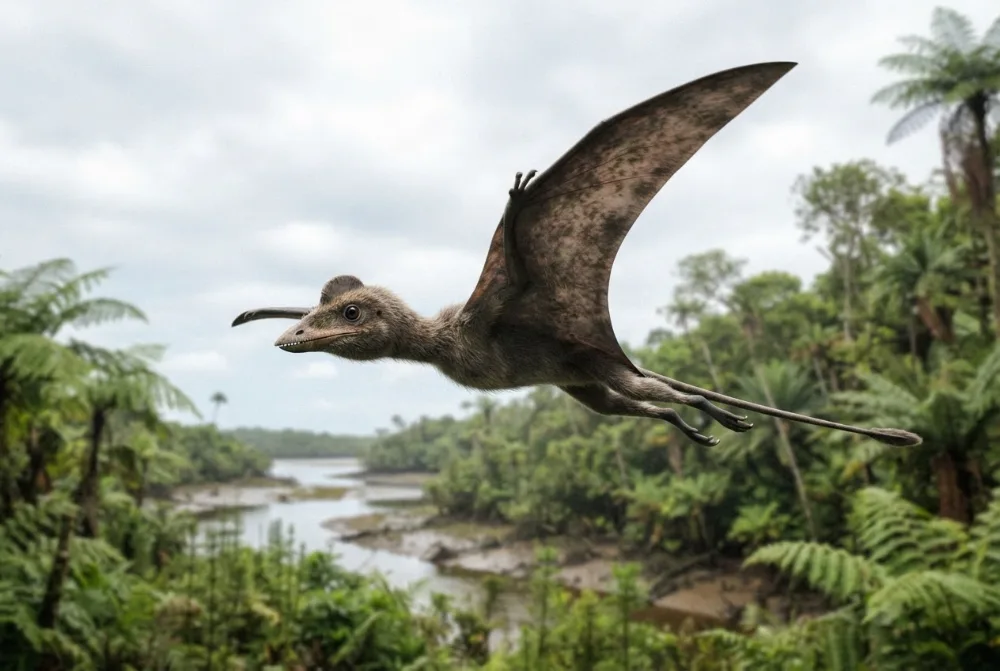
Aymberedactylus was a toothless flying reptile from the Early Cretaceous of Brazil. It had a short, downturned beak and probably ate fruits. Scientists think it was a small to medium-sized pterosaur with a wingspan of about 2 metres.1
Rairarama rini?
Raiva hombe sei?
Mapapiro aro aiva akapamhama zvakadii?
 kureba sekatsi dzemumba 4 kubva pamhino kusvika kumuswe⚽raigona kubhururuka richiyambuka nhandare yose yebhora mumasekonzi 7.9
Aymberedactylus raiva hombe sei kana richienzaniswa NEWE?
Masvomhu chete mubrowser yako. Hapana chinochengetwa kana kutumirwa kupi zvako.
Raimhanya zvakadii?


Zvinonakidza
Aymberedactylus is only known from one almost complete lower jaw (mandible). No other bones have been found.1
Its lower jaw is 27 centimetres long and is completely toothless.1
It had a very long retroarticular process (a part of the jaw joint) that was about 7% of the whole jaw length.1
The jaw had a shallow, rough-textured pit on the splenial bone that is unique to this species.1
Aymberedactylus belongs to the Tapejarinae group, which are toothless pterosaurs that often had big crests on their heads.1
It lived about 119 to 113 million years ago in a coastal lagoon environment.4
Mibvunzo inonyanya kubvunzwa nezve Aymberedactylus
?What did Aymberedactylus eat?
It probably ate fruits. Scientists think it was a frugivore, like other tapejarine pterosaurs with downturned beaks.2
?How big was Aymberedactylus?
It had a wingspan of about 2 metres (6.5 feet), which is typical for tapejarid pterosaurs. The only known fossil is a 27 centimetre long lower jaw.32
?Was Aymberedactylus a dinosaur?
No, it was a pterosaur, a flying reptile that lived at the same time as dinosaurs but is not a dinosaur itself.3
Zvevanyanzvi vemadhino
- Zita resainzi
- Aymberedactylus
- Akaripa zita:
- Pegas et al. 20164
- Boka
- Zvinokambaira zvinobhururuka
- Mhuri / boka
- Tapejaridae4
- Kurongwa kwemhuka
- Pterosauria > Pterodactyloidea4
- Zera rematombo
- makore mamiriyoni 120 kusvika 113 (Aptian)4
- Mapoka ematombo
- Crato4
- Nyika
- Brazil4
- Zvinyorwa zvemafosiri
- 1 mu The Paleobiology Database4
- Kuwanikwa
- Aymberedactylus cearensis was named in 2016 by R.V. Pêgas, M.E.C. Leal and A.W.A. Kellner based on a lower jaw found near Nova Olinda, Brazil. Its name means 'small lizard finger' from the Tupi language, referring to its small size and pterosaur features.1
- Zvichiri kupokanwa
- Since only a lower jaw has been found, scientists are not sure about the exact shape of its head crest or its full body size.1
Kunobva chokwadi
- A Basal Tapejarine (Pterosauria; Pterodactyloidea; Tapejaridae) from the Crato Formation, Early Cretaceous of Brazil (web.archive.org)
- A Basal Tapejarine (Pterosauria; Pterodactyloidea; Tapejaridae) from the Crato Formation, Early Cretaceous of Brazil | PLOS One (journals.plos.org)
- Aymberedactylus (en.wikipedia.org)
- Aymberedactylus in The Paleobiology Database (CC BY 4.0): zera, nzvimbo, mapoka ematombo, kurongwa kwemhuka.
Chokwadi chega chega papeji ino chine nhamba inoratidza kwachakabva. Kana takakanganisa chimwe chinhu, ruregerero, tiri vanoda madhino, kwete magazini yesainzi. Tiudze pa [email protected] tichazvigadzirisa.
 Rex ane nzara! Dino Wiki ipurojekiti yababa yemwanakomana wavo anoda madhino, mahara, pasina kushambadza uye pasina zvinokutevera. Vakuru vanogona kupa Rex chekudyadya kuti vabatsire kuchengeta saiti iri pamhepo.Fudza Rex
 Pteranodon
 Quetzalcoatlus
 Dorygnathus
 Rhamphorhynchus
 Anhanguera
 Pterodactylus
 Stegosaurus
 Iguanodon
 Archaeopteryx
 Giganotosaurus
 Microraptor
 Deinonychus