 Uri dhino ripi? Kwizi
 Hondo yemadhino
 Mujaho wemadhino
 Mitambo midiki yemadhino
 Arubhamu yemasitika
 Rondedzero dzeTOP dzemadhino
 Ndishamise!
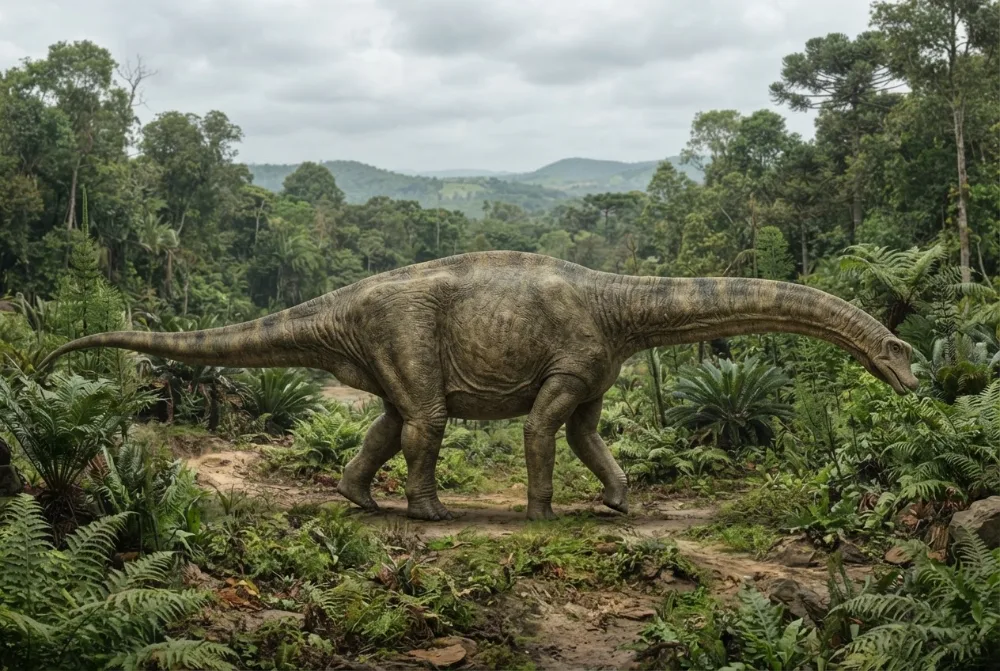
Barapasaurus
Barapasaurus was one of the very first giant long-necked dinosaurs. It lived in India about 190 million years ago and grew as long as a bus! Even though it was an early sauropod, it already had the long neck and big body that later giants like Brachiosaurus would have.1
Rairarama rini?
Raiva hombe sei?
Raiva refu zvakadii?
Raiva rakakwirira zvakadii?
fungidziro
Rairema zvakadii?
 kureba semotokari 3 dzakamiswa dzakatevedzana🍌kureba semabhanana 78 akatevedzana
 kurema kunenge senzou🍉kurema semanwiwa 1400🎒kurema semakirasi 9 akazara evana vechikoro🐻❄️kurema semabere echando 16🏃raigona kumhanya mamita 100 mumasekonzi 21 (munhu anomhanya kupfuura vose anoda 9.6)
Barapasaurus raiva hombe sei kana richienzaniswa NEWE?
Masvomhu chete mubrowser yako. Hapana chinochengetwa kana kutumirwa kupi zvako.
Raimhanya zvakadii?


Zvinonakidza
Barapasaurus is known from about 300 bones from at least six different individuals, making it one of the most complete early sauropods ever found.1
Its name means 'big-legged lizard' in several Indian languages, because a single thigh bone (femur) was over 1.7 metres (5.6 feet) long.1
No skull has ever been found, only a few teeth. The largest tooth is just 5.8 centimetres (2.3 inches) tall.1
The fossils were discovered in 1958 and dug up in 1960 and 1961, but the dinosaur was not officially named until 1975.1
Barapasaurus lived alongside another early sauropod called Kotasaurus, as well as some of the earliest mammals like Kotatherium.1
Its backbone already had hollow spaces and extra joints that helped support its huge body, a feature later sauropods perfected.1
Mibvunzo inonyanya kubvunzwa nezve Barapasaurus
?How big was Barapasaurus?
Barapasaurus was about 12 to 14 metres long and weighed around 7 tonnes. That is about as long as a bus.12
?What did Barapasaurus eat?
Barapasaurus was a herbivore, meaning it ate plants. Its spoon-shaped teeth were good for stripping leaves.12
?When did Barapasaurus live?
Barapasaurus lived during the Early Jurassic period, about 184 to 200 million years ago. Some scientists think it might have lived a bit later, in the Middle Jurassic.12
?Where was Barapasaurus found?
Barapasaurus fossils were found in central India, near the village of Pochampally. The first bones were discovered in 1958.1
?Why is it called Barapasaurus?
Barapasaurus means big legged lizard in several Indian languages. It got that name because its thigh bone was over 1.7 metres long.1
?Did Barapasaurus have a long neck?
Yes, Barapasaurus had a long neck, just like later sauropods. Its neck bones were elongated, which helped it reach high plants.1
Mubvisi wengano
Ngano: Barapasaurus had a tiny head like later sauropods such as Brachiosaurus.
Chokwadi: Scientists have not found a skull, only a few teeth, so we do not know what its head looked like.1
Zvevanyanzvi vemadhino
- Zita resainzi
- Barapasaurus
- Akaripa zita:
- Jain et al. 19753
- Boka
- Madhino emitsipa mirefu
- Mhuri / boka
- Gravisauria3
- Kurongwa kwemhuka
- Sauropodomorpha > Sauropoda3
- Zera rematombo
- makore mamiriyoni 200 kusvika 184 (Sinemurian / Pliensbachian)3
- Mapoka ematombo
- Kota3
- Nyika
- India3
- Zvinyorwa zvemafosiri
- 2 mu The Paleobiology Database3
- Kuwanikwa
- The first bones were found in 1958 near Pochampally, India. Most fossils were collected in 1960 and 1961, and the dinosaur was named Barapasaurus tagorei in 1975 by paleontologist Sohan Lal Jain and colleagues.1
- Zvichiri kupokanwa
- Scientists disagree on whether Barapasaurus was more primitive than the early sauropod Vulcanodon or more advanced. Some place it inside the group Eusauropoda, others outside it.1
Kunobva chokwadi
- Barapasaurus (en.wikipedia.org)
- Barapasaurus | Natural History Museum (nhm.ac.uk)
- Barapasaurus in The Paleobiology Database (CC BY 4.0): zera, nzvimbo, mapoka ematombo, kurongwa kwemhuka.
Chokwadi chega chega papeji ino chine nhamba inoratidza kwachakabva. Kana takakanganisa chimwe chinhu, ruregerero, tiri vanoda madhino, kwete magazini yesainzi. Tiudze pa [email protected] tichazvigadzirisa.
 Rex ane nzara! Dino Wiki ipurojekiti yababa yemwanakomana wavo anoda madhino, mahara, pasina kushambadza uye pasina zvinokutevera. Vakuru vanogona kupa Rex chekudyadya kuti vabatsire kuchengeta saiti iri pamhepo.Fudza Rex
 Brachiosaurus
 Diplodocus
 Brontosaurus
 Argentinosaurus
 Camarasaurus
 Morosaurus
 Dilophosaurus
 Stenopterygius
 Dorygnathus
 Scutellosaurus
 Sinosaurus
 Temnodontosaurus