 Uri dhino ripi? Kwizi
 Hondo yemadhino
 Mujaho wemadhino
 Mitambo midiki yemadhino
 Arubhamu yemasitika
 Rondedzero dzeTOP dzemadhino
 Ndishamise!
Caelestiventus
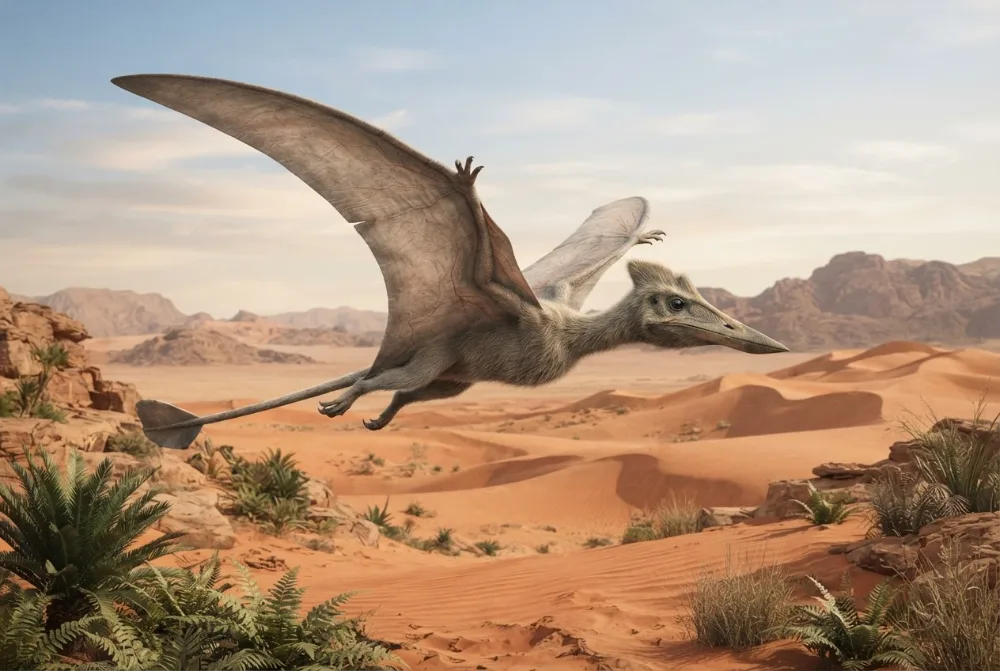
Caelestiventus was a flying reptile that lived in a hot desert during the Late Triassic, about 205 million years ago. It was one of the biggest pterosaurs of its time, with a wingspan over 1.5 meters (5 feet). Unlike most early pterosaurs, which are found in marine rocks, this one lived among sand dunes.21
Rairarama rini?
Raiva hombe sei?
Mapapiro aro aiva akapamhama zvakadii?
 kureba sekatsi dzemumba 3 kubva pamhino kusvika kumuswe⚽raigona kubhururuka richiyambuka nhandare yose yebhora mumasekonzi 7.3
Caelestiventus raiva hombe sei kana richienzaniswa NEWE?
Masvomhu chete mubrowser yako. Hapana chinochengetwa kana kutumirwa kupi zvako.
Raimhanya zvakadii?


Zvinonakidza
Caelestiventus is the only known desert-dwelling non-pterodactyloid pterosaur, and it is 65 million years older than any other desert pterosaur.21
Its skull was 17.8 centimeters (7 inches) long, and most of the skull bones were preserved in three dimensions, not squashed flat like most Triassic pterosaur fossils.1
The lower jaw of Caelestiventus was hollow and air-filled, with large openings that may have helped reduce weight for flight.1
It had three different kinds of teeth: long fang-like spikes at the front, large leaf-shaped blades, and tiny blades further back.1
The only known fossil includes most of the skull and the last finger bone of the wing, which supported the wingtip.1
Caelestiventus is closely related to Dimorphodon, a pterosaur from the Early Jurassic of Britain.21
The quarry where it was found also contained bones of crocodile-like reptiles, lizards, and small meat-eating dinosaurs.1
Mibvunzo inonyanya kubvunzwa nezve Caelestiventus
?Was Caelestiventus a dinosaur?
No, Caelestiventus was a pterosaur, a flying reptile, not a dinosaur.13
?How big was Caelestiventus?
It had a wingspan of at least 1.5 meters (4.9 feet) and a skull 17.8 centimeters (7 inches) long. It was one of the largest Triassic pterosaurs, and the only known specimen was not fully grown.1
?What did Caelestiventus eat?
Scientists are not sure, but its three kinds of teeth (fang-like spikes, leaf-shaped blades, and tiny blades) suggest it ate different foods, possibly insects or small animals.1
?Did Caelestiventus have feathers?
No, it did not have feathers. Like most pterosaurs, it was covered in small hair-like structures called pycnofibers.3
?When did Caelestiventus live?
It lived during the Late Triassic Period, about 205 million years ago.1
?Where was Caelestiventus found?
It was discovered in the Saints & Sinners Quarry in northeastern Utah, USA, in fossilized sand dunes.1
Zvevanyanzvi vemadhino
- Zita resainzi
- Caelestiventus
- Akaripa zita:
- Britt et al. 20184
- Boka
- Zvinokambaira zvinobhururuka
- Mhuri / boka
- Dimorphodontidae4
- Kurongwa kwemhuka
- Pterosauria4
- Zera rematombo
- makore mamiriyoni 237 kusvika 175 (Carnian / Toarcian)4
- Mapoka ematombo
- Nugget Sandstone4
- Nyika
- Amerika4
- Zvinyorwa zvemafosiri
- 1 mu The Paleobiology Database4
- Kuwanikwa
- The fossil was discovered in 2007 by Dan Chure and George Engelmann in the Nugget Sandstone of Utah. It was named in 2018 by Britt and colleagues, honoring Robin Hansen, a geologist who helped with the excavation.14
- Zvichiri kupokanwa
- Scientists are not sure if the hollow spaces in its skull and jaw were used for storing food, for making sounds, or for display.1
Kunobva chokwadi
- Caelestiventus (en.wikipedia.org)
- Caelestiventus hanseni gen. et sp. nov. extends the desert-dwelling pterosaur record back 65 million years | Nature Ecology & Evolution (nature.com)
- Caelestiventus hanseni - BYU Geology (geology.byu.edu)
- Caelestiventus in The Paleobiology Database (CC BY 4.0): zera, nzvimbo, mapoka ematombo, kurongwa kwemhuka.
Chokwadi chega chega papeji ino chine nhamba inoratidza kwachakabva. Kana takakanganisa chimwe chinhu, ruregerero, tiri vanoda madhino, kwete magazini yesainzi. Tiudze pa [email protected] tichazvigadzirisa.
 Rex ane nzara! Dino Wiki ipurojekiti yababa yemwanakomana wavo anoda madhino, mahara, pasina kushambadza uye pasina zvinokutevera. Vakuru vanogona kupa Rex chekudyadya kuti vabatsire kuchengeta saiti iri pamhepo.Fudza Rex
 Pteranodon
 Quetzalcoatlus
 Dorygnathus
 Rhamphorhynchus
 Anhanguera
 Pterodactylus
 Nothosaurus
 Massospondylus
 Plateosaurus
 Coelophysis
 Podokesaurus
 Simosaurus