 Uri dhino ripi? Kwizi
 Hondo yemadhino
 Mujaho wemadhino
 Mitambo midiki yemadhino
 Arubhamu yemasitika
 Rondedzero dzeTOP dzemadhino
 Ndishamise!
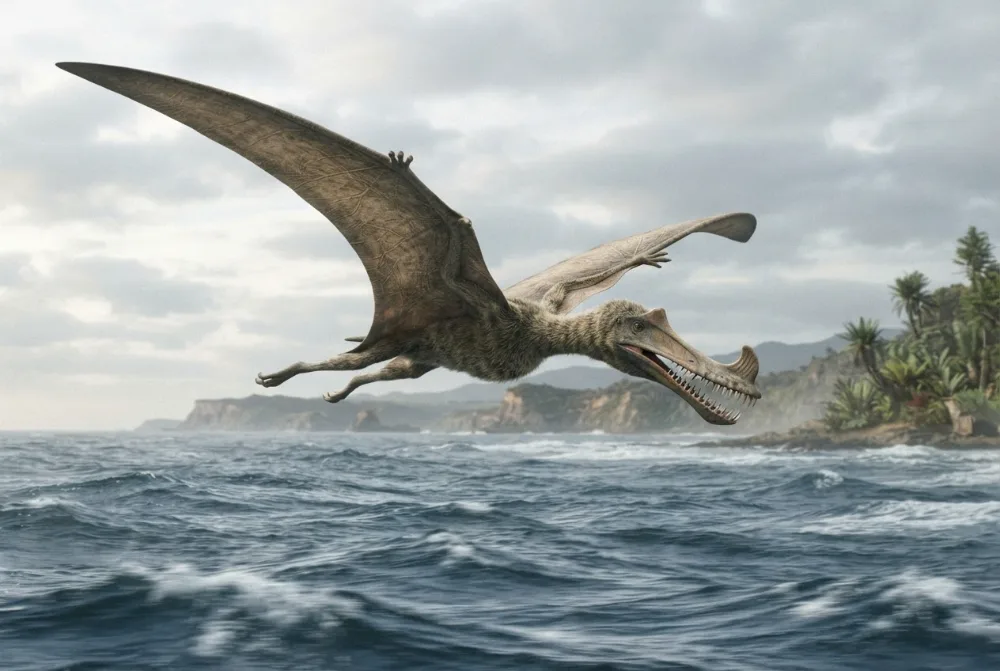
Coloborhynchus
Coloborhynchus was a flying reptile with a long, toothed snout that lived near the sea. It soared over the waves and snatched fish with its sharp teeth. Some scientists think it was one of the biggest toothed pterosaurs ever!1
Rairarama rini?
Raiva hombe sei?
Mapapiro aro aiva akapamhama zvakadii?
 mapapiro akapamhama semabhasikoro 4 akatevedzana⚽raigona kubhururuka richiyambuka nhandare yose yebhora mumasekonzi 4.8
Coloborhynchus raiva hombe sei kana richienzaniswa NEWE?
Masvomhu chete mubrowser yako. Hapana chinochengetwa kana kutumirwa kupi zvako.
Raimhanya zvakadii?


Zvinonakidza
Coloborhynchus lived about 140 to 94 million years ago, during the Cretaceous Period.4
Its name means 'maimed beak' because the first fossil found was a damaged snout.1
The first Coloborhynchus fossil was a piece of the upper jaw with tooth sockets, found in England.12
Coloborhynchus belonged to a group called Anhangueridae, which were fish-eating pterosaurs with crests on their snouts.41
Some scientists now think only one species, Coloborhynchus clavirostris, truly belongs to this genus.2
Fossils of Coloborhynchus have been found in both England and Morocco, showing it lived in different parts of the world.41
Coloborhynchus had a flat, squared-off tip on its upper jaw, which helped it catch fish.2
Mibvunzo inonyanya kubvunzwa nezve Coloborhynchus
?How big was Coloborhynchus?
It could have a wingspan of about 7 metres (23 feet), which is as long as a small boat. The largest toothed pterosaur specimen, Coloborhynchus capito, had a skull up to 75 centimetres long.13
?What did Coloborhynchus eat?
It ate fish, just like many other pterosaurs that lived near the sea. Its sharp teeth and long snout helped it catch them.1
?When did Coloborhynchus live?
It lived during the Early Cretaceous Period, about 140 to 94 million years ago.1
?Why is it called Coloborhynchus?
Its name means 'maimed beak' because the first fossil found was a damaged snout. The name was given by Richard Owen in 1874.1
Mubvisi wengano
Ngano: Coloborhynchus was the largest flying animal ever.
Chokwadi: It was once thought to be the largest toothed pterosaur, but a close relative called Tropeognathus is now believed to have had a bigger wingspan.1
Zvevanyanzvi vemadhino
- Zita resainzi
- Coloborhynchus
- Akaripa zita:
- Owen 18744
- Boka
- Zvinokambaira zvinobhururuka
- Mhuri / boka
- Anhangueridae4
- Kurongwa kwemhuka
- Pterosauria > Pterodactyloidea4
- Zera rematombo
- makore mamiriyoni 139 kusvika 94 (Berriasian / Cenomanian)4
- Mapoka ematombo
- Wessex, Ifezouane4
- Nyika
- Morocco, United Kingdom4
- Zvinyorwa zvemafosiri
- 5 mu The Paleobiology Database4
- Rinonziwo
- Amblydectes (mazita ekare zvino oonekwa semhuka imwe chete)4
- Kuwanikwa
- Richard Owen named Coloborhynchus in 1874 based on a partial snout from East Sussex, England. The fossil was damaged, so Owen called it 'maimed beak'.14
- Zvichiri kupokanwa
- Scientists are still debating which species belong to Coloborhynchus and which should be placed in other genera like Nicorhynchus or Uktenadactylus.2
Kunobva chokwadi
- Coloborhynchus (en.wikipedia.org)
- A taxonomic and phylogenetic review of the anhanguerid pterosaur group Coloborhynchinae and the new clade (ddd.uab.cat)
- The world’s largest toothed pterosaur, NHMUK R481, an incomplete rostrum of Coloborhynchus capito (Seeley, 1870) from the Cambridge Greensand of England (sciencedirect.com)
- Coloborhynchus in The Paleobiology Database (CC BY 4.0): zera, nzvimbo, mapoka ematombo, kurongwa kwemhuka.
Chokwadi chega chega papeji ino chine nhamba inoratidza kwachakabva. Kana takakanganisa chimwe chinhu, ruregerero, tiri vanoda madhino, kwete magazini yesainzi. Tiudze pa [email protected] tichazvigadzirisa.
 Rex ane nzara! Dino Wiki ipurojekiti yababa yemwanakomana wavo anoda madhino, mahara, pasina kushambadza uye pasina zvinokutevera. Vakuru vanogona kupa Rex chekudyadya kuti vabatsire kuchengeta saiti iri pamhepo.Fudza Rex
 Pteranodon
 Quetzalcoatlus
 Dorygnathus
 Rhamphorhynchus
 Anhanguera
 Pterodactylus
 Stegosaurus
 Iguanodon
 Archaeopteryx
 Giganotosaurus
 Microraptor
 Deinonychus