 Uri dhino ripi? Kwizi
 Hondo yemadhino
 Mujaho wemadhino
 Mitambo midiki yemadhino
 Arubhamu yemasitika
 Rondedzero dzeTOP dzemadhino
 Ndishamise!
Haliskia
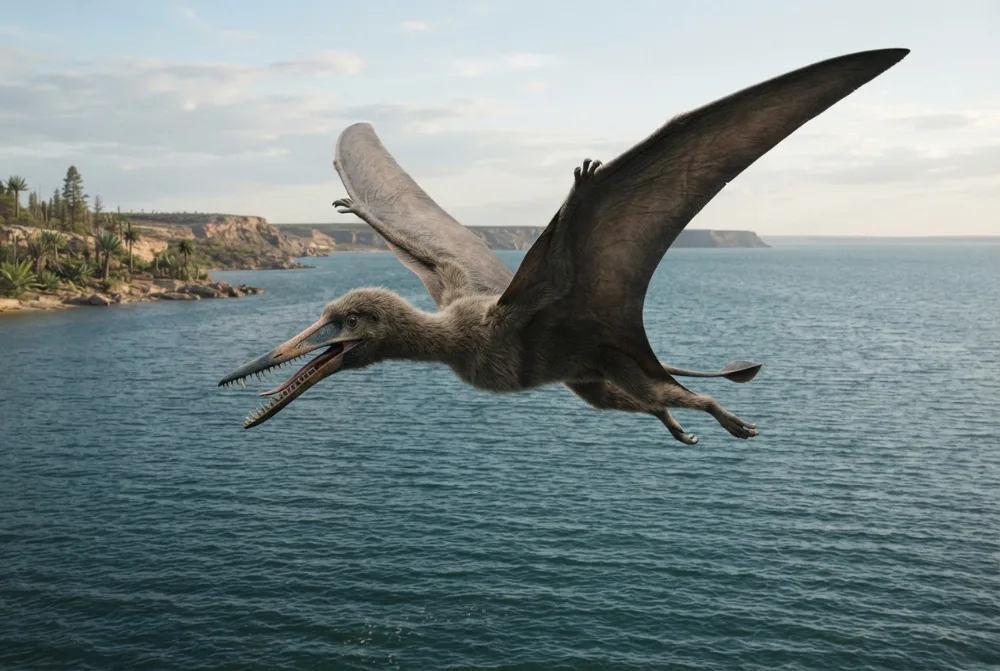
Haliskia was a flying reptile that soared over an ancient inland sea in Australia 100 million years ago. With a wingspan as wide as a car, it used its long, muscular tongue and curved teeth to catch slippery fish and squid. It is the most complete pterosaur skeleton ever found in Australia.12
Rairarama rini?
Raiva hombe sei?
Mapapiro aro aiva akapamhama zvakadii?
 mapapiro akapamhama semabhasikoro 2.5 akatevedzana⚽raigona kubhururuka richiyambuka nhandare yose yebhora mumasekonzi 5.7
Haliskia raiva hombe sei kana richienzaniswa NEWE?
Masvomhu chete mubrowser yako. Hapana chinochengetwa kana kutumirwa kupi zvako.
Raimhanya zvakadii?


Zvinonakidza
Haliskia is 22% complete, more than twice as complete as any other partial pterosaur skeleton from Australia.2
Its hyoid bone (the tongue bone) is 70% as long as its lower jaw, the highest ratio of any pterosaur known. This means Haliskia had a very strong, muscular tongue.1
The fossil was found in 2021 by Kevin Petersen, a museum curator, at a site called Dig Site 3 near Richmond, Queensland.12
Haliskia lived during the Albian age, about 106 to 100 million years ago, when much of Queensland was covered by a shallow inland sea.31
Its teeth are curved and interlock when the mouth closes, forming a trap that stopped fish from wriggling out.1
Haliskia belongs to a group called Anhangueria, which were pterosaurs with crests on their snouts and teeth that stuck out sideways.1
Mibvunzo inonyanya kubvunzwa nezve Haliskia
?How big was Haliskia?
About 4.6 metres (15 feet) across the wings, which is about as wide as a small car.12
?What did Haliskia eat?
It ate fish and soft-bodied animals like squid (cephalopods). Its curved, interlocking teeth formed a trap to stop slippery prey from escaping.12
?Is Haliskia a dinosaur?
No, it is a pterosaur, which is a flying reptile that lived at the same time as dinosaurs but is not a dinosaur.2
Zvevanyanzvi vemadhino
- Zita resainzi
- Haliskia
- Akaripa zita:
- Pentland et al. 20244
- Boka
- Zvinokambaira zvinobhururuka
- Mhuri / boka
- Anhangueridae4
- Kurongwa kwemhuka
- Pterosauria > Pterodactyloidea4
- Zera rematombo
- makore mamiriyoni 106 kusvika 100 (Albian)4
- Mapoka ematombo
- Toolebuc4
- Nyika
- Australia4
- Zvinyorwa zvemafosiri
- 1 mu The Paleobiology Database4
- Kuwanikwa
- Haliskia was discovered by Kevin Petersen, curator of Kronosaurus Korner museum, in November 2021 at a site in Queensland, Australia. It was named and described by Adele Pentland and colleagues in 2024.12
- Zvichiri kupokanwa
- Scientists are not sure whether Haliskia ate only fish or also soft-bodied animals like squid. Its teeth have few wear marks, which could mean it ate soft prey, but its 'fish grab' teeth suggest it caught fish too.1
Kunobva chokwadi
- Haliskia peterseni, a new anhanguerian pterosaur from the late Early Cretaceous of Australia | Scientific Reports (nature.com)
- No bones about it: 100-million-year-old bones reveal new species of pterosaur | Curtin University (curtin.edu.au)
- PBDB Taxon (paleobiodb.org)
- Haliskia in The Paleobiology Database (CC BY 4.0): zera, nzvimbo, mapoka ematombo, kurongwa kwemhuka.
Chokwadi chega chega papeji ino chine nhamba inoratidza kwachakabva. Kana takakanganisa chimwe chinhu, ruregerero, tiri vanoda madhino, kwete magazini yesainzi. Tiudze pa [email protected] tichazvigadzirisa.
 Rex ane nzara! Dino Wiki ipurojekiti yababa yemwanakomana wavo anoda madhino, mahara, pasina kushambadza uye pasina zvinokutevera. Vakuru vanogona kupa Rex chekudyadya kuti vabatsire kuchengeta saiti iri pamhepo.Fudza Rex
 Pteranodon
 Quetzalcoatlus
 Dorygnathus
 Rhamphorhynchus
 Anhanguera
 Pterodactylus
 Stegosaurus
 Iguanodon
 Archaeopteryx
 Giganotosaurus
 Microraptor
 Deinonychus