 Uri dhino ripi? Kwizi
 Hondo yemadhino
 Mujaho wemadhino
 Mitambo midiki yemadhino
 Arubhamu yemasitika
 Rondedzero dzeTOP dzemadhino
 Ndishamise!
Rairarama rini?

Raiva hombe sei?
Raiva refu zvakadii?
Raiva rakakwirira zvakadii?
fungidziro
Rairema zvakadii?

 kureba seimbwa 8 kubva pamhino kusvika kumuswe🍌kureba semabhanana 44 akatevedzanakurema seimbwa 80🍉kurema semanwiwa 320🧸kurema sevana vekireshi 84🎒kurema sevana vechikoro 50🐻❄️kurema semabere echando 4🏃raigona kumhanya mamita 100 mumasekonzi 12 (munhu anomhanya kupfuura vose anoda 9.6)
Mussaurus raiva hombe sei kana richienzaniswa NEWE?
Masvomhu chete mubrowser yako. Hapana chinochengetwa kana kutumirwa kupi zvako.
Raimhanya zvakadii?


Zvinonakidza
As it grew, Mussaurus changed from walking on all fours to walking on two legs.1
Scientists found over 100 eggs and 80 skeletons of Mussaurus together, showing they lived in herds.1
This dinosaur lived about 193 million years ago, during the Early Jurassic period.2
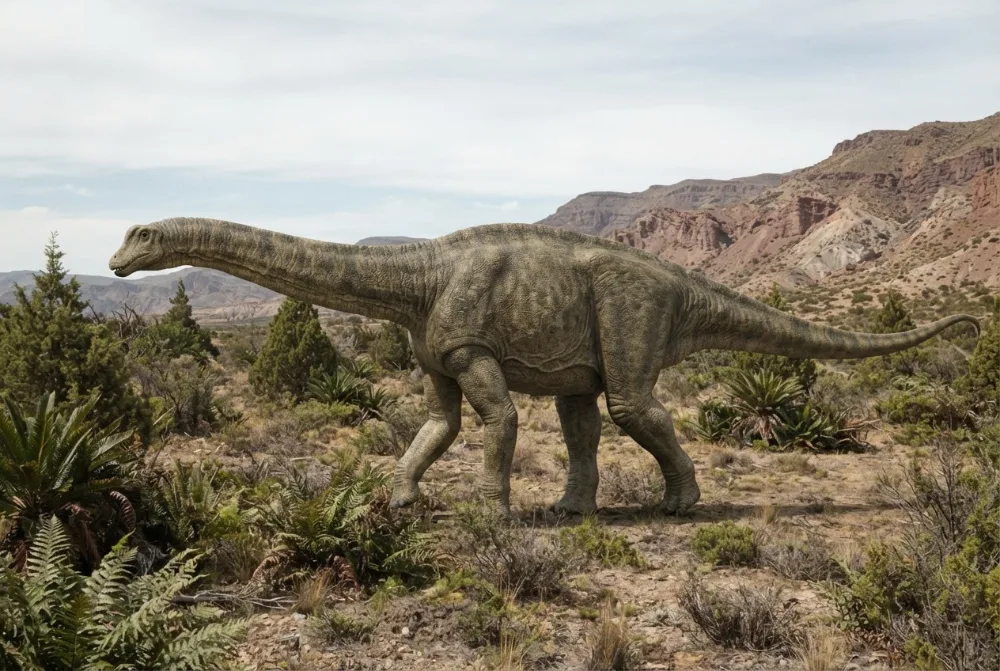
Adult Mussaurus could reach 8 metres (26 ft) long and weigh up to 1.6 metric tons (1.8 short tons).1
Mussaurus is one of the earliest dinosaurs known to have complex social behavior, like living in groups.1
Mibvunzo inonyanya kubvunzwa nezve Mussaurus
?What did Mussaurus eat?
Mussaurus was an herbivore, meaning it ate plants. It had a long neck to reach leaves and ferns.1
?How big was a baby Mussaurus?
Baby Mussaurus were tiny, about 20 centimetres long and weighing as little as a chicken egg, around 53 to 77 grams.1
?Did Mussaurus live in herds?
Yes, Mussaurus is the earliest dinosaur known to have lived in herds. Scientists found over 100 eggs and 80 skeletons together, showing they lived in age-segregated groups.145
?How fast could Mussaurus run?
Nobody knows for sure, but since adults walked on two legs and were medium-sized, they could probably move at a moderate jogging speed.1
?When did Mussaurus live?
Mussaurus lived about 193 million years ago, during the Early Jurassic period.15
?Why is it called Mussaurus?
Mussaurus means 'mouse lizard' because the first fossils found were tiny babies, about the size of a mouse.1
Mubvisi wengano
Ngano: Mussaurus was always a tiny dinosaur.
Chokwadi: Only the babies were tiny. Adults grew to be huge, up to 8 metres long.1
Zvevanyanzvi vemadhino
- Zita resainzi
- Mussaurus
- Akaripa zita:
- Bonaparte and Vince 19796
- Boka
- Madhino emitsipa mirefu
- Mhuri / boka
- Sauropodiformes6
- Kurongwa kwemhuka
- Sauropodomorpha6
- Zera rematombo
- makore mamiriyoni 200 kusvika 193 (Sinemurian)6
- Mapoka ematombo
- Laguna Colorada6
- Nyika
- Ajentina6
- Zvinyorwa zvemafosiri
- 2 mu The Paleobiology Database6
- Kuwanikwa
- Mussaurus was named by Jose Bonaparte and Martin Vince in 1979. They found tiny skeletons and eggs in the Laguna Colorada Formation in Argentina.23
- Zvichiri kupokanwa
- Scientists are still debating whether Mussaurus is a direct ancestor of the giant sauropods.1
Kunobva chokwadi
- Mussaurus (en.wikipedia.org)
- PBDB Taxon (paleobiodb.org)
- A M E G H I N I A N A (naturalhistory.si.edu)
- Earliest evidence of herd-living and age segregation amongst dinosaurs | Scientific Reports (nature.com)
- Fossil bonanza reveals earliest evidence of dinosaurs living in herds | National Geographic (nationalgeographic.com)
- Mussaurus in The Paleobiology Database (CC BY 4.0): zera, nzvimbo, mapoka ematombo, kurongwa kwemhuka.
Chokwadi chega chega papeji ino chine nhamba inoratidza kwachakabva. Kana takakanganisa chimwe chinhu, ruregerero, tiri vanoda madhino, kwete magazini yesainzi. Tiudze pa [email protected] tichazvigadzirisa.
 Rex ane nzara! Dino Wiki ipurojekiti yababa yemwanakomana wavo anoda madhino, mahara, pasina kushambadza uye pasina zvinokutevera. Vakuru vanogona kupa Rex chekudyadya kuti vabatsire kuchengeta saiti iri pamhepo.Fudza Rex
 Brachiosaurus
 Diplodocus
 Brontosaurus
 Argentinosaurus
 Camarasaurus
 Morosaurus
 Dilophosaurus
 Stenopterygius
 Dorygnathus
 Scutellosaurus
 Sinosaurus
 Temnodontosaurus