 Uri dhino ripi? Kwizi
 Hondo yemadhino
 Mujaho wemadhino
 Mitambo midiki yemadhino
 Arubhamu yemasitika
 Rondedzero dzeTOP dzemadhino
 Ndishamise!
Nichollssaura
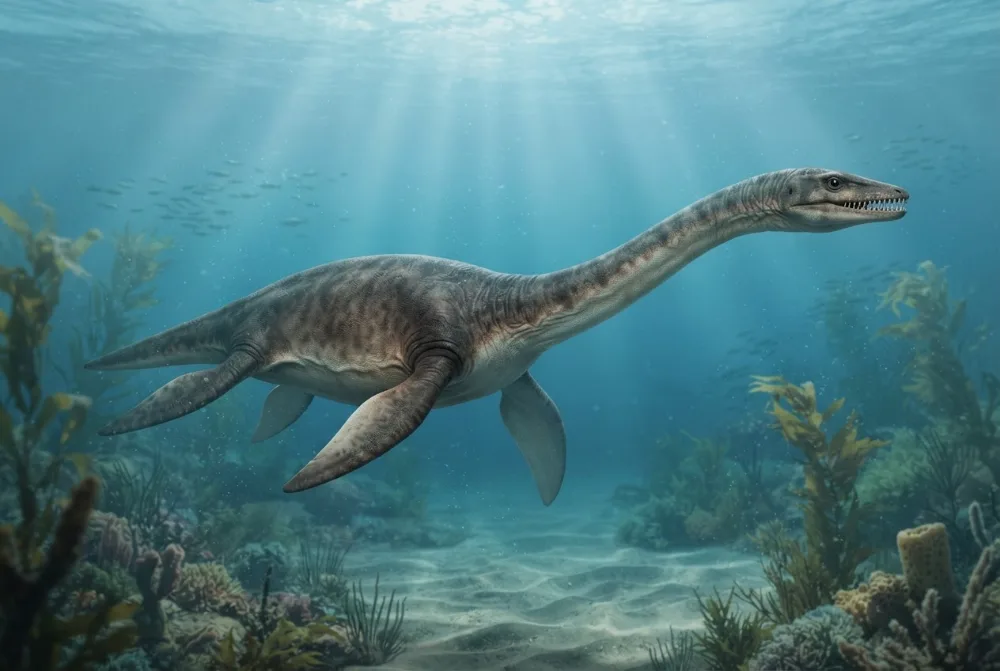
Nichollssaura was a small, fast-swimming marine reptile that lived in the ancient seas of North America. It had a long neck, four flippers, and a mouth full of sharp teeth for catching fish.1
Rairarama rini?
Raiva hombe sei?
Raiva refu zvakadii?
Rairema zvakadii?
 kureba seimbwa 3 kubva pamhino kusvika kumuswe🍌kureba semabhanana 16 akatevedzana🍉kurema semanwiwa 27🧸kurema sevana vekireshi 7🎒kurema sevana vechikoro 4🏊raigona kushambira kureba kwedziva guru rekushambira (50 m) mumasekonzi 6.4
Nichollssaura raiva hombe sei kana richienzaniswa NEWE?
Masvomhu chete mubrowser yako. Hapana chinochengetwa kana kutumirwa kupi zvako.
Raimhanya zvakadii?


Zvinonakidza
Nichollssaura fills a 40-million-year gap in the fossil record of North American plesiosaurs, meaning no plesiosaur fossils from that time were known before its discovery.1
The only known skeleton was accidentally discovered by a 100-ton electric shovel operator in an oilsand mine near Fort McMurray, Alberta, in 1994.1
The fossil is almost complete, missing only a few bones like the left forelimb and some ribs, which were lost when the shovel hit the skeleton.1
Inside the stomach of the Nichollssaura fossil, scientists found 165 gastroliths (stomach stones) made of chert and quartzite, which may have helped it digest food.1
The gastroliths in Nichollssaura are similar to those found in another plesiosaur from the same area, Wapuskanectes, suggesting both animals collected stones from the same ancient beaches.1
Zvevanyanzvi vemadhino
- Zita resainzi
- Nichollssaura
- Akaripa zita:
- Druckenmiller and Russell 20092
- Boka
- Mapresiosauro
- Mhuri / boka
- Leptocleididae2
- Kurongwa kwemhuka
- Plesiosauria > Sauropterygia2
- Zera rematombo
- makore mamiriyoni 113 kusvika 100 (Albian)2
- Mapoka ematombo
- Clearwater2
- Nyika
- Kanada2
- Zvinyorwa zvemafosiri
- 1 mu The Paleobiology Database2
- Kuwanikwa
- The fossil was discovered in 1994 by shovel operators Greg Fisher and Lorne Cundal in an oilsand mine near Fort McMurray, Alberta. It was named Nichollsia borealis in 2008 by Druckenmiller and Russell, but renamed Nichollssaura borealis in 2009 because the original name was already taken.12
- Zvichiri kupokanwa
- Scientists are not sure exactly where Nichollssaura collected its stomach stones, but they think it may have swum westward to gather rocks from the Cadomin Formation, which is 8 to 10 million years older than the plesiosaur itself.1
Kunobva chokwadi
- Nichollssaura (en.wikipedia.org)
- Nichollssaura in The Paleobiology Database (CC BY 4.0): zera, nzvimbo, mapoka ematombo, kurongwa kwemhuka.
Chokwadi chega chega papeji ino chine nhamba inoratidza kwachakabva. Kana takakanganisa chimwe chinhu, ruregerero, tiri vanoda madhino, kwete magazini yesainzi. Tiudze pa [email protected] tichazvigadzirisa.
 Rex ane nzara! Dino Wiki ipurojekiti yababa yemwanakomana wavo anoda madhino, mahara, pasina kushambadza uye pasina zvinokutevera. Vakuru vanogona kupa Rex chekudyadya kuti vabatsire kuchengeta saiti iri pamhepo.Fudza Rex
 Elasmosaurus
 Pliosaurus
 Plesiosaurus
 Cimoliasaurus
 Colymbosaurus
 Trinacromerum
 Stegosaurus
 Iguanodon
 Archaeopteryx
 Giganotosaurus
 Microraptor
 Deinonychus