 Uri dhino ripi? Kwizi
 Hondo yemadhino
 Mujaho wemadhino
 Mitambo midiki yemadhino
 Arubhamu yemasitika
 Rondedzero dzeTOP dzemadhino
 Ndishamise!
Ornithopsis
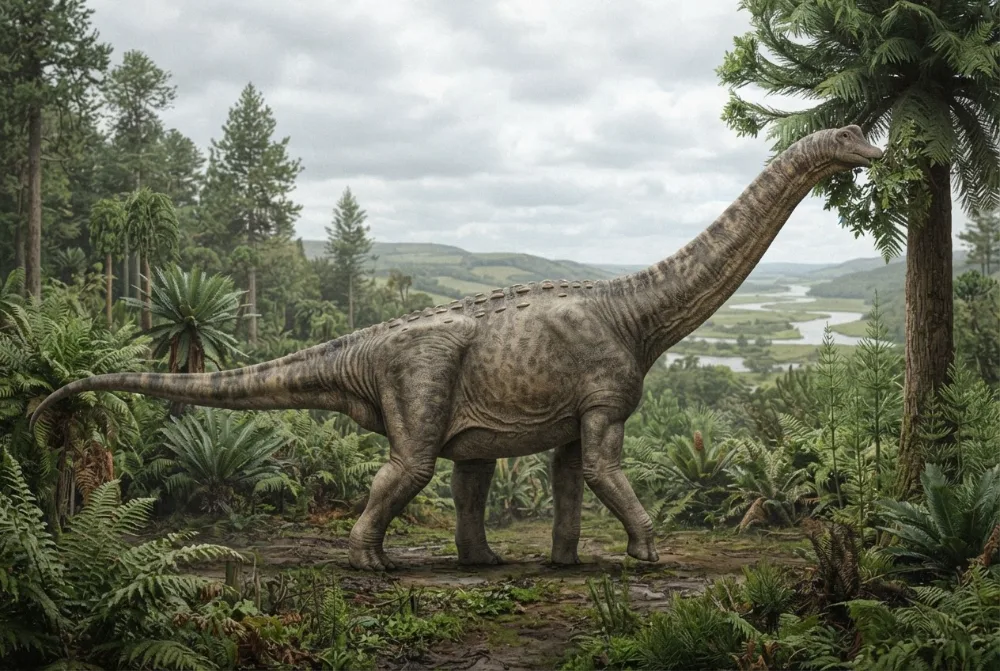
Ornithopsis was a huge, long-necked plant-eater that stomped through England and Germany during the Early Cretaceous. Its name means 'bird-likeness' because its back bones were hollow and filled with air sacs, just like birds have today.1
Rairarama rini?
Raiva hombe sei?
Raiva refu zvakadii?
Raiva rakakwirira zvakadii?
fungidziro
 kureba semotokari 4 dzakamiswa dzakatevedzana🍌kureba semabhanana 100 akatevedzana🏃raigona kumhanya mamita 100 mumasekonzi 28 (munhu anomhanya kupfuura vose anoda 9.6)
Ornithopsis raiva hombe sei kana richienzaniswa NEWE?
Masvomhu chete mubrowser yako. Hapana chinochengetwa kana kutumirwa kupi zvako.
Raimhanya zvakadii?


Zvinonakidza
Ornithopsis was one of the first dinosaurs whose bones were recognized as having air sacs, like modern birds and pterosaurs.1
The only known species is Ornithopsis hulkei, named after the scientist John Whitaker Hulke.1
Its back bones were very light because they were filled with big cavities called camellae.1
Scientists think Ornithopsis was about 16 to 18 metres long, as long as two school buses.1
A possible German fossil of Ornithopsis came from a slightly smaller individual.1
Ornithopsis belongs to a group of sauropods called Titanosauriformes, which includes some of the biggest land animals ever.1
Mibvunzo inonyanya kubvunzwa nezve Ornithopsis
?What does the name Ornithopsis mean?
Ornithopsis means 'bird-likeness' in Greek, named for its bird-like hollow bones. The name comes from 'ornis' (bird) and 'opsis' (likeness).12
?How big was Ornithopsis?
Ornithopsis was about 16 to 18 metres long. A possible German fossil came from a slightly smaller individual.13
?What did Ornithopsis eat?
Ornithopsis was a herbivore, eating tough vegetation with its chisel-like teeth. It was a long-necked browser.3
Mubvisi wengano
Ngano: Ornithopsis was a flying animal like a pterosaur.
Chokwadi: Ornithopsis was a sauropod dinosaur that walked on land. Its name 'bird-likeness' refers to its air-filled bones, not to flying.1
Zvevanyanzvi vemadhino
- Zita resainzi
- Ornithopsis
- Akaripa zita:
- Seeley 18704
- Boka
- Madhino emitsipa mirefu
- Mhuri / boka
- Titanosauriformes4
- Kurongwa kwemhuka
- Sauropodomorpha > Sauropoda > Macronaria4
- Zera rematombo
- makore mamiriyoni 145 kusvika 120 (Tithonian / Aptian)4
- Mapoka ematombo
- Wessex, Portland Stone4
- Nyika
- United Kingdom, Germany4
- Zvinyorwa zvemafosiri
- 6 mu The Paleobiology Database4
- Kuwanikwa
- Harry Govier Seeley named Ornithopsis in 1870 based on two vertebrae from the Isle of Wight, England. He thought it was a creature between pterosaurs and birds, but later scientists showed it was a sauropod dinosaur.1
- Zvichiri kupokanwa
- Scientists are not sure if the German fossil really belongs to Ornithopsis because it is poorly preserved.1
Kunobva chokwadi
- Ornithopsis (en.wikipedia.org)
- ORNITHOPSIS - DinoChecker dinosaur archive (dinochecker.com)
- Ornithopsis, an Isle of Wight Brachiosaur - DinoWight (dinowight.org.uk)
- Ornithopsis in The Paleobiology Database (CC BY 4.0): zera, nzvimbo, mapoka ematombo, kurongwa kwemhuka.
Chokwadi chega chega papeji ino chine nhamba inoratidza kwachakabva. Kana takakanganisa chimwe chinhu, ruregerero, tiri vanoda madhino, kwete magazini yesainzi. Tiudze pa [email protected] tichazvigadzirisa.
 Rex ane nzara! Dino Wiki ipurojekiti yababa yemwanakomana wavo anoda madhino, mahara, pasina kushambadza uye pasina zvinokutevera. Vakuru vanogona kupa Rex chekudyadya kuti vabatsire kuchengeta saiti iri pamhepo.Fudza Rex
 Brachiosaurus
 Diplodocus
 Brontosaurus
 Argentinosaurus
 Camarasaurus
 Morosaurus
 Stegosaurus
 Iguanodon
 Archaeopteryx
 Giganotosaurus
 Microraptor
 Deinonychus