 Uri dhino ripi? Kwizi
 Hondo yemadhino
 Mujaho wemadhino
 Mitambo midiki yemadhino
 Arubhamu yemasitika
 Rondedzero dzeTOP dzemadhino
 Ndishamise!
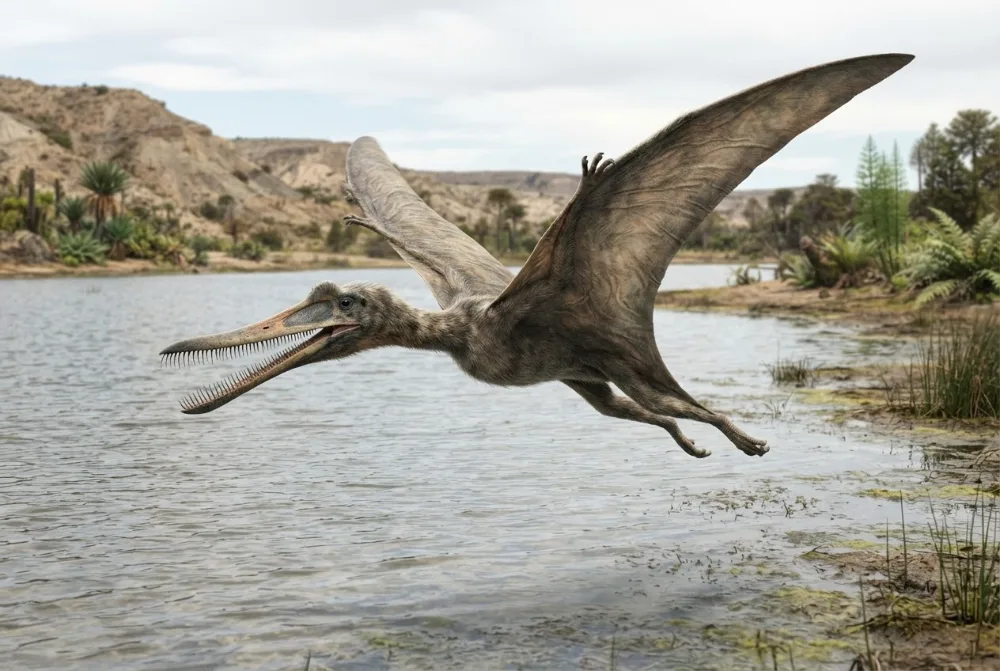
Pterodaustro
Pterodaustro was a flying reptile that lived near lakes in what is now Argentina. It had a weird mouth with about 1,000 long, bristle-like teeth in its lower jaw, just like a comb! It used those teeth to strain tiny shrimp and other small animals from the water, just like flamingos do today.12
Rairarama rini?
Raiva hombe sei?
Mapapiro aro aiva akapamhama zvakadii?
Rairema zvakadii?

 mapapiro akapamhama semabhasikoro 1.5 akatevedzana🍌kurema semabhanana 77⚽raigona kubhururuka richiyambuka nhandare yose yebhora mumasekonzi 6.8
Pterodaustro raiva hombe sei kana richienzaniswa NEWE?
Masvomhu chete mubrowser yako. Hapana chinochengetwa kana kutumirwa kupi zvako.
Raimhanya zvakadii?


Zvinonakidza
Pterodaustro had about 1,000 teeth in its lower jaw, each only 0.2 to 0.3 millimeters wide. That's thinner than a human hair!12
Scientists have found over 750 fossils of Pterodaustro, including eggs and embryos, making it one of the best-known pterosaurs.1
Pterodaustro had a long tail with 22 vertebrae, which is unusual for a pterodactyloid pterosaur. Most others have at most 16.1
Two Pterodaustro fossils were found with gizzard stones in their stomachs. These are the first gizzard stones ever reported for any pterosaur.1
Pterodaustro may have been pink like a flamingo! Its diet of tiny crustaceans could have given it a pink color, just like flamingos get from eating brine shrimp.12
Pterodaustro had a hard time taking off from the ground. Because of its long body and short legs, it needed a lot of open space to launch, like modern geese and swans.1
Juvenile Pterodaustro grew quickly in their first two years, reaching about half of adult size. They then grew more slowly for four to five years until they were fully grown.1
Mibvunzo inonyanya kubvunzwa nezve Pterodaustro
?How big was Pterodaustro?
It had a wingspan of about 3 metres (9 ft 10 in) and weighed about 9.2 kilograms (20 lb).1
?What did Pterodaustro eat?
It ate tiny shrimp, crustaceans, and other small water animals. It used its comb-like teeth to strain them from the water, just like flamingos do.214
?Could Pterodaustro swim?
Yes, it had a long body and large, splayed feet that were adaptations for swimming and wading in lakes.1
Mubvisi wengano
Ngano: Pterodaustro was a dinosaur.
Chokwadi: Pterodaustro was a pterosaur, a flying reptile that lived at the same time as dinosaurs but is not a dinosaur.1
Zvevanyanzvi vemadhino
- Zita resainzi
- Pterodaustro
- Akaripa zita:
- Bonaparte 19705
- Boka
- Zvinokambaira zvinobhururuka
- Mhuri / boka
- Lophocratia5
- Kurongwa kwemhuka
- Pterosauria > Pterodactyloidea5
- Zera rematombo
- makore mamiriyoni 121 kusvika 100 (Aptian / Albian)5
- Mapoka ematombo
- Lagarcito, La Cruz5
- Nyika
- Ajentina5
- Zvinyorwa zvemafosiri
- 2 mu The Paleobiology Database5
- Kuwanikwa
- The first fossils of Pterodaustro were discovered in the late 1960s by paleontologist José Bonaparte in the Lagarcito Formation of San Luis Province, Argentina. Bonaparte named the genus in 1970, with the species name P. guinazui honoring Román Guiñazú.1
- Zvichiri kupokanwa
- Scientists are still debating whether Pterodaustro was actually pink like a flamingo. While its diet suggests it could have been, no direct fossil evidence of color has been found.12
Kunobva chokwadi
- Pterodaustro (en.wikipedia.org)
- Pterosaur of the Day: Pterodaustro | AMNH (amnh.org)
- PBDB Taxon (paleobiodb.org)
- Pterodaustro guinazui (amnh.org)
- Pterodaustro in The Paleobiology Database (CC BY 4.0): zera, nzvimbo, mapoka ematombo, kurongwa kwemhuka.
Chokwadi chega chega papeji ino chine nhamba inoratidza kwachakabva. Kana takakanganisa chimwe chinhu, ruregerero, tiri vanoda madhino, kwete magazini yesainzi. Tiudze pa [email protected] tichazvigadzirisa.
 Rex ane nzara! Dino Wiki ipurojekiti yababa yemwanakomana wavo anoda madhino, mahara, pasina kushambadza uye pasina zvinokutevera. Vakuru vanogona kupa Rex chekudyadya kuti vabatsire kuchengeta saiti iri pamhepo.Fudza Rex
 Pteranodon
 Quetzalcoatlus
 Dorygnathus
 Rhamphorhynchus
 Anhanguera
 Pterodactylus
 Stegosaurus
 Iguanodon
 Archaeopteryx
 Giganotosaurus
 Microraptor
 Deinonychus