 Uri dhino ripi? Kwizi
 Hondo yemadhino
 Mujaho wemadhino
 Mitambo midiki yemadhino
 Arubhamu yemasitika
 Rondedzero dzeTOP dzemadhino
 Ndishamise!
Rairarama rini?

Raiva hombe sei?
Raiva refu zvakadii?
Raiva rakakwirira zvakadii?
Rairema zvakadii?
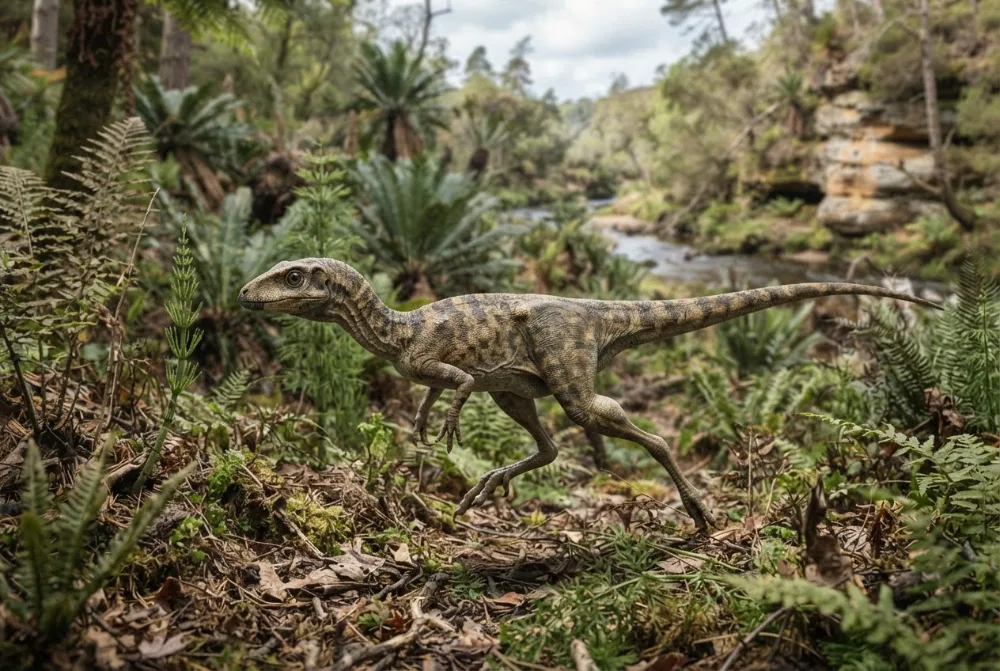
 kureba sekatsi dzemumba 2 kubva pamhino kusvika kumuswe🍌kureba semabhanana 6 akatevedzana🪶kureruka kupfuura katsi yemumba🍌kurema semabhanana 8🪑diki zvekugona kufamba pasi pechigaro🏃raigona kumhanya mamita 100 mumasekonzi 24 (munhu anomhanya kupfuura vose anoda 9.6)
Saltopus raiva hombe sei kana richienzaniswa NEWE?
Masvomhu chete mubrowser yako. Hapana chinochengetwa kana kutumirwa kupi zvako.
Raimhanya zvakadii?


Zvinonakidza
Saltopus had hollow bones, just like birds and many other dinosaurs, which made it light and fast.1
The only known fossil of Saltopus was discovered in 1867 by William Taylor, but it was not named until 1910 by Friedrich von Huene.1
Saltopus had five fingers on each hand, but the fourth and fifth fingers were smaller than the others.1
Scientists are not sure if Saltopus was a true dinosaur or a very close relative. Some think it might be the closest relative of all dinosaurs.1
The fossil of Saltopus is mostly impressions and natural casts in sandstone, with very little actual bone preserved.1
Saltopus lived between 237 and 205 million years ago, during the Carnian to Norian stages of the Late Triassic.3
Mibvunzo inonyanya kubvunzwa nezve Saltopus
?How big was Saltopus?
About 80 to 100 centimetres (31 to 39 inches) long, about the size of a domestic cat. It may have weighed around 1 kilogram (2.2 pounds).1
?Was Saltopus a dinosaur?
Scientists are not sure. It is a dinosauriform, a close relative of dinosaurs, and some studies think it might be the closest relative of true dinosaurs, while others think it was an early archosaur.1
?What did Saltopus eat?
It was a carnivore, or meat-eater, and it may have eaten mostly insects and other small prey.2
?When did Saltopus live?
It lived during the Late Triassic period, about 237 to 205 million years ago.1
?Where was Saltopus found?
Its only fossil was found in Scotland, in the Lossiemouth Sandstone Formation.1
?Why is it called Saltopus?
The name means 'hopping foot', from Latin and Greek words, because it probably hopped or jumped around.1
Zvevanyanzvi vemadhino
- Zita resainzi
- Saltopus
- Akaripa zita:
- Huene 19103
- Boka
- Madhinosori ekutanga
- Mhuri / boka
- Saurischia3
- Zera rematombo
- makore mamiriyoni 237 kusvika 206 (Carnian / Norian)3
- Mapoka ematombo
- Lossiemouth Sandstone3
- Nyika
- United Kingdom3
- Zvinyorwa zvemafosiri
- 1 mu The Paleobiology Database3
- Kuwanikwa
- The only fossil of Saltopus was found in 1867 by William Taylor in Scotland. It was first thought to be another animal, but in 1910 Friedrich von Huene named it Saltopus elginensis.1
- Zvichiri kupokanwa
- Scientists still debate whether Saltopus was a true dinosaur or a dinosauriform (a close relative). Some recent studies suggest it might be one of the earliest ornithischian dinosaurs.1
Kunobva chokwadi
- Saltopus (en.wikipedia.org)
- Saltopus Fact Sheet (enchantedlearning.com)
- Saltopus in The Paleobiology Database (CC BY 4.0): zera, nzvimbo, mapoka ematombo, kurongwa kwemhuka.
Chokwadi chega chega papeji ino chine nhamba inoratidza kwachakabva. Kana takakanganisa chimwe chinhu, ruregerero, tiri vanoda madhino, kwete magazini yesainzi. Tiudze pa [email protected] tichazvigadzirisa.
 Rex ane nzara! Dino Wiki ipurojekiti yababa yemwanakomana wavo anoda madhino, mahara, pasina kushambadza uye pasina zvinokutevera. Vakuru vanogona kupa Rex chekudyadya kuti vabatsire kuchengeta saiti iri pamhepo.Fudza Rex
 Herrerasaurus
 Tawa
Tawa Chindesaurus
 Nyasasaurus
 Staurikosaurus
 Alwalkeria
 Nothosaurus
 Massospondylus
 Plateosaurus
 Coelophysis
 Podokesaurus
 Simosaurus