 Uri dhino ripi? Kwizi
 Hondo yemadhino
 Mujaho wemadhino
 Mitambo midiki yemadhino
 Arubhamu yemasitika
 Rondedzero dzeTOP dzemadhino
 Ndishamise!
Umoonasaurus
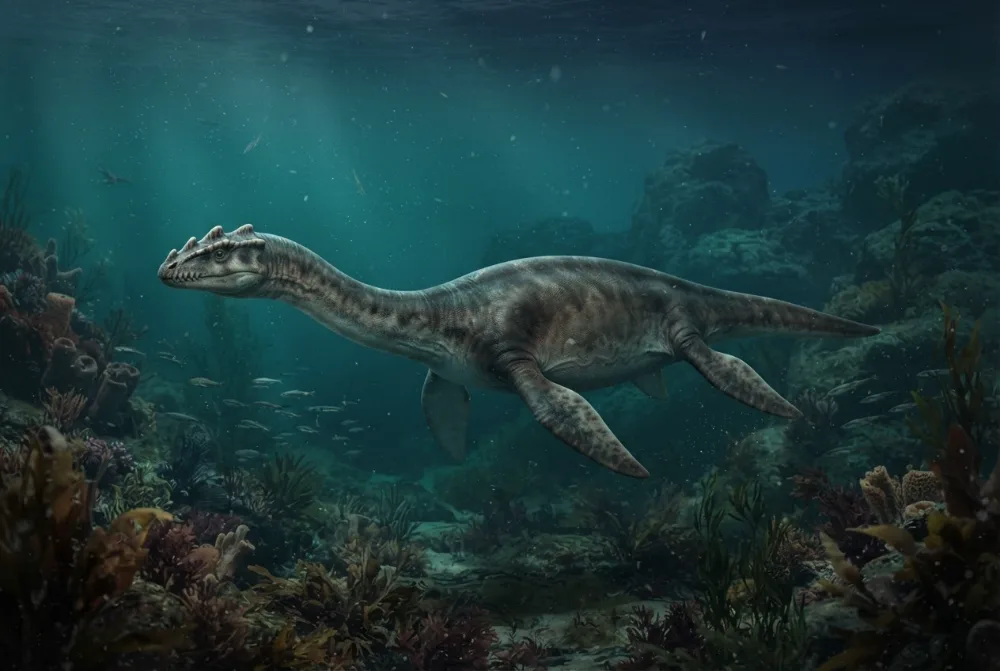
Umoonasaurus was a small, crested marine reptile that swam in cold seas near Antarctica about 115 million years ago. It had three bony crests on its head, like a tiny underwater dinosaur, but it was actually a plesiosaur, not a dinosaur. Its fossils are famous because they are preserved in beautiful blue opal.12
Rairarama rini?
Raiva hombe sei?
Raiva refu zvakadii?
 kureba seimbwa 2.5 kubva pamhino kusvika kumuswe🍌kureba semabhanana 14 akatevedzana🏊raigona kushambira kureba kwedziva guru rekushambira (50 m) mumasekonzi 6.9
Umoonasaurus raiva hombe sei kana richienzaniswa NEWE?
Masvomhu chete mubrowser yako. Hapana chinochengetwa kana kutumirwa kupi zvako.
Raimhanya zvakadii?


Zvinonakidza
Umoonasaurus is known from several partial skeletons, and one of them is the most complete opalized vertebrate fossil ever found.1
It had three thin, blade-like crests on its skull: one along the top of its snout and a pair above its eyes. These crests may have been used for display, like a peacock's tail.1
Umoonasaurus lived in a cold, high-latitude inland sea near the South Pole, where water temperatures were near freezing.12
It was a small plesiosaur, only about 2.5 metres (8 feet) long as an adult. A juvenile specimen was less than 1 metre long.1
Umoonasaurus is the most primitive and also the last surviving member of its group, the rhomaleosaurids. It lived about 115 million years ago.12
Its tail ended in a 'pygostyle-like' structure made of fused vertebrae, similar to the tail tip of some modern birds.1
Mibvunzo inonyanya kubvunzwa nezve Umoonasaurus
?What did Umoonasaurus eat?
Umoonasaurus ate small fish. Preserved gut contents show it ate small teleost fish.1
?Why did Umoonasaurus have crests?
Scientists think the three crests on its skull were used for display, like a peacock's tail, to help recognise each other or attract mates. They were too fragile for fighting.1
Zvevanyanzvi vemadhino
- Zita resainzi
- Umoonasaurus
- Akaripa zita:
- Kear et al. 20065
- Boka
- Mapresiosauro
- Mhuri / boka
- Leptocleididae5
- Kurongwa kwemhuka
- Plesiosauria > Sauropterygia5
- Zera rematombo
- makore mamiriyoni 121 kusvika 100 (Aptian / Albian)5
- Mapoka ematombo
- Bulldog Shale5
- Nyika
- Australia5
- Zvinyorwa zvemafosiri
- 4 mu The Paleobiology Database5
- Kuwanikwa
- Umoonasaurus was named in 2006 by Benjamin Kear and colleagues. The holotype skeleton, nicknamed 'Eric', was bought by public donations and is preserved in opal from the Zorba Extension Opal Field near Coober Pedy, Australia.1
- Zvichiri kupokanwa
- Scientists are not sure what the three crests on its head were used for. They were too fragile for fighting, so they might have been for display or recognizing other Umoonasaurus.1
Kunobva chokwadi
- An archaic crested plesiosaur in opal from the Lower Cretaceous high-latitude deposits of Australia (pmc.ncbi.nlm.nih.gov)
- An archaic crested plesiosaur in opal from the Lower Cretaceous high-latitude deposits of Australia (royalsocietypublishing.org)
- Umoonasaurus (en.wikipedia.org)
- Umoonasaurus demoscyllus - The Australian Museum (australian.museum)
- Umoonasaurus in The Paleobiology Database (CC BY 4.0): zera, nzvimbo, mapoka ematombo, kurongwa kwemhuka.
Chokwadi chega chega papeji ino chine nhamba inoratidza kwachakabva. Kana takakanganisa chimwe chinhu, ruregerero, tiri vanoda madhino, kwete magazini yesainzi. Tiudze pa [email protected] tichazvigadzirisa.
 Rex ane nzara! Dino Wiki ipurojekiti yababa yemwanakomana wavo anoda madhino, mahara, pasina kushambadza uye pasina zvinokutevera. Vakuru vanogona kupa Rex chekudyadya kuti vabatsire kuchengeta saiti iri pamhepo.Fudza Rex
 Elasmosaurus
 Pliosaurus
 Plesiosaurus
 Cimoliasaurus
 Colymbosaurus
 Trinacromerum
 Stegosaurus
 Iguanodon
 Archaeopteryx
 Giganotosaurus
 Microraptor
 Deinonychus