 Uri dhino ripi? Kwizi
 Hondo yemadhino
 Mujaho wemadhino
 Mitambo midiki yemadhino
 Arubhamu yemasitika
 Rondedzero dzeTOP dzemadhino
 Ndishamise!
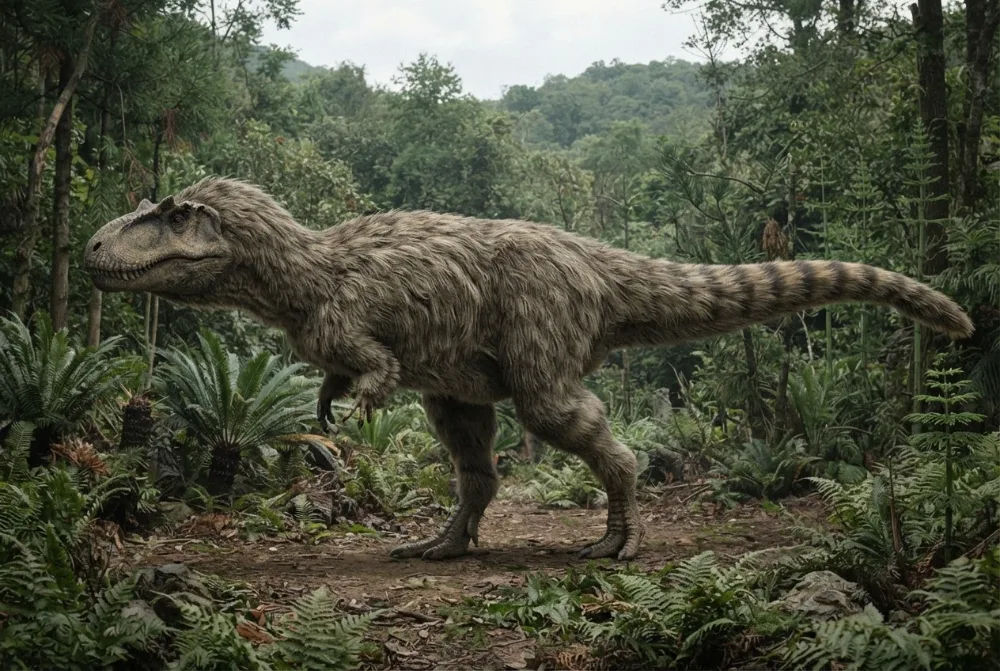
Yutyrannus
Yutyrannus was a big, feathered dinosaur that lived in China about 125 million years ago. It was a cousin of T. rex, but it had feathers all over its body. Scientists found three nearly complete skeletons, which helps us learn a lot about this amazing creature.21
Rairarama rini?
Raiva hombe sei?
Raiva refu zvakadii?
Raiva rakakwirira zvakadii?
Rairema zvakadii?

 kureba semotokari 2 dzakamiswa dzakatevedzana🍌kureba semabhanana 56 akatevedzana🍉kurema semanwiwa 280🧸kurema sevana vekireshi 74🎒kurema sevana vechikoro 44🐻❄️kurema semabere echando 3🏃raigona kumhanya mamita 100 mumasekonzi 11 (munhu anomhanya kupfuura vose anoda 9.6)
Yutyrannus raiva hombe sei kana richienzaniswa NEWE?
Masvomhu chete mubrowser yako. Hapana chinochengetwa kana kutumirwa kupi zvako.
Raimhanya zvakadii?


Zvinonakidza
Yutyrannus is the largest dinosaur ever found with direct evidence of feathers. It was about 40 times heavier than the previous record holder, Beipiaosaurus.1
The feathers of Yutyrannus were long and filamentous, up to 20 centimetres (7.9 inches) long. They may have covered most of its body.1
Yutyrannus lived during the early Cretaceous period, about 125 million years ago. That is about 55 million years before T. rex appeared.21
The three known Yutyrannus fossils were found together, which suggests they may have lived and hunted in packs.1
Yutyrannus had a bite force of about 2,405 newtons (540 pounds-force). That is strong, but much weaker than the bite of T. rex.1
The climate where Yutyrannus lived was cool, with an average annual temperature of about 10 °C (50 °F). Its feathers may have helped keep it warm.1
Mibvunzo inonyanya kubvunzwa nezve Yutyrannus
?Did Yutyrannus have feathers?
Yes. Fossil imprints show it had long, filamentous feathers up to 20 centimetres long, making it the largest dinosaur with direct evidence of feathers.21
?What did Yutyrannus eat?
It was a carnivore, meaning it ate meat. It may have hunted in packs to take down large prey like sauropods.3
?Was Yutyrannus bigger than T. rex?
No. Yutyrannus was about 7.5 to 10 metres long, while T. rex could grow to over 12 metres. T. rex was larger.3
?When did Yutyrannus live?
It lived during the Early Cretaceous period, about 125 million years ago. That is about 55 million years before T. rex appeared.31
?Where was Yutyrannus found?
Its fossils were found in Liaoning Province, northeastern China, in rocks of the Yixian Formation.31
?Why did Yutyrannus have a crest?
The wavy crest on its snout was probably used for display, like to attract mates or show off.14
?How fast could Yutyrannus run?
Scientists are not sure exactly, but its short foot was not specialized for running, so it was probably not very fast.1
Zvevanyanzvi vemadhino
- Zita resainzi
- Yutyrannus
- Akaripa zita:
- Xu et al. 20125
- Boka
- Matiranosauro
- Mhuri / boka
- Proceratosauridae5
- Kurongwa kwemhuka
- Theropoda > Tyrannosauroidea5
- Zera rematombo
- makore mamiriyoni 126 kusvika 120 (Barremian / Aptian)5
- Mapoka ematombo
- Yixian5
- Nyika
- China5
- Zvinyorwa zvemafosiri
- 1 mu The Paleobiology Database5
- Kuwanikwa
- Yutyrannus was named and described by Xu Xing and colleagues in 2012. The three fossils were bought from a fossil dealer who said they came from a single quarry in Liaoning, China.1
- Zvichiri kupokanwa
- Scientists are not sure if the feathers covered the whole body or only certain parts. They also debate whether later, larger tyrannosaurs like T. rex had feathers as adults.1
Kunobva chokwadi
- Yutyrannus (en.wikipedia.org)
- A gigantic feathered dinosaur from the Lower Cretaceous of China | Nature (nature.com)
- Yutyrannus | Natural History Museum (nhm.ac.uk)
- Dinosaurs - Yutyrannus huali - The Australian Museum (australian.museum)
- Yutyrannus in The Paleobiology Database (CC BY 4.0): zera, nzvimbo, mapoka ematombo, kurongwa kwemhuka.
Chokwadi chega chega papeji ino chine nhamba inoratidza kwachakabva. Kana takakanganisa chimwe chinhu, ruregerero, tiri vanoda madhino, kwete magazini yesainzi. Tiudze pa [email protected] tichazvigadzirisa.
 Rex ane nzara! Dino Wiki ipurojekiti yababa yemwanakomana wavo anoda madhino, mahara, pasina kushambadza uye pasina zvinokutevera. Vakuru vanogona kupa Rex chekudyadya kuti vabatsire kuchengeta saiti iri pamhepo.Fudza Rex
 Tyrannosaurus
 Tarbosaurus
 Albertosaurus
 Daspletosaurus
 Gorgosaurus
 Alectrosaurus
 Stegosaurus
 Iguanodon
 Archaeopteryx
 Giganotosaurus
 Microraptor
 Deinonychus