 Kuizi: Çfarë dinozauri je?
 Beteja e dinozaurëve
 Gara e dinozaurëve
 Minilojëra me dinozaurë
 Albumi i stikerave
 Listat TOP të dinozaurëve
 Më surprizo!
Vallibonavenatrix
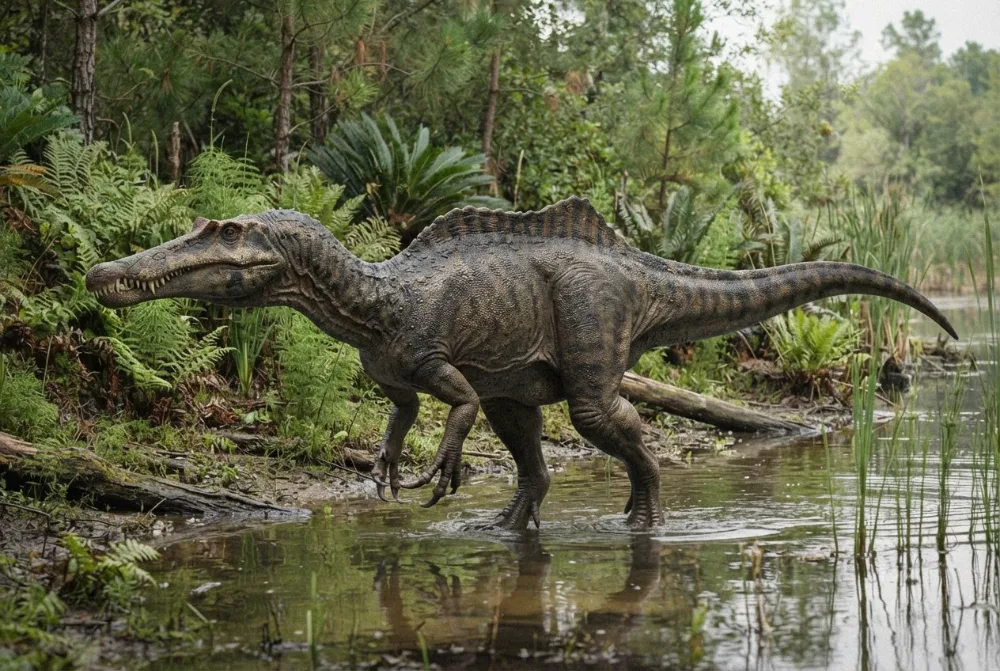
Vallibonavenatrix was a medium-sized spinosaurid dinosaur that lived in what is now Spain during the Early Cretaceous. It had a long, crocodile-like snout and probably ate fish, just like its bigger cousin Spinosaurus. This dinosaur is the most complete spinosaur ever found in the Iberian Peninsula.1
Kur jetoi?
Sa i madh ishte?
Sa i gjatë ishte?
Sa i lartë ishte?
Sa i rëndë ishte?
 i gjatë sa 7 qen nga hunda te bishti🍌i gjatë sa 39 banane njëra pas tjetrës🍉i rëndë sa 200 shalqinj🧸i rëndë sa 53 fëmijë kopshti🎒i rëndë sa 31 nxënës🐻❄️i rëndë sa 2 arinj polarë🏃mund të vraponte 100 metra për 12 sekonda (njeriu më i shpejtë do 9,6)
Sa i madh ishte Vallibonavenatrix krahasuar me TY?
Vetëm matematikë në shfletuesin tënd. Asgjë nuk ruhet dhe asgjë nuk dërgohet askund.
Sa i shpejtë ishte?


Fakte argëtuese
Vallibonavenatrix had a sail on its back made of tall, fan-shaped spines, similar to the dinosaur Ichthyovenator.1
Its bones were full of air pockets, making its skeleton lighter. This is called being pneumatic.1
The first fossils were found by amateur fossil collector Juan Cano Forner in the 1980s and 1990s.1
Vallibonavenatrix lived about 129 to 125 million years ago, during the Barremian stage of the Early Cretaceous.1
It shared its home with other dinosaurs like Iguanodon and the spinosaurid Protathlitis.1
Pyetjet më të shpeshta për Vallibonavenatrix
?How big was Vallibonavenatrix?
It was a medium-sized spinosaurid, but scientists do not know its exact length or weight because only a partial skeleton has been found.1
?What did Vallibonavenatrix eat?
It probably ate fish, just like its bigger cousin Spinosaurus, because it had a long, crocodile-like snout.1
?Did Vallibonavenatrix have a sail?
Yes, it likely had a sail on its back made of tall, fan-shaped spines, similar to the dinosaur Ichthyovenator.1
?When did Vallibonavenatrix live?
It lived about 129 to 125 million years ago, during the Barremian stage of the Early Cretaceous.1
?Where was Vallibonavenatrix found?
Its fossils were found in the Arcillas de Morella Formation near Vallibona, Castellón, Spain.12
?Is Vallibonavenatrix a dinosaur?
Yes, it is a spinosaurid dinosaur, a type of theropod dinosaur.1
Shkatërruesi i miteve
Miti: Vallibonavenatrix was a close relative of Baryonyx from Europe.
E vërteta: Scientists disagree. Some studies place it closer to spinosaurines from Africa and South America, like Spinosaurus and Irritator.1
Për ekspertët e dinozaurëve
- Emri shkencor
- Vallibonavenatrix
- Emërtuar nga
- Malafaia et al. 20192
- Grupi
- Spinozaurët
- Familja / klada
- Spinosauridae2
- Klasifikimi
- Theropoda > Spinosauridae2
- Mosha e shkëmbinjve
- 126 deri në 121 milionë vjet (Barremian)2
- Formacionet shkëmbore
- Arcillas de Morella2
- Vendet
- Spanja2
- Gjetjet fosile
- 1 në The Paleobiology Database2
- Zbulimi
- Vallibonavenatrix was named in 2019 by Elisabete Malafaia and colleagues. The species name cani honors Juan Cano Forner, who discovered the fossils.1
- Ende i diskutueshëm
- Scientists are not sure whether Vallibonavenatrix belongs to the Spinosaurinae or Baryonychinae group, or if it is a more primitive spinosaurid.1
Nga vijnë faktet
- Vallibonavenatrix (en.wikipedia.org)
- Vallibonavenatrix in The Paleobiology Database (CC BY 4.0): mosha, vendet, formacionet shkëmbore, klasifikimi.
Çdo fakt në këtë faqe ka një numër që të çon te burimi i tij. Nëse kemi gabuar diçka, na fal, ne jemi fansa dinozaurësh, jo revistë shkencore. Na shkruaj në [email protected] dhe do ta rregullojmë.
 Rexi ka uri! Dino Wiki është projekti i një babai për djalin e tij që i do dinozaurët, falas, pa reklama dhe pa gjurmues. Të rriturit mund t'i japin Rexit një meze për ta mbajtur online.Ushqe Rexin
 Spinosaurus
 Baryonyx
 Suchomimus
 Angaturama
 Camarillasaurus
 Ceratosuchops
 Stegosaurus
 Iguanodon
 Archaeopteryx
 Giganotosaurus
 Microraptor
 Deinonychus