 Kwisi: O dinosaure efe?
 Ntwa ya didinosaure
 Peiso ya didinosaure
 Dipapadi tse nyane tsa didinosaure
 Albamo ya ditikara
 Manane a TOP a didinosaure
 Nkgethele!
Ajkaceratops
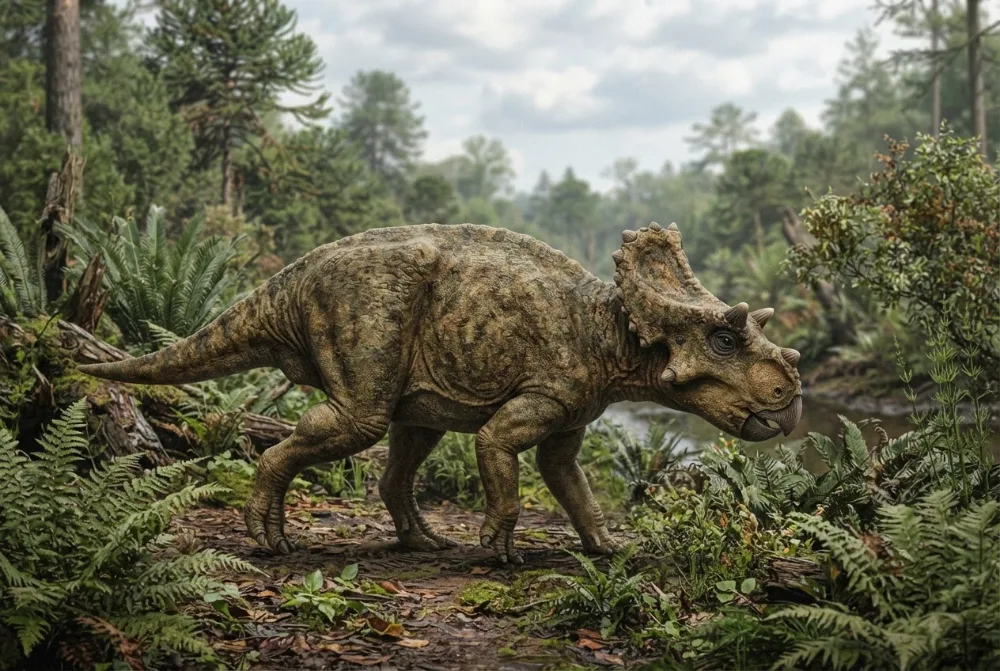
Ajkaceratops was a small horned dinosaur that lived on ancient islands in what is now Europe. It had a beak like a parrot and probably ate tough plants. Scientists think it may have hopped from island to island to reach Europe from Asia.12
E phetse neng?
E ne e le kgolo hakae?
E ne e le telele hakae?
E ne e phahame hakae?
kakanyo
 telele jwaloka dikatse tsa lapeng tse 2 ho tloha nkong ho isa mohatleng🍌telele jwaloka dibanana tse 6 di behilwe ka mola🪑e nyane hoo e ka tsamayang ka tlasa setulo🏃e ne e ka matha dimitara tse 100 ka metsotswana e 14 (motho ya lebelo ka ho fetisisa o hloka 9,6)
Ajkaceratops e ne e le kgolo hakae ha e bapiswa le WENA?
Ke dipalo feela ho browser ya hao. Ha ho letho le bolokwang kapa le romelwang kae kapa kae.
E ne e le lebelo hakae?


Dintlha tse monate
Ajkaceratops is the first ceratopsian dinosaur ever found in Europe that scientists are sure about.2
Its fossils were discovered in a former floodplain and channel deposit, made of clay, silt, and sandstone.1
The name Ajkaceratops honors the town of Ajka in Hungary, where the fossils were found.1
Ajkaceratops may have lacked the frill and horns that other ceratopsians had.1
Its ancestors probably reached Europe by island-hopping across the Tethys Ocean.2
A 2026 study using a more complete skull confirmed that Ajkaceratops is a true ceratopsian.1
Dipotso tse botswang haholo ka Ajkaceratops
?How big was Ajkaceratops?
About 1 metre (3.3 feet) long, roughly the size of a large dog.1
?Did Ajkaceratops have horns?
Probably not. It may have lacked the frill and horns seen in other ceratopsians.1
?What did Ajkaceratops eat?
It ate tough plants. Its tooth wear shows it chewed tougher vegetation than some other dinosaurs living nearby.1
?When did Ajkaceratops live?
It lived during the Late Cretaceous, about 86 to 84 million years ago.1
?Where was Ajkaceratops found?
Its fossils were found in Hungary, near the town of Ajka, in rocks that were once a floodplain.1
?Is Ajkaceratops a dinosaur?
Yes, it is a small horned dinosaur called a ceratopsian.1
Bakeng sa ditsebi tsa didinosaure
- Lebitso la saense
- Ajkaceratops
- E rehilwe ke
- Osi et al. 20103
- Sehlopha
- Didinosaure tse dinaka
- Lelapa / leloko
- Ceratopsia3
- Tlhophiso
- Ornithischia > Ceratopsia3
- Dilemo tsa mafika
- dilemo tse dimilione tse 86 ho isa ho 84 (Santonian)3
- Dibopeho tsa mafika
- Csehbánya3
- Dinaha
- Hungary3
- Direkoto tsa difosili
- 1 ho The Paleobiology Database3
- Ho sibollwa
- Ajkaceratops was named by Attila Ősi and colleagues in 2010, based on skull fragments found near Ajka, Hungary. The species name kozmai honors Károly Kozma.1
- E sa ntse e phehwa kgang
- Scientists are still debating whether Ajkaceratops had a true rostral bone, which is a key feature of ceratopsians.1
Moo dintlha di tswang teng
- Ajkaceratops (en.wikipedia.org)
- A Late Cretaceous ceratopsian dinosaur from Europe with Asian affinities | Nature (nature.com)
- Ajkaceratops in The Paleobiology Database (CC BY 4.0): dilemo, dibaka, dibopeho tsa mafika, tlhophiso.
Ntlha e nngwe le e nngwe leqepheng lena e na le nomoro e supang mohlodi wa yona. Haeba re fositse ho hong, re kopa tshwarelo, re balatedi ba didinosaure, ha re koranta ya saense. Re bolelle ho [email protected] mme re tla e lokisa.
 Rex o lapile! Dino Wiki ke projeke ya ntate bakeng sa mora wa hae ya ratang didinosaure, ke mahala, ha ho dipapatso, ha ho disebedi. Batho ba baholo ba ka fepa Rex seneke ho thusa hore e dule e le inthaneteng.Fepa Rex
 Triceratops
 Protoceratops
 Ojoceratops
 Tatankaceratops
 Psittacosaurus
 Centrosaurus
 Tyrannosaurus
 Velociraptor
 Spinosaurus
 Ankylosaurus
 Parasaurolophus
 Pteranodon