 Kwisi: O dinosaure efe?
 Ntwa ya didinosaure
 Peiso ya didinosaure
 Dipapadi tse nyane tsa didinosaure
 Albamo ya ditikara
 Manane a TOP a didinosaure
 Nkgethele!
Aquilarhinus
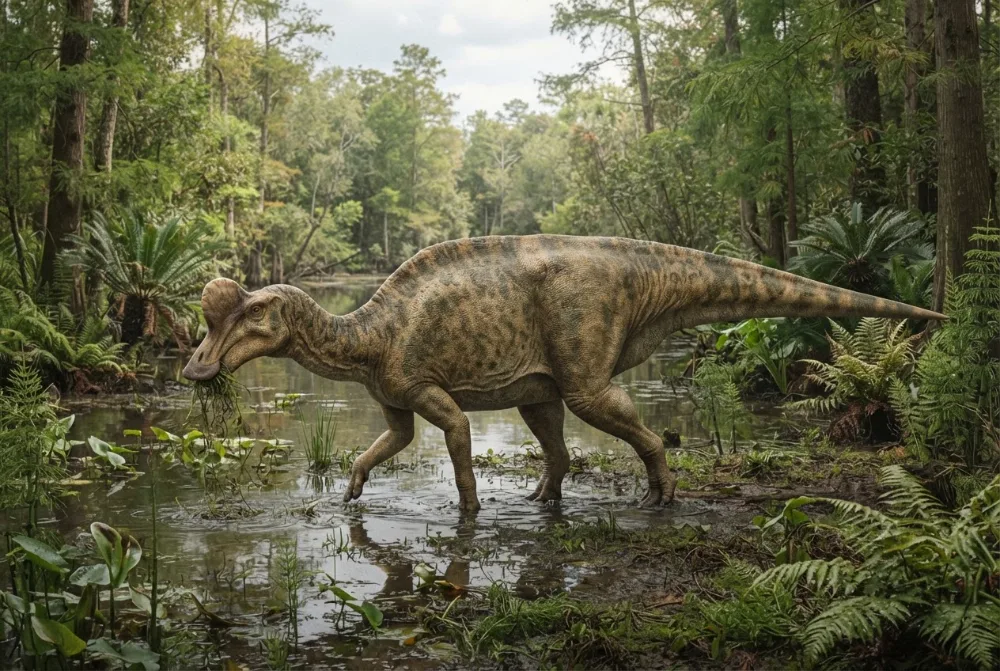
Aquilarhinus was a duck-billed dinosaur with a weird, shovel-shaped beak. It used its beak to scoop up soft plants from swamps and rivers. This dinosaur lived in what is now Texas, USA, about 80 million years ago.21
E phetse neng?
E ne e le kgolo hakae?
E ne e le telele hakae?
E ne e phahame hakae?
E ne e le boima hakae?

 telele jwaloka dintja tse 6 ho tloha nkong ho isa mohatleng🍌telele jwaloka dibanana tse 33 di behilwe ka molaboima jwaloka dintja tse 100🍉boima jwaloka mahapu a 400🎒boima jwaloka ditlelase tse feletseng tse 2.5 tsa bana ba sekolo🐻❄️boima jwaloka dibere tse tshweu tse 4🏃e ne e ka matha dimitara tse 100 ka metsotswana e 12 (motho ya lebelo ka ho fetisisa o hloka 9,6)
Aquilarhinus e ne e le kgolo hakae ha e bapiswa le WENA?
Ke dipalo feela ho browser ya hao. Ha ho letho le bolokwang kapa le romelwang kae kapa kae.
E ne e le lebelo hakae?


Dintlha tse monate
Aquilarhinus had a beak shaped like a shovel, which was different from the flat beaks of most duck-billed dinosaurs.12
Its lower jaw bones met in a W shape at the front, which helped it scoop up plants.2
The name Aquilarhinus means 'eagle snout' because its nose bones were arched like an eagle's beak.1
This dinosaur lived during the Campanian stage of the Late Cretaceous, between 83.6 and 72.2 million years ago.3
Aquilarhinus was first thought to be a species of Kritosaurus, but scientists later realized it was a new genus.1
Dipotso tse botswang haholo ka Aquilarhinus
?How big was Aquilarhinus?
Scientists have not published a specific length or weight for Aquilarhinus, but as a hadrosaurid it was probably similar in size to other duck-billed dinosaurs, around 7 to 9 metres (23 to 30 feet) long.1
?What did Aquilarhinus eat?
It ate soft plants, scooping up semiaquatic vegetation from swamps and rivers with its shovel-shaped beak.12
?Why did Aquilarhinus have a shovel beak?
Its lower jaw bones met in a W shape, forming a wide, flattened scoop that helped it shovel out and scoop up loose, wet sediment and aquatic plants.12
?When did Aquilarhinus live?
It lived about 80 million years ago, during the Campanian stage of the Late Cretaceous.1
Mosenyi wa ditshomo
Tshomo: Some people think all duck-billed dinosaurs had flat, duck-like beaks.
Nnete: Aquilarhinus had a shovel-shaped beak, not flat like a duck's. It used it to dig and scoop plants.2
Bakeng sa ditsebi tsa didinosaure
- Lebitso la saense
- Aquilarhinus
- E rehilwe ke
- Prieto-Márquez et al. 20204
- Sehlopha
- Melomo ya letata
- Lelapa / leloko
- Hadrosauridae4
- Tlhophiso
- Ornithischia > Ornithopoda > Iguanodontia > Hadrosauridae4
- Dilemo tsa mafika
- dilemo tse dimilione tse 84 ho isa ho 72 (Campanian)4
- Dibopeho tsa mafika
- Aguja4
- Dinaha
- Amerika4
- Direkoto tsa difosili
- 1 ho The Paleobiology Database4
- Ho sibollwa
- The first fossil of Aquilarhinus was found in 1983 in Big Bend National Park, Texas. More bones were dug up in 1999. It was named Aquilarhinus palimentus in 2019 by scientists Prieto-Márquez, Wagner, and Lehman.1
- E sa ntse e phehwa kgang
- Scientists are still debating exactly how Aquilarhinus used its shovel-shaped beak. It might have scooped plants from water or dug in mud.2
Moo dintlha di tswang teng
- Aquilarhinus (en.wikipedia.org)
- An unusual ‘shovel-billed’ dinosaur with trophic specializations from the early Campanian of Trans-Pecos Texas, and the ancestral hadrosaurian crest: Journal of Systematic Palaeontology: Vol 18 , No 6 - Get Access (tandfonline.com)
- PBDB Taxon (paleobiodb.org)
- Aquilarhinus in The Paleobiology Database (CC BY 4.0): dilemo, dibaka, dibopeho tsa mafika, tlhophiso.
Ntlha e nngwe le e nngwe leqepheng lena e na le nomoro e supang mohlodi wa yona. Haeba re fositse ho hong, re kopa tshwarelo, re balatedi ba didinosaure, ha re koranta ya saense. Re bolelle ho [email protected] mme re tla e lokisa.
 Rex o lapile! Dino Wiki ke projeke ya ntate bakeng sa mora wa hae ya ratang didinosaure, ke mahala, ha ho dipapatso, ha ho disebedi. Batho ba baholo ba ka fepa Rex seneke ho thusa hore e dule e le inthaneteng.Fepa Rex
 Parasaurolophus
 Edmontosaurus
 Saurolophus
 Hypacrosaurus
 Corythosaurus
 Kritosaurus
 Tyrannosaurus
 Triceratops
 Velociraptor
 Spinosaurus
 Ankylosaurus
 Pteranodon