 Kwisi: O dinosaure efe?
 Ntwa ya didinosaure
 Peiso ya didinosaure
 Dipapadi tse nyane tsa didinosaure
 Albamo ya ditikara
 Manane a TOP a didinosaure
 Nkgethele!
E phetse neng?

E ne e le kgolo hakae?
E ne e le telele hakae?
E ne e phahame hakae?
kakanyo
E ne e le boima hakae?

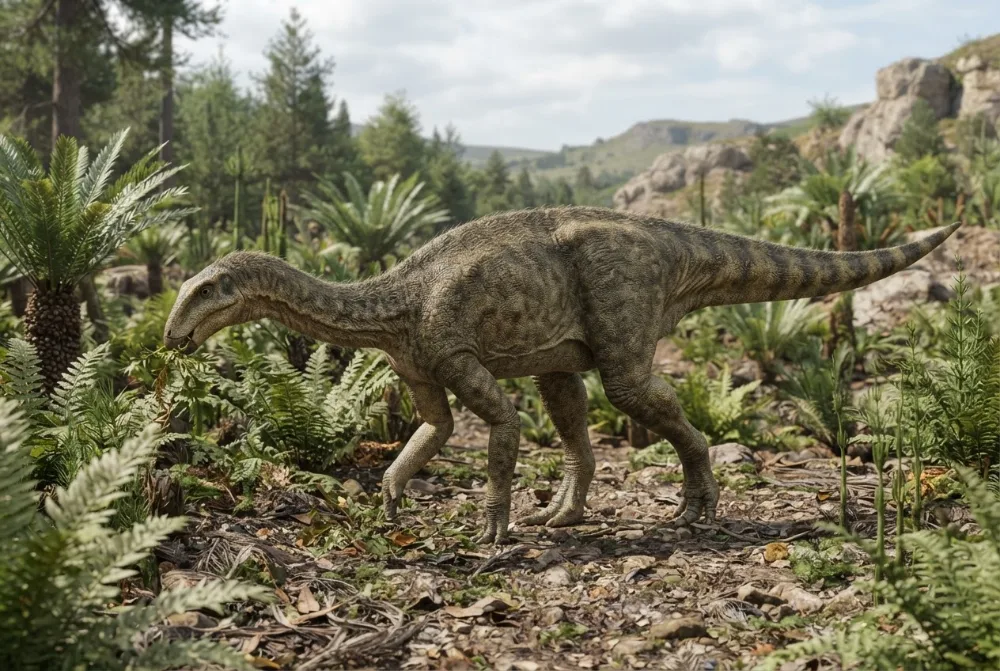
 telele jwaloka dikatse tsa lapeng tse 4 ho tloha nkong ho isa mohatleng🍌telele jwaloka dibanana tse 11 di behilwe ka mola🍉boima jwaloka mahapu a 50🧸boima jwaloka bana ba kereshe ba 13🎒boima jwaloka bana ba sekolo ba 8🏃e ne e ka matha dimitara tse 100 ka metsotswana e 9.5 (motho ya lebelo ka ho fetisisa o hloka 9,6)
Asylosaurus e ne e le kgolo hakae ha e bapiswa le WENA?
Ke dipalo feela ho browser ya hao. Ha ho letho le bolokwang kapa le romelwang kae kapa kae.
E ne e le lebelo hakae?


Dintlha tse monate
The bones of Asylosaurus were discovered in 1834, but they were not recognized as a new dinosaur until 2007.1
Its bones were saved from destruction during World War II because they had been taken to Yale University in the USA.1
Asylosaurus had a different upper arm bone (humerus) compared to its relatives Thecodontosaurus and Pantydraco.1
Its hand had a reduced number of finger bones, with a formula of 2 to 3-4 to 2-?1.2
The name Asylosaurus means 'unharmed lizard', because its fossils escaped the bombing of Bristol in 1940.1
Dipotso tse botswang haholo ka Asylosaurus
?How big was Asylosaurus?
About 2 metres long and weighed roughly 250 kilograms.1
?What did Asylosaurus eat?
It was a plant-eater, but it may have also eaten some insects or small animals, since scientists are not sure if it was purely herbivorous or omnivorous.1
?Why is it called Asylosaurus?
The name means 'unharmed lizard' because its fossils were saved from a World War II bombing that destroyed the original Thecodontosaurus bones.1
?When did Asylosaurus live?
It lived during the Late Triassic period, about 200 million years ago.1
Mosenyi wa ditshomo
Tshomo: Some people think Asylosaurus is the same as Thecodontosaurus.
Nnete: It was first thought to be Thecodontosaurus, but scientists now see it as its own genus because of differences in the upper arm bone.1
Bakeng sa ditsebi tsa didinosaure
- Lebitso la saense
- Asylosaurus
- E rehilwe ke
- Galton 20073
- Sehlopha
- Melala e melelele
- Lelapa / leloko
- Sauropodomorpha3
- Tlhophiso
- Sauropodomorpha3
- Dilemo tsa mafika
- dilemo tse dimilione tse 206 ho isa ho 201 (Rhaetian)3
- Dibopeho tsa mafika
- Magnesian Conglomerate3
- Dinaha
- United Kingdom3
- Direkoto tsa difosili
- 1 ho The Paleobiology Database3
- Ho sibollwa
- The bones were found in 1834 by quarrymen in Bristol, England. They were described in 1836 as Thecodontosaurus, but Peter Galton named them Asylosaurus in 2007.1
- E sa ntse e phehwa kgang
- Scientists are not sure if some other bones from the same site belong to Asylosaurus or to another dinosaur.2
Moo dintlha di tswang teng
- Asylosaurus (en.wikipedia.org)
- VOL. 26, N° 2, 2007 (dinochecker.com)
- Asylosaurus in The Paleobiology Database (CC BY 4.0): dilemo, dibaka, dibopeho tsa mafika, tlhophiso.
Ntlha e nngwe le e nngwe leqepheng lena e na le nomoro e supang mohlodi wa yona. Haeba re fositse ho hong, re kopa tshwarelo, re balatedi ba didinosaure, ha re koranta ya saense. Re bolelle ho [email protected] mme re tla e lokisa.
 Rex o lapile! Dino Wiki ke projeke ya ntate bakeng sa mora wa hae ya ratang didinosaure, ke mahala, ha ho dipapatso, ha ho disebedi. Batho ba baholo ba ka fepa Rex seneke ho thusa hore e dule e le inthaneteng.Fepa Rex
 Brachiosaurus
 Diplodocus
 Brontosaurus
 Argentinosaurus
 Camarasaurus
 Morosaurus
 Nothosaurus
 Coelophysis
 Podokesaurus
 Simosaurus
 Eudimorphodon
 Herrerasaurus