 Kwisi: O dinosaure efe?
 Ntwa ya didinosaure
 Peiso ya didinosaure
 Dipapadi tse nyane tsa didinosaure
 Albamo ya ditikara
 Manane a TOP a didinosaure
 Nkgethele!
E phetse neng?

E ne e le kgolo hakae?
E ne e le telele hakae?
E ne e phahame hakae?
E ne e le boima hakae?

 telele jwaloka dintja tse 3 ho tloha nkong ho isa mohatleng🍌telele jwaloka dibanana tse 17 di behilwe ka mola🍉boima jwaloka mahapu a 5🏃e ne e ka matha dimitara tse 100 ka metsotswana e 8.4 (motho ya lebelo ka ho fetisisa o hloka 9,6)
Coelophysis e ne e le kgolo hakae ha e bapiswa le WENA?
Ke dipalo feela ho browser ya hao. Ha ho letho le bolokwang kapa le romelwang kae kapa kae.
E ne e le lebelo hakae?


Dintlha tse monate
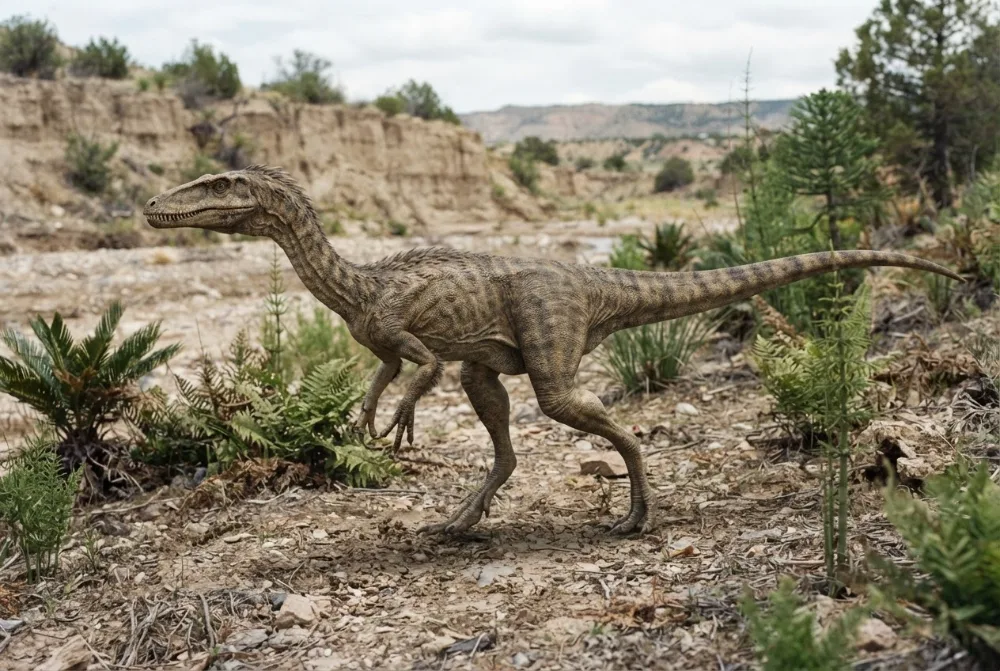
Coelophysis is one of the earliest known dinosaur genera, living about 215 to 201 million years ago.1
A huge pile of hundreds of Coelophysis skeletons was found at Ghost Ranch in New Mexico in 1947.2
Coelophysis had about 26 teeth in its upper jaw and 27 in its lower jaw.1
Its arms were flexible but weak, so it probably hunted animals much smaller than itself.1
Coelophysis was very light, weighing only about as much as a big dog.2
Some scientists once thought Coelophysis was the same as another dinosaur called Rioarribasaurus, but now most agree they are different.1
Dipotso tse botswang haholo ka Coelophysis
?How big was Coelophysis?
Coelophysis was small, growing up to about 3 metres (9.8 feet) long. It weighed only about 18 to 23 kg (40 to 50 pounds).12
?What did Coelophysis eat?
Coelophysis was a carnivore, meaning it ate meat. It probably hunted small, fast animals like lizards and early mammal relatives.12
?When did Coelophysis live?
Coelophysis lived during the Late Triassic period, about 215 to 201 million years ago.1
?Where was Coelophysis found?
Coelophysis fossils have been found in the southwestern United States, especially in New Mexico. Similar animals have been found in South Africa and Zimbabwe.13
?How fast could Coelophysis run?
Maybe up to about 43 km/h (27 mph), faster than a fast human runner. This is an estimate from its size. It had long legs and a light body, made for running.13
?Why is Coelophysis called Coelophysis?
The name Coelophysis means 'hollow form', because its limb bones were hollow. This made its body light and helped it be a swift hunter.3
?Did Coelophysis have feathers?
Scientists don't know for sure if Coelophysis had feathers. No feathers have been found with its fossils, but some related dinosaurs may have had them.1
?Was Coelophysis bigger than a human?
Coelophysis was about 3 metres (9.8 feet) long, which is longer than a human is tall, but it was very light, weighing only about 18 to 23 kg (40 to 50 pounds).12
?Could Coelophysis swim?
There is no evidence that Coelophysis could swim. It was a land-dwelling dinosaur that ran on two legs.1
Mosenyi wa ditshomo
Tshomo: Coelophysis swallowed its young whole.
Nnete: A fossil once thought to show a baby Coelophysis inside an adult is actually a different reptile or a mistake. There is no proof it ate its own young.1
Bakeng sa ditsebi tsa didinosaure
- Lebitso la saense
- Coelophysis
- E rehilwe ke
- Cope 18894
- Sehlopha
- Didinosaure tse jang nama
- Lelapa / leloko
- Coelophysidae4
- Tlhophiso
- Theropoda > Coelophysoidea4
- Dilemo tsa mafika
- dilemo tse dimilione tse 227 ho isa ho 193 (Norian / Sinemurian)4
- Dibopeho tsa mafika
- Chinle, Petrified Forest, Tecovas4
- Dinaha
- Amerika4
- Direkoto tsa difosili
- 26 ho The Paleobiology Database4
- E boetse e tsejwa e le
- Rioarribasaurus (mabitso a kgale jwale a balwa e le phoofolo e le nngwe)4
- Ho sibollwa
- Edward Drinker Cope named Coelophysis in 1889, based on bones collected by David Baldwin in 1881 from New Mexico, USA.14
- E sa ntse e phehwa kgang
- Scientists still debate whether some fossils from other parts of the world belong to Coelophysis or to similar dinosaurs.1
Moo dintlha di tswang teng
- Coelophysis (en.wikipedia.org)
- Coelophysis | Triassic, Carnivore, Reptile | Britannica (britannica.com)
- Coelophysis | Natural History Museum (nhm.ac.uk)
- Coelophysis in The Paleobiology Database (CC BY 4.0): dilemo, dibaka, dibopeho tsa mafika, tlhophiso.
Ntlha e nngwe le e nngwe leqepheng lena e na le nomoro e supang mohlodi wa yona. Haeba re fositse ho hong, re kopa tshwarelo, re balatedi ba didinosaure, ha re koranta ya saense. Re bolelle ho [email protected] mme re tla e lokisa.
 Rex o lapile! Dino Wiki ke projeke ya ntate bakeng sa mora wa hae ya ratang didinosaure, ke mahala, ha ho dipapatso, ha ho disebedi. Batho ba baholo ba ka fepa Rex seneke ho thusa hore e dule e le inthaneteng.Fepa Rex
 Allosaurus
 Carnotaurus
 Dilophosaurus
 Giganotosaurus
 Compsognathus
 Paronychodon
 Nothosaurus
 Massospondylus
 Plateosaurus
 Simosaurus
 Thecodontosaurus
 Eudimorphodon