 Kwisi: O dinosaure efe?
 Ntwa ya didinosaure
 Peiso ya didinosaure
 Dipapadi tse nyane tsa didinosaure
 Albamo ya ditikara
 Manane a TOP a didinosaure
 Nkgethele!
Calvarius
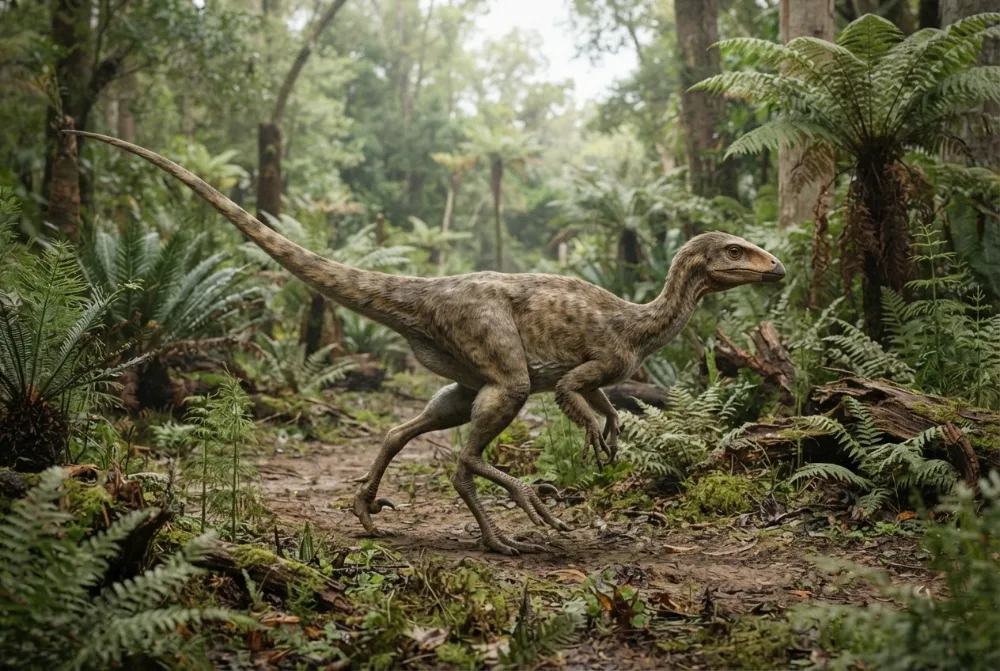
Calvarius was a small, speedy plant-eating dinosaur that lived near the very end of the Age of Dinosaurs. It was one of the last dinosaurs to walk on Earth before the big asteroid hit.2
E phetse neng?
E ne e le kgolo hakae?
E ne e le telele hakae?
E ne e phahame hakae?
kakanyo
 telele jwaloka dikatse tsa lapeng tse 4 ho tloha nkong ho isa mohatleng🍌telele jwaloka dibanana tse 11 di behilwe ka mola🏃e ne e ka matha dimitara tse 100 ka metsotswana e 8.8 (motho ya lebelo ka ho fetisisa o hloka 9,6)
Calvarius e ne e le kgolo hakae ha e bapiswa le WENA?
Ke dipalo feela ho browser ya hao. Ha ho letho le bolokwang kapa le romelwang kae kapa kae.
E ne e le lebelo hakae?


Dintlha tse monate
Calvarius is known from just one foot bone, a left metatarsal IV, which was about 15 centimeters long.2
It was probably a fast runner. Its long foot bone and light build suggest it could sprint quickly, unlike most other styracostern dinosaurs.1
Calvarius lived on a large island called Ibero-Armorica, which is now northern Spain and southern France. On islands, animals sometimes evolve to be smaller because food is limited.2
It was one of the last dinosaurs ever. Its fossils were found just 25 meters below the layer that marks the asteroid impact that killed the non-bird dinosaurs.1
The fossil was discovered in 2019 by paleontologists from the Institut Català de Paleontologia Miquel Crusafont and the Museu de la Conca Dellà.2
Calvarius is the smallest known styracostern dinosaur. Some of its relatives grew over 10 meters long, but Calvarius was less than 2 meters.2
Dipotso tse botswang haholo ka Calvarius
?How big was Calvarius?
Calvarius was no more than 2 metres (6.6 feet) long, making it one of the smallest known styracostern dinosaurs.2
?What did Calvarius eat?
Calvarius was a plant-eater. It was an ornithopod, a group of herbivorous dinosaurs.2
?When did Calvarius live?
Calvarius lived about 66 million years ago, right at the end of the Cretaceous period. It was one of the last dinosaurs before the asteroid hit.2
Bakeng sa ditsebi tsa didinosaure
- Lebitso la saense
- Calvarius
- E rehilwe ke
- Prieto-Márquez and Sellés 20233
- Sehlopha
- Dija-dimela tse nang le melomo
- Lelapa / leloko
- Styracosterna3
- Tlhophiso
- Ornithischia > Ornithopoda > Iguanodontia3
- Dilemo tsa mafika
- dilemo tse dimilione tse 72 ho isa ho 66 (Maastrichtian)3
- Dibopeho tsa mafika
- Talarn3
- Dinaha
- Sepania3
- Direkoto tsa difosili
- 1 ho The Paleobiology Database3
- Ho sibollwa
- The fossil was found in 2019 at the Masia de Ramón site in Spain by a team from the MCD and ICP. Albert Prieto-Márquez and Albert Sellés named it Calvarius rapidus in 2023.23
- E sa ntse e phehwa kgang
- Scientists are not sure exactly how big Calvarius was because only one foot bone has been found. They estimate it was less than 2 meters long, but it could have been different.2
Moo dintlha di tswang teng
- Evolutionary convergence in a small cursorial styracosternan ornithopod dinosaur from western Europe (dinodata.de)
- Calvarius rapidus, the new dinosaur species that almost saw the asteroid falling (icp.cat)
- Calvarius in The Paleobiology Database (CC BY 4.0): dilemo, dibaka, dibopeho tsa mafika, tlhophiso.
Ntlha e nngwe le e nngwe leqepheng lena e na le nomoro e supang mohlodi wa yona. Haeba re fositse ho hong, re kopa tshwarelo, re balatedi ba didinosaure, ha re koranta ya saense. Re bolelle ho [email protected] mme re tla e lokisa.
 Rex o lapile! Dino Wiki ke projeke ya ntate bakeng sa mora wa hae ya ratang didinosaure, ke mahala, ha ho dipapatso, ha ho disebedi. Batho ba baholo ba ka fepa Rex seneke ho thusa hore e dule e le inthaneteng.Fepa Rex
 Iguanodon
 Tenontosaurus
 Thescelosaurus
 Zalmoxes
 Camptosaurus
 Rhabdodon
 Tyrannosaurus
 Triceratops
 Velociraptor
 Spinosaurus
 Ankylosaurus
 Parasaurolophus