 Kwisi: O dinosaure efe?
 Ntwa ya didinosaure
 Peiso ya didinosaure
 Dipapadi tse nyane tsa didinosaure
 Albamo ya ditikara
 Manane a TOP a didinosaure
 Nkgethele!
Coahuilaceratops
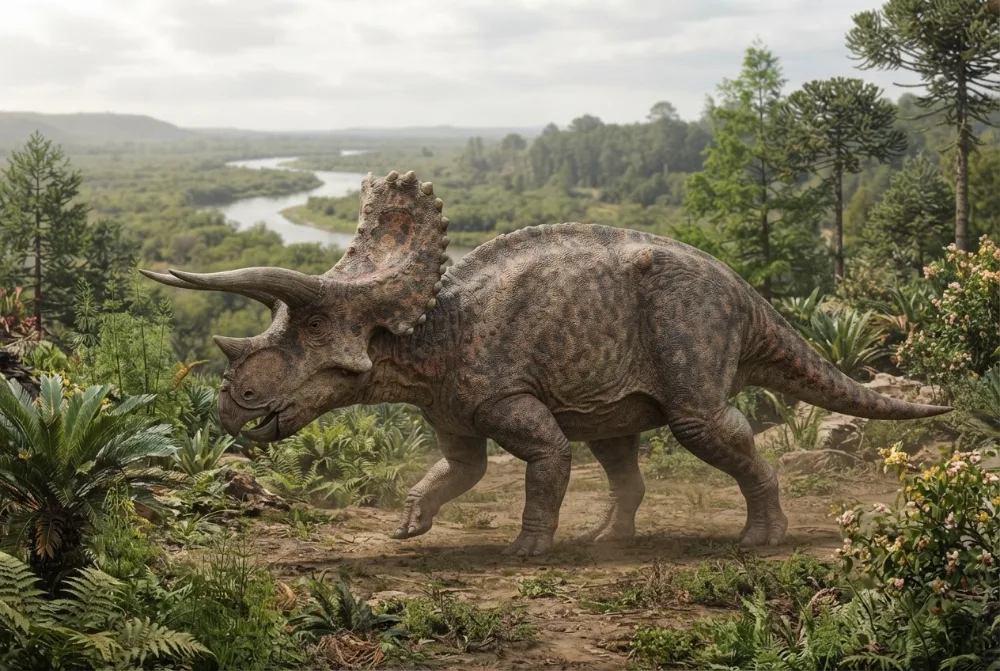
Coahuilaceratops was a horned dinosaur that lived in what is now Mexico. It had huge horns on its face, as big as those of Triceratops. This dinosaur was a plant-eater that roamed the land about 71 to 70 million years ago.12
E phetse neng?
E ne e le kgolo hakae?
E ne e le telele hakae?
E ne e phahame hakae?
E ne e le boima hakae?

 telele jwaloka dintja tse 7 ho tloha nkong ho isa mohatleng🍌telele jwaloka dibanana tse 37 di behilwe ka mola
 e batla e le boima jwaloka tlou🍉boima jwaloka mahapu a 1000🎒boima jwaloka ditlelase tse feletseng tse 6 tsa bana ba sekolo🐻❄️boima jwaloka dibere tse tshweu tse 11🏃e ne e ka matha dimitara tse 100 ka metsotswana e 11 (motho ya lebelo ka ho fetisisa o hloka 9,6)
Coahuilaceratops e ne e le kgolo hakae ha e bapiswa le WENA?
Ke dipalo feela ho browser ya hao. Ha ho letho le bolokwang kapa le romelwang kae kapa kae.
E ne e le lebelo hakae?


Dintlha tse monate
Coahuilaceratops had horns that were about 0.91 to 1.22 meters (3 to 4 feet) long, as big as those of Triceratops.1
Its name means 'horned face from Coahuila', after the Mexican state where it was found.1
Its fossils were discovered in 2001 by Claudio de Leon near Porvenir de Jalpa, Coahuila.1
Scientists think Coahuilaceratops may be an early relative of Triceratops.3
Dipotso tse botswang haholo ka Coahuilaceratops
?How big was Coahuilaceratops?
An adult was about 6.7 meters (22 feet) long, 1.8 to 2.1 meters (6 to 7 feet) tall at the shoulders and hips, and probably weighed about 4 to 5 metric tons. Another estimate says it was about 4 meters (13 feet) long and weighed 1 to 1.5 metric tons.14
?What did Coahuilaceratops eat?
It was a plant-eater, like other horned dinosaurs.4
?When did Coahuilaceratops live?
It lived about 71.5 to 70.5 million years ago, during the Late Cretaceous period.1
?Where was Coahuilaceratops found?
Its fossils were found in Coahuila, Mexico, near the town of Porvenir de Jalpa.1
?Why did Coahuilaceratops have such big horns?
Scientists are not sure, but the most widely accepted idea is that the horns were used to attract mates and fight with rivals of the same species.4
Bakeng sa ditsebi tsa didinosaure
- Lebitso la saense
- Coahuilaceratops
- E rehilwe ke
- Loewen et al. 20105
- Sehlopha
- Didinosaure tse dinaka
- Lelapa / leloko
- Ceratopsidae5
- Tlhophiso
- Ornithischia > Ceratopsia > Ceratopsidae5
- Dilemo tsa mafika
- dilemo tse dimilione tse 72 ho isa ho 66 (Maastrichtian)5
- Dinaha
- Meksiko5
- Direkoto tsa difosili
- 1 ho The Paleobiology Database5
- Ho sibollwa
- Coahuilaceratops was named by Mark A. Loewen and colleagues in 2010. The fossils were found in 2001 and dug up in 2003 in Coahuila, Mexico.12
- E sa ntse e phehwa kgang
- Scientists are not sure exactly how big Coahuilaceratops was, because different estimates give lengths from 4 to 6.7 meters.1
Moo dintlha di tswang teng
- Coahuilaceratops (en.wikipedia.org)
- PBDB Taxon (paleobiodb.org)
- Stratigraphic Reassessment of the Mexican Chasmosaurine Coahuilaceratops magnacuerna as the First Diagnostic Dinosaur Remains from the Cerro Huerta Formation (Lower Maastrichtian) Supporting the Southern Origin of the Triceratopsini (dinosaurier-info.de)
- First horned dinosaur from Mexico (phys.org)
- Coahuilaceratops in The Paleobiology Database (CC BY 4.0): dilemo, dibaka, dibopeho tsa mafika, tlhophiso.
Ntlha e nngwe le e nngwe leqepheng lena e na le nomoro e supang mohlodi wa yona. Haeba re fositse ho hong, re kopa tshwarelo, re balatedi ba didinosaure, ha re koranta ya saense. Re bolelle ho [email protected] mme re tla e lokisa.
 Rex o lapile! Dino Wiki ke projeke ya ntate bakeng sa mora wa hae ya ratang didinosaure, ke mahala, ha ho dipapatso, ha ho disebedi. Batho ba baholo ba ka fepa Rex seneke ho thusa hore e dule e le inthaneteng.Fepa Rex
 Triceratops
 Protoceratops
 Ojoceratops
 Tatankaceratops
 Psittacosaurus
 Centrosaurus
 Tyrannosaurus
 Velociraptor
 Spinosaurus
 Ankylosaurus
 Parasaurolophus
 Pteranodon