 Kwisi: O dinosaure efe?
 Ntwa ya didinosaure
 Peiso ya didinosaure
 Dipapadi tse nyane tsa didinosaure
 Albamo ya ditikara
 Manane a TOP a didinosaure
 Nkgethele!
Datai
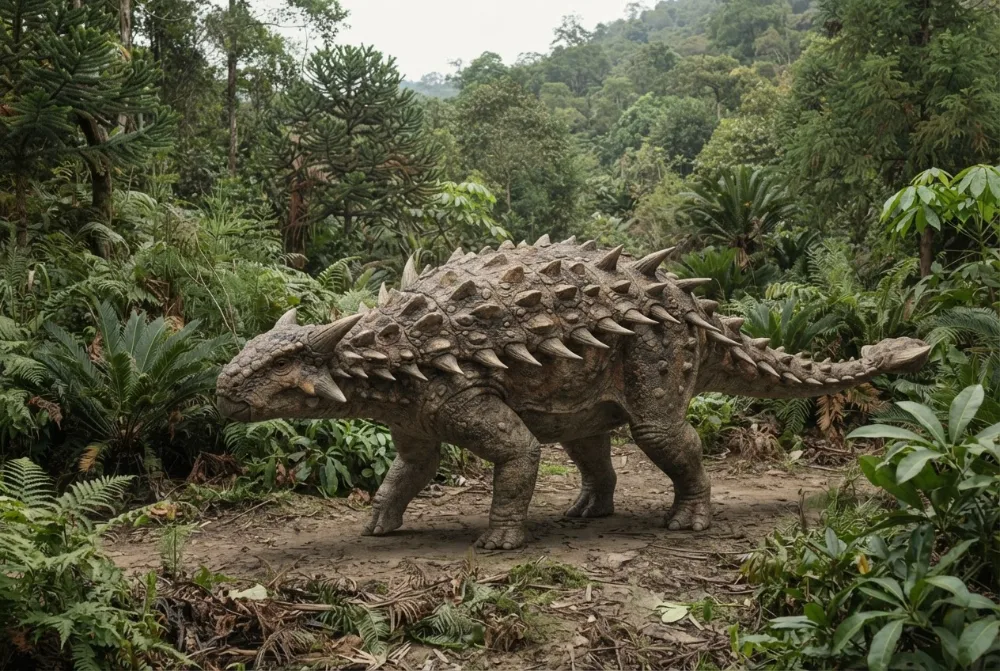
Datai was an armored dinosaur that walked on four legs and had bony plates and spikes on its body. It had a pair of horns on its cheeks, which made it look extra tough. It lived in what is now China, about 90 million years ago.12
E phetse neng?
E ne e le kgolo hakae?
E ne e le telele hakae?
E ne e phahame hakae?
kakanyo
 telele jwaloka dintja tse 4 ho tloha nkong ho isa mohatleng🍌telele jwaloka dibanana tse 22 di behilwe ka mola🏃e ne e ka matha dimitara tse 100 ka metsotswana e 18 (motho ya lebelo ka ho fetisisa o hloka 9,6)
Datai e ne e le kgolo hakae ha e bapiswa le WENA?
Ke dipalo feela ho browser ya hao. Ha ho letho le bolokwang kapa le romelwang kae kapa kae.
E ne e le lebelo hakae?


Dintlha tse monate
Datai had a pair of horns on its cheeks, which is unusual and helped scientists identify it as a new species.2
The two Datai fossils were found lying on top of each other, likely because they were buried quickly by wind-blown sand.2
The neck bones of one Datai had curved holes about 2 cm wide, probably made by small creatures like mollusks burrowing in the sediment after the dinosaur died.2
Datai's tail had ossified tendons, which suggests it may have had a tail club for defense.1
Scientists used Datai's features to help make the family tree of ankylosaurs more stable, because before, many relationships were uncertain.1
Datai lived during the Late Cretaceous, about 96 to 90 million years ago, which is a time when many armored dinosaurs roamed.1
Dipotso tse botswang haholo ka Datai
?What did Datai eat?
Datai was a plant-eating dinosaur. It was a ground-dwelling herbivore, so it likely ate low-growing plants.3
?Did Datai have a tail club?
It likely did. Its tail bones were surrounded by ossified tendons, which suggests it may have had a tail club for defense.1
?How big was Datai?
Scientists don't know exactly, because the fossils are from young, not fully grown individuals. The known specimens were immature, so their adult size is uncertain.1
?When did Datai live?
Datai lived during the Late Cretaceous, about 96 to 90 million years ago, in what is now China.1
Mosenyi wa ditshomo
Tshomo: Some people think all armored dinosaurs had tail clubs, but not all did.
Nnete: Datai likely had a tail club because of ossified tendons near its tail, but many other ankylosaurs did not have one.1
Bakeng sa ditsebi tsa didinosaure
- Lebitso la saense
- Datai
- E rehilwe ke
- Xing et al. 20243
- Sehlopha
- Didinosaure tse nang le sesireletsi
- Lelapa / leloko
- Ankylosauridae3
- Tlhophiso
- Ornithischia > Ankylosauria > Ankylosauridae > Thyreophora3
- Dilemo tsa mafika
- dilemo tse dimilione tse 94 ho isa ho 86 (Turonian / Coniacian)3
- Dibopeho tsa mafika
- Zhoutian3
- Dinaha
- Tjhaena3
- Direkoto tsa difosili
- 1 ho The Paleobiology Database3
- Ho sibollwa
- The fossils were found in 2016 in Jiangxi Province, China, and later acquired by the Yingliang Stone Natural History Museum. In 2024, a team led by Xing Lida named the new species Datai yingliangis.12
- E sa ntse e phehwa kgang
- Scientists are still debating exactly where Datai fits in the ankylosaur family tree. Depending on the analysis, it appears either as a basal ankylosaurine or as a close relative of Pinacosaurus.1
Moo dintlha di tswang teng
- Datai (en.wikipedia.org)
- Fossils of new armored dinosaur species found in east China-Xinhua (english.news.cn)
- Datai in The Paleobiology Database (CC BY 4.0): dilemo, dibaka, dibopeho tsa mafika, tlhophiso.
Ntlha e nngwe le e nngwe leqepheng lena e na le nomoro e supang mohlodi wa yona. Haeba re fositse ho hong, re kopa tshwarelo, re balatedi ba didinosaure, ha re koranta ya saense. Re bolelle ho [email protected] mme re tla e lokisa.
 Rex o lapile! Dino Wiki ke projeke ya ntate bakeng sa mora wa hae ya ratang didinosaure, ke mahala, ha ho dipapatso, ha ho disebedi. Batho ba baholo ba ka fepa Rex seneke ho thusa hore e dule e le inthaneteng.Fepa Rex
 Ankylosaurus
 Sauropelta
 Pinacosaurus
 Scutellosaurus
 Struthiosaurus
 Euoplocephalus
 Tyrannosaurus
 Triceratops
 Velociraptor
 Spinosaurus
 Parasaurolophus
 Pteranodon