 Kwisi: O dinosaure efe?
 Ntwa ya didinosaure
 Peiso ya didinosaure
 Dipapadi tse nyane tsa didinosaure
 Albamo ya ditikara
 Manane a TOP a didinosaure
 Nkgethele!
Dendrorhynchoides
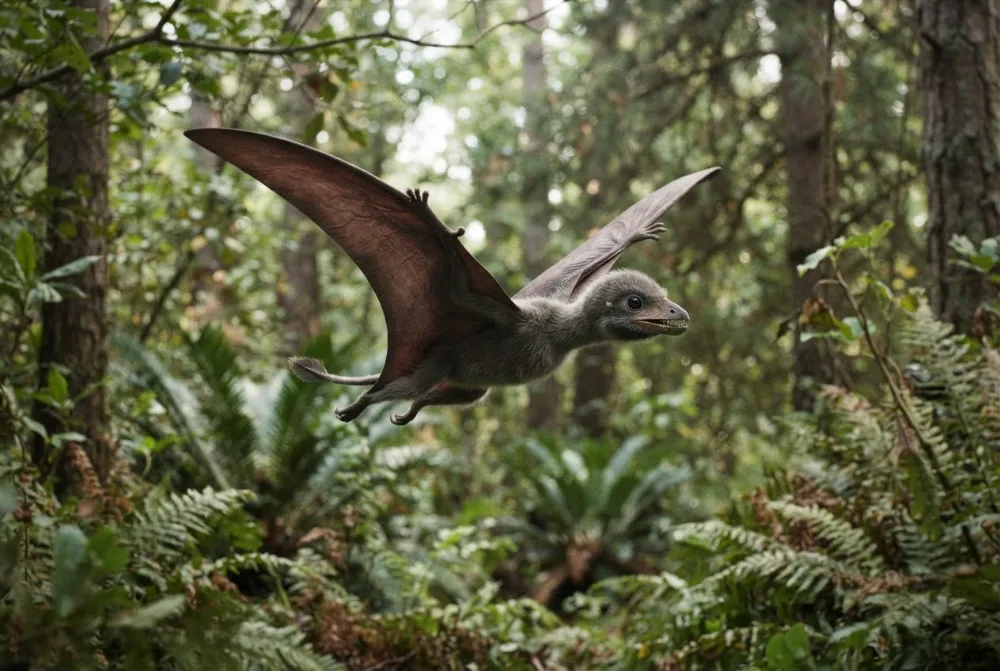
Dendrorhynchoides was a tiny flying reptile that lived about 124 million years ago. It was one of the smallest pterosaurs ever, with a wingspan of only about 40 centimetres (16 inches). It probably fluttered through forests catching insects.1
E phetse neng?
E ne e le kgolo hakae?
Mapheo a yona a ne a pharaletse hakae?
Dendrorhynchoides e ne e le kgolo hakae ha e bapiswa le WENA?
Ke dipalo feela ho browser ya hao. Ha ho letho le bolokwang kapa le romelwang kae kapa kae.
E ne e le lebelo hakae?


Dintlha tse monate
Its wingspan was only about 40 centimetres (16 inches), making it one of the smallest pterosaurs known.1
It had a short, broad head with very large eye sockets, giving it excellent eyesight for spotting insects.1
Its teeth were curved and about 3 millimetres long, perfect for gripping slippery insects.1
The first fossil was altered by fossil dealers who added a piece of a dromaeosaurid tail to make it look more valuable.1
Scientists think it may have hunted at night like modern bats or nightjars, using its big eyes to see in the dark.1
Its wings were short and its joints were very flexible, which helped it maneuver through trees while chasing prey.1
Dipotso tse botswang haholo ka Dendrorhynchoides
?Was Dendrorhynchoides a dinosaur?
No, it was a pterosaur, a flying reptile that is not a dinosaur.1
?How big was Dendrorhynchoides?
It had a wingspan of about 40 centimetres (16 inches), making it one of the smallest known pterosaurs.1
?What did Dendrorhynchoides eat?
It was an insectivore that ate insects. It had curved teeth about 3 millimetres long for gripping slippery prey.1
?Could Dendrorhynchoides fly?
Yes, it was a flying reptile with short wings and flexible joints that helped it maneuver through trees while chasing insects.1
Mosenyi wa ditshomo
Tshomo: Some people think Dendrorhynchoides was a dinosaur because it lived with dinosaurs.
Nnete: It was a pterosaur, a flying reptile, not a dinosaur.1
Bakeng sa ditsebi tsa didinosaure
- Lebitso la saense
- Dendrorhynchoides
- E rehilwe ke
- Ji et al. 19993
- Sehlopha
- Dihahabi tse fofang
- Lelapa / leloko
- Anurognathidae3
- Tlhophiso
- Pterosauria3
- Dilemo tsa mafika
- dilemo tse dimilione tse 168 ho isa ho 120 (Bathonian / Aptian)3
- Dibopeho tsa mafika
- Yixian, Tiaojishan3
- Dinaha
- Tjhaena3
- Direkoto tsa difosili
- 2 ho The Paleobiology Database3
- Ho sibollwa
- The first fossil was found around 1995 and bought from illegal fossil dealers. It was named Dendrorhynchus in 1998, but that name was already used for a parasite, so it was renamed Dendrorhynchoides in 1999.1
- E sa ntse e phehwa kgang
- Scientists debate whether the first fossil came from the Early Cretaceous or the Middle Jurassic, because the fossil was originally obtained from dealers and its exact location is unclear.1
Moo dintlha di tswang teng
- Dendrorhynchoides (en.wikipedia.org)
- PBDB Taxon (paleobiodb.org)
- Dendrorhynchoides in The Paleobiology Database (CC BY 4.0): dilemo, dibaka, dibopeho tsa mafika, tlhophiso.
Ntlha e nngwe le e nngwe leqepheng lena e na le nomoro e supang mohlodi wa yona. Haeba re fositse ho hong, re kopa tshwarelo, re balatedi ba didinosaure, ha re koranta ya saense. Re bolelle ho [email protected] mme re tla e lokisa.
 Rex o lapile! Dino Wiki ke projeke ya ntate bakeng sa mora wa hae ya ratang didinosaure, ke mahala, ha ho dipapatso, ha ho disebedi. Batho ba baholo ba ka fepa Rex seneke ho thusa hore e dule e le inthaneteng.Fepa Rex
 Pteranodon
 Quetzalcoatlus
 Dorygnathus
 Rhamphorhynchus
 Anhanguera
 Pterodactylus
 Stegosaurus
 Iguanodon
 Archaeopteryx
 Giganotosaurus
 Microraptor
 Deinonychus