 Kwisi: O dinosaure efe?
 Ntwa ya didinosaure
 Peiso ya didinosaure
 Dipapadi tse nyane tsa didinosaure
 Albamo ya ditikara
 Manane a TOP a didinosaure
 Nkgethele!
Domeykodactylus
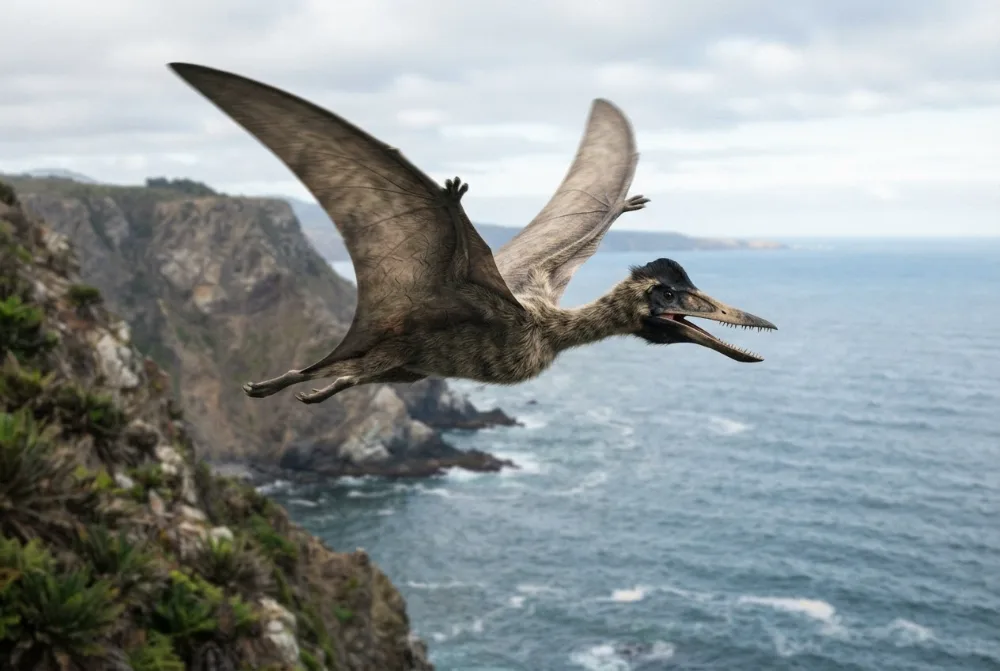
Domeykodactylus was a flying reptile that lived in what is now Chile during the Early Cretaceous. It had a crest on its head and ate fish, swooping over ancient seas.13
E phetse neng?
E ne e le kgolo hakae?
Mapheo a yona a ne a pharaletse hakae?
 telele jwaloka dikatse tsa lapeng tse 4 ho tloha nkong ho isa mohatleng⚽e ne e ka fofa ho tshela lebala lohle la bolo ya maoto ka metsotswana e 7.9
Domeykodactylus e ne e le kgolo hakae ha e bapiswa le WENA?
Ke dipalo feela ho browser ya hao. Ha ho letho le bolokwang kapa le romelwang kae kapa kae.
E ne e le lebelo hakae?


Dintlha tse monate
Domeykodactylus was first thought to be a different pterosaur called Pterodaustro, but scientists later realized it was a new species.1
Its skull was about 30 centimeters (12 inches) long, about the size of a ruler.1
Domeykodactylus had a crest on top of its snout made of thin bone struts, which gave it a bumpy texture.1
It had 16 tooth sockets in each lower jaw bone, but the teeth themselves were small and have not been found.1
Domeykodactylus was the first pterosaur of its family, the Dsungaripteridae, ever found in South America. Most others lived in Asia.1
Its fossils were found in rocks that are between 143 and 100 million years old, from the Early Cretaceous period.3
Dipotso tse botswang haholo ka Domeykodactylus
?How big was Domeykodactylus?
Its skull was about 30 centimeters (12 inches) long, and its wingspan was about 2 meters (6.6 feet).1
?What did Domeykodactylus eat?
It ate fish, swooping over ancient seas to catch them.3
?Why did Domeykodactylus have a crest?
Scientists are not sure, but the crest was made of thin bone struts and may have been used for display or to help identify its species.1
Bakeng sa ditsebi tsa didinosaure
- Lebitso la saense
- Domeykodactylus
- E rehilwe ke
- Martill et al. 20003
- Sehlopha
- Dihahabi tse fofang
- Lelapa / leloko
- Dsungaripteridae3
- Tlhophiso
- Pterosauria > Pterodactyloidea3
- Dilemo tsa mafika
- dilemo tse dimilione tse 143 ho isa ho 100 (Berriasian / Albian)3
- Dibopeho tsa mafika
- Santa Ana3
- Dinaha
- Chile3
- Direkoto tsa difosili
- 1 ho The Paleobiology Database3
- Ho sibollwa
- Domeykodactylus was named in 2000 by David Martill, Eberhard Frey, Guillermo Chong Diaz and Charles Michael Bell. The fossil was found in the Sierra da Candeleros in Chile and was originally mistaken for Pterodaustro.12
- E sa ntse e phehwa kgang
- Scientists are not sure exactly what the crest on Domeykodactylus's head was used for. It might have been for display to attract mates or to recognize others of its kind.1
Moo dintlha di tswang teng
- Domeykodactylus (en.wikipedia.org)
- Reinterpretation of a Chilean pterosaur and the occurrence of Dsungaripteridae in South America | Geological Magazine | Cambridge Core (cambridge.org)
- Domeykodactylus in The Paleobiology Database (CC BY 4.0): dilemo, dibaka, dibopeho tsa mafika, tlhophiso.
Ntlha e nngwe le e nngwe leqepheng lena e na le nomoro e supang mohlodi wa yona. Haeba re fositse ho hong, re kopa tshwarelo, re balatedi ba didinosaure, ha re koranta ya saense. Re bolelle ho [email protected] mme re tla e lokisa.
 Rex o lapile! Dino Wiki ke projeke ya ntate bakeng sa mora wa hae ya ratang didinosaure, ke mahala, ha ho dipapatso, ha ho disebedi. Batho ba baholo ba ka fepa Rex seneke ho thusa hore e dule e le inthaneteng.Fepa Rex
 Pteranodon
 Quetzalcoatlus
 Dorygnathus
 Rhamphorhynchus
 Anhanguera
 Pterodactylus
 Stegosaurus
 Iguanodon
 Archaeopteryx
 Giganotosaurus
 Microraptor
 Deinonychus