 Kwisi: O dinosaure efe?
 Ntwa ya didinosaure
 Peiso ya didinosaure
 Dipapadi tse nyane tsa didinosaure
 Albamo ya ditikara
 Manane a TOP a didinosaure
 Nkgethele!
Gallodactylus
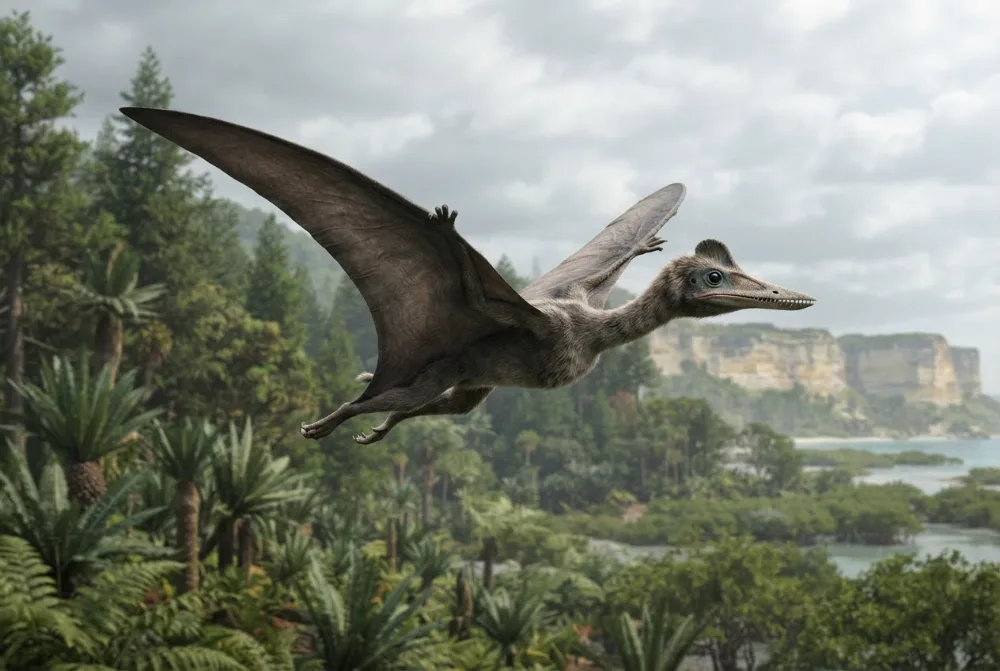
Gallodactylus was a flying reptile that lived near the sea. It had a long beak and probably scooped up fish for dinner. It was not a dinosaur, but a pterosaur.3
E phetse neng?
E ne e le lebelo hakae?


Dintlha tse monate
Gallodactylus lived about 149 to 145 million years ago, during the Late Jurassic period.1
Its name means 'rooster finger', because scientists thought its wing finger looked like a rooster's toe.3
Only one species is known: Gallodactylus canjuersensis.1
The only fossil of Gallodactylus is a partial skeleton found in a limestone quarry in France.1
Some scientists think Gallodactylus might actually be the same animal as Cycnorhamphus.1
Dipotso tse botswang haholo ka Gallodactylus
?How big was Gallodactylus?
No exact size is given in the sources, but it was a medium sized pterosaur with a wingspan estimated at about 1.5 metres (5 feet).23
?Did Gallodactylus have teeth?
Yes, it had peg-like teeth at the tips of its jaws, which were blunter and stouter in older individuals.2
Bakeng sa ditsebi tsa didinosaure
- Lebitso la saense
- Gallodactylus
- E rehilwe ke
- Fabre 19763
- Sehlopha
- Dihahabi tse fofang
- Lelapa / leloko
- Lophocratia3
- Tlhophiso
- Pterosauria > Pterodactyloidea3
- Dilemo tsa mafika
- dilemo tse dimilione tse 149 ho isa ho 145 (Tithonian)3
- Dinaha
- Fora3
- Direkoto tsa difosili
- 1 ho The Paleobiology Database3
- Ho sibollwa
- Gallodactylus was named by French paleontologist Fabre in 1976, based on a partial skeleton found at the Canjuers-Les Bessons quarry in France.31
- E sa ntse e phehwa kgang
- Scientists are not sure if Gallodactylus is a separate genus or if it should be called Cycnorhamphus.1
Moo dintlha di tswang teng
- PBDB Taxon (paleobiodb.org)
- Cycnorhamphus (Wikipedia) (Wikipedia)
- Gallodactylus in The Paleobiology Database (CC BY 4.0): dilemo, dibaka, dibopeho tsa mafika, tlhophiso.
Ntlha e nngwe le e nngwe leqepheng lena e na le nomoro e supang mohlodi wa yona. Haeba re fositse ho hong, re kopa tshwarelo, re balatedi ba didinosaure, ha re koranta ya saense. Re bolelle ho [email protected] mme re tla e lokisa.
 Rex o lapile! Dino Wiki ke projeke ya ntate bakeng sa mora wa hae ya ratang didinosaure, ke mahala, ha ho dipapatso, ha ho disebedi. Batho ba baholo ba ka fepa Rex seneke ho thusa hore e dule e le inthaneteng.Fepa Rex
 Pteranodon
 Quetzalcoatlus
 Dorygnathus
 Rhamphorhynchus
 Anhanguera
 Pterodactylus
 Brachiosaurus
 Diplodocus
 Allosaurus
 Brontosaurus
 Compsognathus
 Camarasaurus