 Kwisi: O dinosaure efe?
 Ntwa ya didinosaure
 Peiso ya didinosaure
 Dipapadi tse nyane tsa didinosaure
 Albamo ya ditikara
 Manane a TOP a didinosaure
 Nkgethele!
Himeoolithus
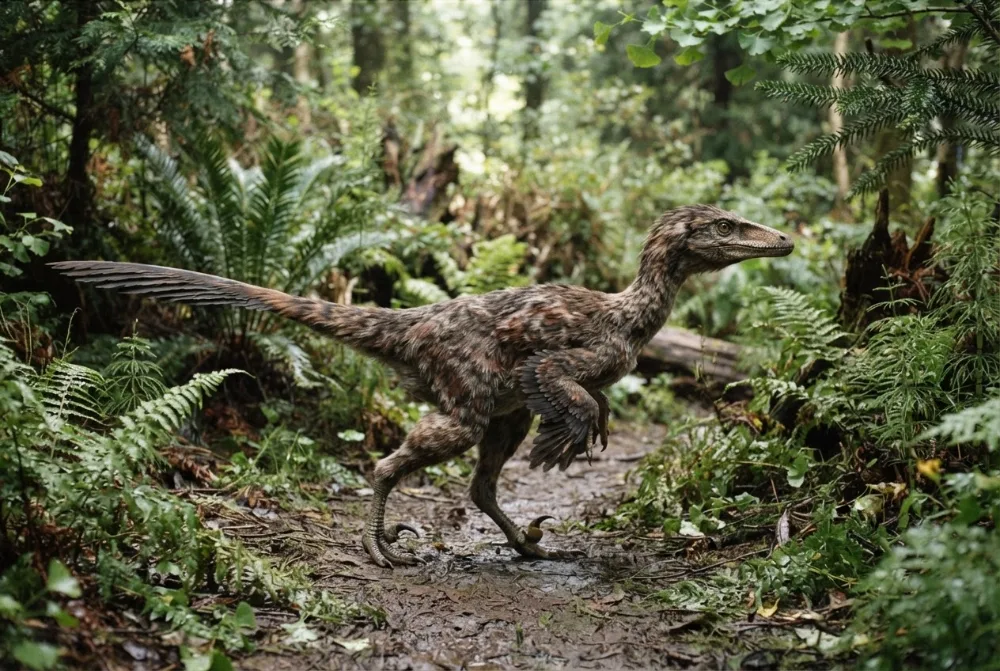
Himeoolithus was a tiny meat-eating dinosaur that lived in what is now Japan about 110 million years ago. It is known from its eggs, which are some of the smallest theropod eggs ever found, about the size of a quail egg. These eggs show that small dinosaurs lived alongside the giants!2
E phetse neng?
E ne e le lebelo hakae?


Dintlha tse monate
Himeoolithus eggs are the smallest non-avian theropod eggs known, with an estimated mass of only 9.9 grams, about the size of a modern quail egg.1
The eggs are unusually elongated for their size, with a length-to-width ratio of 2.25, which is more typical of larger theropod eggs.1
The nest was found in place, not moved by water or wind, because most eggshell fragments were positioned concave-up, which happens when they break in place.2
Over 1,300 eggshell fragments from Himeoolithus were found at the Kamitaki Egg Quarry, along with other small theropod eggs.2
The high diversity of small theropod eggs at this site makes it one of the most diverse Early Cretaceous egg localities known.2
Mosenyi wa ditshomo
Tshomo: Some people think all dinosaurs were huge, but Himeoolithus shows that many were small.
Nnete: Himeoolithus eggs are tiny, and the dinosaur that laid them was likely small, showing that dinosaurs came in many sizes.2
Bakeng sa ditsebi tsa didinosaure
- Lebitso la saense
- Himeoolithus
- E rehilwe ke
- Tanaka et al. 20203
- Sehlopha
- Didinosaure tse jang nama
- Lelapa / leloko
- Theropoda3
- Tlhophiso
- Theropoda3
- Dilemo tsa mafika
- dilemo tse dimilione tse 113 ho isa ho 110 (Albian)3
- Dibopeho tsa mafika
- Ohyamashimo3
- Dinaha
- Japane3
- Direkoto tsa difosili
- 1 ho The Paleobiology Database3
- Ho sibollwa
- The eggs were first discovered in 2015 at the Kamitaki Egg Quarry in Japan, and the species was named by Tanaka and colleagues in 2020.23
- E sa ntse e phehwa kgang
- Scientists are not sure exactly which theropod dinosaur laid the eggs, since no bones of the adult have been found yet.2
Moo dintlha di tswang teng
- Exceptionally small theropod eggs from the Lower Cretaceous Ohyamashimo Formation of Tamba, Hyogo Prefecture, Japan (sciencedirect.com)
- Tiny Japanese Dinosaur Eggs Help Unscramble Cretaceous Ecosystem | Research News - University of Tsukuba (tsukuba.ac.jp)
- Himeoolithus in The Paleobiology Database (CC BY 4.0): dilemo, dibaka, dibopeho tsa mafika, tlhophiso.
Ntlha e nngwe le e nngwe leqepheng lena e na le nomoro e supang mohlodi wa yona. Haeba re fositse ho hong, re kopa tshwarelo, re balatedi ba didinosaure, ha re koranta ya saense. Re bolelle ho [email protected] mme re tla e lokisa.
 Rex o lapile! Dino Wiki ke projeke ya ntate bakeng sa mora wa hae ya ratang didinosaure, ke mahala, ha ho dipapatso, ha ho disebedi. Batho ba baholo ba ka fepa Rex seneke ho thusa hore e dule e le inthaneteng.Fepa Rex
 Allosaurus
 Carnotaurus
 Dilophosaurus
 Giganotosaurus
 Compsognathus
 Paronychodon
 Stegosaurus
 Iguanodon
 Archaeopteryx
 Microraptor
 Deinonychus
 Baryonyx