 Kwisi: O dinosaure efe?
 Ntwa ya didinosaure
 Peiso ya didinosaure
 Dipapadi tse nyane tsa didinosaure
 Albamo ya ditikara
 Manane a TOP a didinosaure
 Nkgethele!
Huadanosaurus
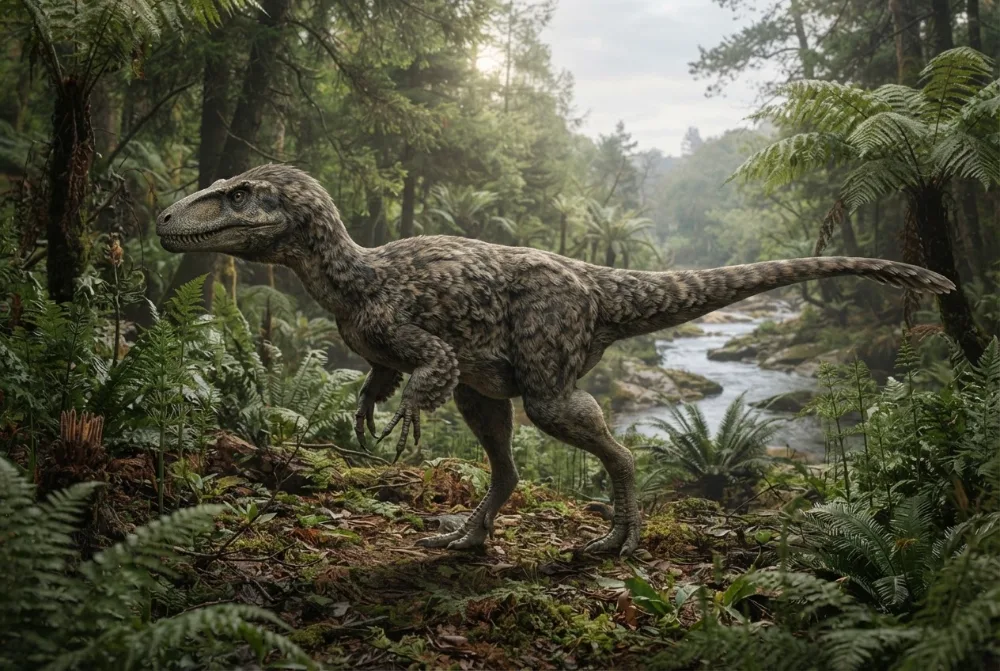
Huadanosaurus was a small, meat-eating dinosaur that lived in what is now China about 125 million years ago. It had a strong bite and probably hunted small mammals at night. Its body was covered with feather-like structures to keep it warm.12
E phetse neng?
E ne e le kgolo hakae?
E ne e le telele hakae?
 telele jwaloka dikatse tsa lapeng tse 2 ho tloha nkong ho isa mohatleng🍌telele jwaloka dibanana tse 6 di behilwe ka mola🏃e ne e ka matha dimitara tse 100 ka metsotswana e 7.7 (motho ya lebelo ka ho fetisisa o hloka 9,6)
Huadanosaurus e ne e le kgolo hakae ha e bapiswa le WENA?
Ke dipalo feela ho browser ya hao. Ha ho letho le bolokwang kapa le romelwang kae kapa kae.
E ne e le lebelo hakae?


Dintlha tse monate
Huadanosaurus had a very strong bite for its size, similar to some tyrannosaurs, but its front teeth were slender and weak.1
Fossilized mammal bones were found inside its stomach, showing it ate small mammals whole.1
The stomach contents included two different kinds of mammals: a ground-dwelling gobiconodontid and a tree-climbing eutherian.1
Because Mesozoic mammals were probably nocturnal, scientists think Huadanosaurus may have hunted at night too.1
Huadanosaurus had feather-like filaments on its tail, which may have helped keep it warm during cold nights.2
Its hands were weak and could not grip well, so it caught prey with its mouth instead of its claws.1
The only known specimen might be a juvenile, because its skull bones were not fully fused.1
Dipotso tse botswang haholo ka Huadanosaurus
?How big was Huadanosaurus?
About 1 metre (3.3 feet) long, which is roughly the size of a large turkey.2
?What did Huadanosaurus eat?
It ate small mammals, swallowing them whole. Fossilized bones of a ground-dwelling gobiconodontid and a tree-climbing eutherian were found in its stomach.21
?Did Huadanosaurus have feathers?
Yes, it had feather-like filaments on its tail and body, which were probably reddish-brown in color and helped keep it warm.2
?Was Huadanosaurus a dinosaur?
Yes, it was a small meat-eating theropod dinosaur that lived about 125 million years ago.2
Bakeng sa ditsebi tsa didinosaure
- Lebitso la saense
- Huadanosaurus
- E rehilwe ke
- Qiu et al. 20254
- Sehlopha
- Didinosaure tse jang nama
- Lelapa / leloko
- Sinosauropterygidae4
- Tlhophiso
- Theropoda4
- Dilemo tsa mafika
- dilemo tse dimilione tse 126 ho isa ho 121 (Barremian)4
- Dibopeho tsa mafika
- Yixian4
- Dinaha
- Tjhaena4
- Direkoto tsa difosili
- 1 ho The Paleobiology Database4
- Ho sibollwa
- Huadanosaurus was named in 2025 by Qiu and colleagues based on a nearly complete skeleton found 20 years earlier in Liaoning, China. The name celebrates the 75th anniversary of the People's Republic of China and the Chinese Academy of Sciences.13
- E sa ntse e phehwa kgang
- Scientists are not sure whether Huadanosaurus was a juvenile or a small adult, because the only known skeleton has unfused bones.1
Moo dintlha di tswang teng
- Two new compsognathid-like theropods show diversified predation strategies in theropod dinosaurs - PMC (pmc.ncbi.nlm.nih.gov)
- Huadanosaurus (en.wikipedia.org)
- PBDB Taxon (paleobiodb.org)
- Huadanosaurus in The Paleobiology Database (CC BY 4.0): dilemo, dibaka, dibopeho tsa mafika, tlhophiso.
Ntlha e nngwe le e nngwe leqepheng lena e na le nomoro e supang mohlodi wa yona. Haeba re fositse ho hong, re kopa tshwarelo, re balatedi ba didinosaure, ha re koranta ya saense. Re bolelle ho [email protected] mme re tla e lokisa.
 Rex o lapile! Dino Wiki ke projeke ya ntate bakeng sa mora wa hae ya ratang didinosaure, ke mahala, ha ho dipapatso, ha ho disebedi. Batho ba baholo ba ka fepa Rex seneke ho thusa hore e dule e le inthaneteng.Fepa Rex
 Allosaurus
 Carnotaurus
 Dilophosaurus
 Giganotosaurus
 Compsognathus
 Paronychodon
 Stegosaurus
 Iguanodon
 Archaeopteryx
 Microraptor
 Deinonychus
 Baryonyx