 Kwisi: O dinosaure efe?
 Ntwa ya didinosaure
 Peiso ya didinosaure
 Dipapadi tse nyane tsa didinosaure
 Albamo ya ditikara
 Manane a TOP a didinosaure
 Nkgethele!
E phetse neng?

E ne e le kgolo hakae?
E ne e le telele hakae?
E ne e phahame hakae?
kakanyo
E ne e le boima hakae?
 telele jwaloka dintja tse 5 ho tloha nkong ho isa mohatleng🍌telele jwaloka dibanana tse 27 di behilwe ka mola🍉boima jwaloka mahapu a 200🧸boima jwaloka bana ba kereshe ba 53🎒boima jwaloka bana ba sekolo ba 31🐻❄️boima jwaloka dibere tse tshweu tse 2🏃e ne e ka matha dimitara tse 100 ka metsotswana e 19 (motho ya lebelo ka ho fetisisa o hloka 9,6)
Hungarosaurus e ne e le kgolo hakae ha e bapiswa le WENA?
Ke dipalo feela ho browser ya hao. Ha ho letho le bolokwang kapa le romelwang kae kapa kae.
E ne e le lebelo hakae?


Dintlha tse monate
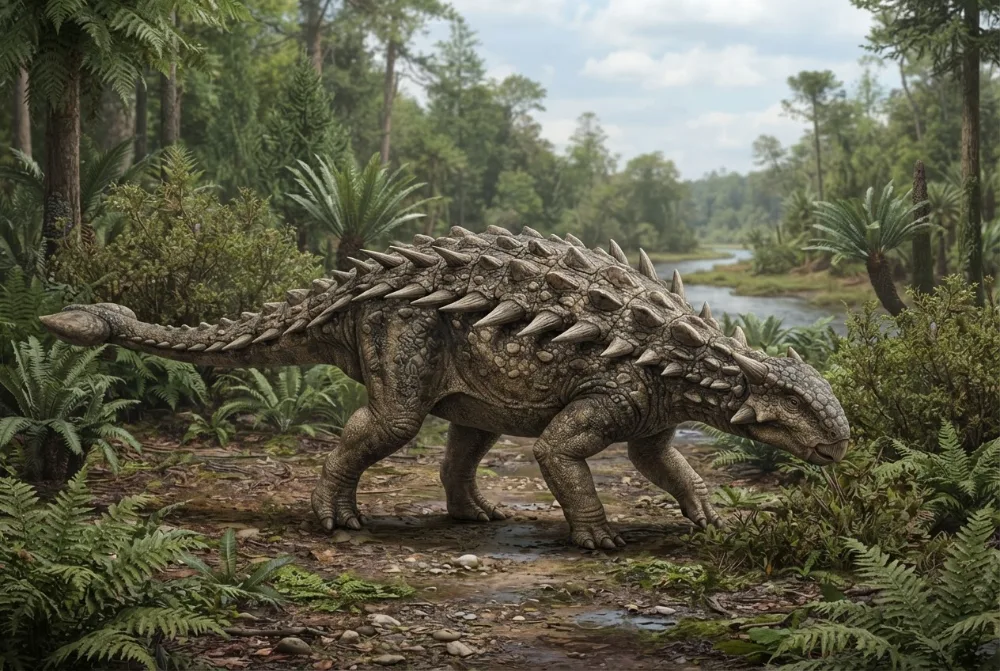
Hungarosaurus is the most completely known armored dinosaur from the Cretaceous of Europe.1
Its body was covered with hundreds of bony plates called osteoderms.1
Hungarosaurus had unusually long front legs for an ankylosaur, almost as long as its back legs.1
The first fossils were found in an open-pit bauxite mine by amateur paleontologist András Torma in 2000.1
Hungarosaurus lived alongside fish, turtles, lizards, crocodiles, pterosaurs, and small meat-eating dinosaurs.1
Its skull was about 32 to 36 centimeters (13 to 14 inches) long and had a bumpy, ornamented surface.1
Dipotso tse botswang haholo ka Hungarosaurus
?How big was Hungarosaurus?
Hungarosaurus was about 4 to 4.8 metres (13 to 16 ft) long and weighed around 650 to 1,000 kilograms (1,430 to 2,200 lb).1
?What did Hungarosaurus eat?
Hungarosaurus was a plant-eater, and its teeth were leaf-shaped for cutting food. It sheared its food with a slicing motion, not just simple chewing.13
?Did Hungarosaurus have armor?
Yes, its body was covered with hundreds of bony plates called osteoderms, which acted like protective armor.1
?Where did Hungarosaurus live?
It lived in what is now Hungary, specifically in the Bakony Mountains, during the Late Cretaceous about 85 million years ago.1
Bakeng sa ditsebi tsa didinosaure
- Lebitso la saense
- Hungarosaurus
- E rehilwe ke
- Osi 20054
- Sehlopha
- Didinosaure tse nang le sesireletsi
- Lelapa / leloko
- Nodosauridae4
- Tlhophiso
- Ornithischia > Ankylosauria > Nodosauridae > Thyreophora4
- Dilemo tsa mafika
- dilemo tse dimilione tse 86 ho isa ho 84 (Santonian)4
- Dibopeho tsa mafika
- Csehbánya4
- Dinaha
- Hungary4
- Direkoto tsa difosili
- 2 ho The Paleobiology Database4
- Ho sibollwa
- Hungarosaurus was named by paleontologist Attila Ősi in 2005. The species name H. tormai honors András Torma, who discovered the fossil site in 2000 in Hungary.1
- E sa ntse e phehwa kgang
- Scientists are still debating exactly how Hungarosaurus is related to other nodosaurids, especially the European Struthiosaurus.12
Moo dintlha di tswang teng
- Hungarosaurus (en.wikipedia.org)
- Hungarosaurus tormai, a new ankylosaur (Dinosauria) from the Upper Cretaceous of Hungary - ADS (ui.adsabs.harvard.edu)
- Hungarosaurus tormai – Magyar Dinoszaurusz-kutató Expedíció (magyardinoszaurusz.hu)
- Hungarosaurus in The Paleobiology Database (CC BY 4.0): dilemo, dibaka, dibopeho tsa mafika, tlhophiso.
Ntlha e nngwe le e nngwe leqepheng lena e na le nomoro e supang mohlodi wa yona. Haeba re fositse ho hong, re kopa tshwarelo, re balatedi ba didinosaure, ha re koranta ya saense. Re bolelle ho [email protected] mme re tla e lokisa.
 Rex o lapile! Dino Wiki ke projeke ya ntate bakeng sa mora wa hae ya ratang didinosaure, ke mahala, ha ho dipapatso, ha ho disebedi. Batho ba baholo ba ka fepa Rex seneke ho thusa hore e dule e le inthaneteng.Fepa Rex
 Ankylosaurus
 Sauropelta
 Pinacosaurus
 Scutellosaurus
 Struthiosaurus
 Euoplocephalus
 Tyrannosaurus
 Triceratops
 Velociraptor
 Spinosaurus
 Parasaurolophus
 Pteranodon