 Kwisi: O dinosaure efe?
 Ntwa ya didinosaure
 Peiso ya didinosaure
 Dipapadi tse nyane tsa didinosaure
 Albamo ya ditikara
 Manane a TOP a didinosaure
 Nkgethele!
Igai
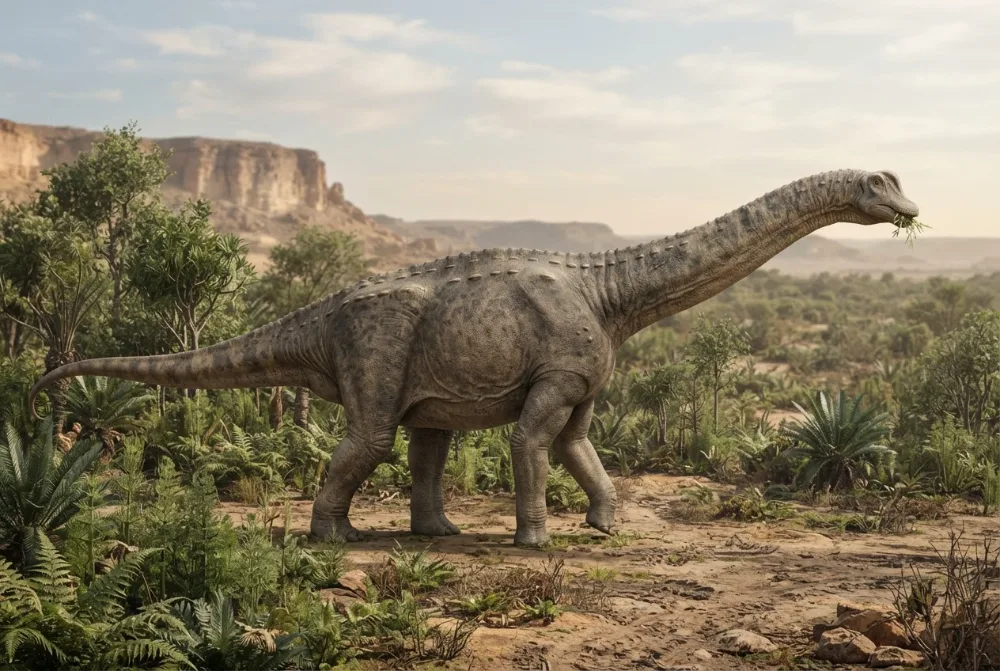
Igai was a giant, long-necked plant-eater that stomped through what is now Egypt about 74 million years ago. It was a titanosaur, a group of sauropods known for their huge bodies and small heads. Even though it was big, it was actually one of the smaller titanosaurs!12
E phetse neng?
E ne e le kgolo hakae?
E ne e le telele hakae?
E ne e phahame hakae?
kakanyo
 telele jwaloka dikoloi tse 3 tse pakilweng ka mola🍌telele jwaloka dibanana tse 83 di behilwe ka mola🏃e ne e ka matha dimitara tse 100 ka metsotswana e 22 (motho ya lebelo ka ho fetisisa o hloka 9,6)
Igai e ne e le kgolo hakae ha e bapiswa le WENA?
Ke dipalo feela ho browser ya hao. Ha ho letho le bolokwang kapa le romelwang kae kapa kae.
E ne e le lebelo hakae?


Dintlha tse monate
Igai had air sacs inside its backbone bones, making them light and spongy, which helped it grow so large.2
Its fifth metacarpal (a bone in the hand) had two unique bumps on the inner side that no other titanosaur has.2
Igai was more slender than many other titanosaurs, with leg bones that were relatively thin and graceful.2
The first and second metatarsals (foot bones) had deep grooves on their upper surfaces, a feature not seen in other titanosaurs.2
Igai lived about 74 million years ago, during the Campanian stage of the Late Cretaceous.2
Igai was probably bigger than its close relative Mansourasaurus, which was about 8 to 10 metres long.2
Dipotso tse botswang haholo ka Igai
Mosenyi wa ditshomo
Tshomo: Igai was a giant, slow-moving beast like other sauropods.
Nnete: Igai was actually relatively small and slender for a titanosaur, and its limb bones suggest it was quite agile for its size.2
Bakeng sa ditsebi tsa didinosaure
- Lebitso la saense
- Igai
- E rehilwe ke
- Gorscak et al. 20234
- Sehlopha
- Melala e melelele
- Lelapa / leloko
- Saltasauridae4
- Tlhophiso
- Sauropodomorpha > Sauropoda > Titanosauria > Macronaria4
- Dilemo tsa mafika
- dilemo tse dimilione tse 84 ho isa ho 72 (Campanian)4
- Dibopeho tsa mafika
- Quseir4
- Dinaha
- Egepeta4
- Direkoto tsa difosili
- 1 ho The Paleobiology Database4
- Ho sibollwa
- Fossils of Igai were first found in 1977 by German scientists in the Kharga Oasis, Egypt. It was named and described in 2023 by Gorscak and colleagues.23
- E sa ntse e phehwa kgang
- Scientists are still debating whether Igai was fully grown when it died, because some bones suggest it might not have been completely mature.1
Moo dintlha di tswang teng
- tandfonline.com (tandfonline.com)
- Igai (en.wikipedia.org)
- PBDB Taxon (paleobiodb.org)
- Igai in The Paleobiology Database (CC BY 4.0): dilemo, dibaka, dibopeho tsa mafika, tlhophiso.
Ntlha e nngwe le e nngwe leqepheng lena e na le nomoro e supang mohlodi wa yona. Haeba re fositse ho hong, re kopa tshwarelo, re balatedi ba didinosaure, ha re koranta ya saense. Re bolelle ho [email protected] mme re tla e lokisa.
 Rex o lapile! Dino Wiki ke projeke ya ntate bakeng sa mora wa hae ya ratang didinosaure, ke mahala, ha ho dipapatso, ha ho disebedi. Batho ba baholo ba ka fepa Rex seneke ho thusa hore e dule e le inthaneteng.Fepa Rex
 Brachiosaurus
 Diplodocus
 Brontosaurus
 Argentinosaurus
 Camarasaurus
 Morosaurus
 Tyrannosaurus
 Triceratops
 Velociraptor
 Spinosaurus
 Ankylosaurus
 Parasaurolophus