 Kwisi: O dinosaure efe?
 Ntwa ya didinosaure
 Peiso ya didinosaure
 Dipapadi tse nyane tsa didinosaure
 Albamo ya ditikara
 Manane a TOP a didinosaure
 Nkgethele!
Kepodactylus
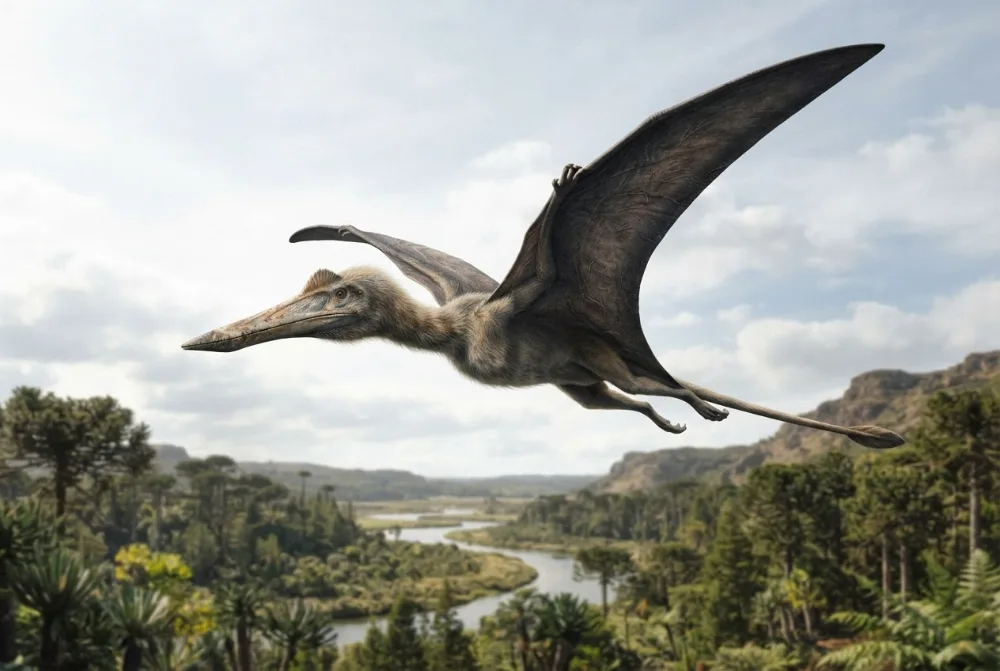
Kepodactylus was a flying reptile that lived during the Late Jurassic period. It had a wingspan of about 2.5 meters (8.2 feet) and likely ate fish.12
E phetse neng?
E ne e le kgolo hakae?
Mapheo a yona a ne a pharaletse hakae?
E ne e le boima hakae?

 mapheo a pharaletse jwaloka dibaesekele tse 1.5 ka mola🍌boima jwaloka dibanana tse 83⚽e ne e ka fofa ho tshela lebala lohle la bolo ya maoto ka metsotswana e 7.3
Kepodactylus e ne e le kgolo hakae ha e bapiswa le WENA?
Ke dipalo feela ho browser ya hao. Ha ho letho le bolokwang kapa le romelwang kae kapa kae.
E ne e le lebelo hakae?


Dintlha tse monate
Kepodactylus was discovered in 1992 when scientists were digging up a Stegosaurus skeleton in Garden Park, Colorado. They found the pterosaur bones by accident.1
Its name means 'garden finger' because it was found in Garden Park and pterosaurs have a long wing finger.1
Kepodactylus had extra holes in its bones called pneumatic foramina. These holes let air from air sacs enter the bones, making them lighter for flying.1
Scientists think Kepodactylus weighed about 10 kilograms (22 pounds), which is as heavy as a large cat.1
Kepodactylus lived during the Late Jurassic period, about 149 to 143 million years ago.2
Dipotso tse botswang haholo ka Kepodactylus
?Was Kepodactylus a dinosaur?
No, Kepodactylus was a pterosaur, a flying reptile that lived during the time of dinosaurs, but it was not a dinosaur itself.1
?How big was Kepodactylus?
Kepodactylus had a wingspan of about 2.5 meters (8.2 feet) and weighed around 10 kilograms (22 pounds), about as heavy as a medium sized dog.1
?What did Kepodactylus eat?
Kepodactylus likely ate fish, as many other pterosaurs with similar long jaws did.1
?Where was Kepodactylus found?
Kepodactylus was discovered in Garden Park, Colorado, in the United States, in rocks from the Late Jurassic period.1
Bakeng sa ditsebi tsa didinosaure
- Lebitso la saense
- Kepodactylus
- E rehilwe ke
- Harris and Carpenter 19963
- Sehlopha
- Dihahabi tse fofang
- Lelapa / leloko
- Lophocratia3
- Tlhophiso
- Pterosauria > Pterodactyloidea3
- Dilemo tsa mafika
- dilemo tse dimilione tse 149 ho isa ho 143 (Tithonian)3
- Dibopeho tsa mafika
- Morrison3
- Dinaha
- Amerika3
- Direkoto tsa difosili
- 1 ho The Paleobiology Database3
- Ho sibollwa
- Kepodactylus was named by Jerald Harris and Kenneth Carpenter in 1996. The fossils were found in 1992 in Garden Park, Colorado, while digging up a Stegosaurus.1
- E sa ntse e phehwa kgang
- Scientists are not sure exactly which group of pterosaurs Kepodactylus belongs to. Some studies place it in the family Ctenochasmatidae, while others put it in a larger group called Lophocratia.12
Moo dintlha di tswang teng
- Kepodactylus (en.wikipedia.org)
- PBDB Taxon (paleobiodb.org)
- Kepodactylus in The Paleobiology Database (CC BY 4.0): dilemo, dibaka, dibopeho tsa mafika, tlhophiso.
Ntlha e nngwe le e nngwe leqepheng lena e na le nomoro e supang mohlodi wa yona. Haeba re fositse ho hong, re kopa tshwarelo, re balatedi ba didinosaure, ha re koranta ya saense. Re bolelle ho [email protected] mme re tla e lokisa.
 Rex o lapile! Dino Wiki ke projeke ya ntate bakeng sa mora wa hae ya ratang didinosaure, ke mahala, ha ho dipapatso, ha ho disebedi. Batho ba baholo ba ka fepa Rex seneke ho thusa hore e dule e le inthaneteng.Fepa Rex
 Pteranodon
 Quetzalcoatlus
 Dorygnathus
 Rhamphorhynchus
 Anhanguera
 Pterodactylus
 Brachiosaurus
 Diplodocus
 Allosaurus
 Brontosaurus
 Compsognathus
 Camarasaurus