 Kwisi: O dinosaure efe?
 Ntwa ya didinosaure
 Peiso ya didinosaure
 Dipapadi tse nyane tsa didinosaure
 Albamo ya ditikara
 Manane a TOP a didinosaure
 Nkgethele!
Lophostropheus
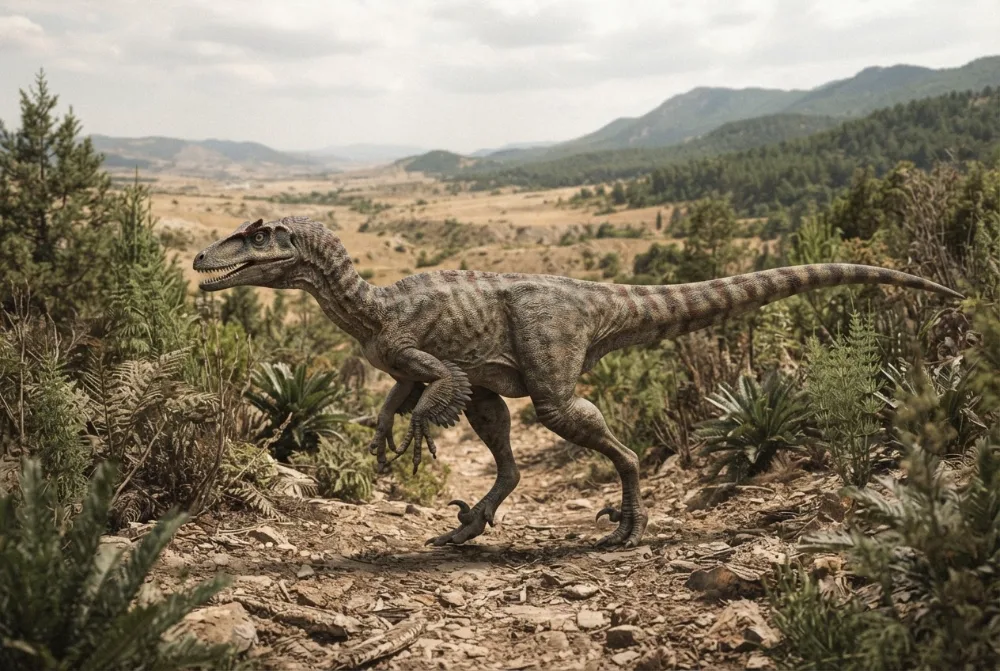
Lophostropheus was a meat-eating dinosaur that lived right at the end of the Triassic Period and the beginning of the Jurassic Period. It is one of the few dinosaurs that may have survived the big extinction that killed many other animals at that time.1
E phetse neng?
E ne e le kgolo hakae?
E ne e le telele hakae?
E ne e phahame hakae?
kakanyo
E ne e le boima hakae?
 telele jwaloka dintja tse 5 ho tloha nkong ho isa mohatleng🍌telele jwaloka dibanana tse 29 di behilwe ka mola🍉boima jwaloka mahapu a 27🧸boima jwaloka bana ba kereshe ba 7🎒boima jwaloka bana ba sekolo ba 4🏃e ne e ka matha dimitara tse 100 ka metsotswana e 7.2 (motho ya lebelo ka ho fetisisa o hloka 9,6)
Lophostropheus e ne e le kgolo hakae ha e bapiswa le WENA?
Ke dipalo feela ho browser ya hao. Ha ho letho le bolokwang kapa le romelwang kae kapa kae.
E ne e le lebelo hakae?


Dintlha tse monate
Lophostropheus is known from only a partial skeleton, including a tooth, neck and back vertebrae, tail bones, and parts of the pelvis.12
Its neck vertebrae have special crests on the top and bottom, which is why it was named 'crest vertebrae'.1
This dinosaur was first thought to be a species of Halticosaurus, then Liliensternus, before getting its own name in 2007.1
Lophostropheus lived around 205 to 196 million years ago, right at the Triassic-Jurassic boundary.1
It is the only theropod dinosaur known from good remains at the Triassic-Jurassic boundary.1
Dipotso tse botswang haholo ka Lophostropheus
?How big was Lophostropheus?
Scientists estimate Lophostropheus was about 3 metres (10 feet) long and weighed up to 100 kilograms (220 pounds). Some researchers think it could have been 5.2 metres (17 feet) long and 136 kilograms (300 pounds).12
?What did Lophostropheus eat?
Lophostropheus was a carnivore, meaning it ate meat. It was a bipedal predator that probably hunted small animals.12
?When did Lophostropheus live?
Lophostropheus lived around 205 to 196 million years ago, right at the end of the Triassic Period and the beginning of the Jurassic Period. It is one of the few dinosaurs that may have survived the big extinction at that time.12
?Where was Lophostropheus found?
Lophostropheus fossils were found in Normandy, France, in a quarry called Airel.1
Bakeng sa ditsebi tsa didinosaure
- Lebitso la saense
- Lophostropheus
- E rehilwe ke
- Ezcurra and Cuny 20073
- Sehlopha
- Didinosaure tse jang nama
- Lelapa / leloko
- Coelophysoidea3
- Tlhophiso
- Theropoda > Coelophysoidea3
- Dilemo tsa mafika
- dilemo tse dimilione tse 206 ho isa ho 200 (Rhaetian / Hettangian)3
- Dibopeho tsa mafika
- Moon-Airel3
- Dinaha
- Fora3
- Direkoto tsa difosili
- 1 ho The Paleobiology Database3
- Ho sibollwa
- The fossils were found in 1959 by Claude Pareyn in a quarry in Normandy, France. They were first described in 1966 as Halticosaurus, then in 1993 as Liliensternus airelensis, and finally named Lophostropheus by Martin Ezcurra and Gilles Cuny in 2007.1
- E sa ntse e phehwa kgang
- Scientists are not sure exactly how big Lophostropheus was. Different estimates range from 3 metres to 5.2 metres long.1
Moo dintlha di tswang teng
- Lophostropheus (en.wikipedia.org)
- Lophostropheus | Natural History Museum (nhm.ac.uk)
- Lophostropheus in The Paleobiology Database (CC BY 4.0): dilemo, dibaka, dibopeho tsa mafika, tlhophiso.
Ntlha e nngwe le e nngwe leqepheng lena e na le nomoro e supang mohlodi wa yona. Haeba re fositse ho hong, re kopa tshwarelo, re balatedi ba didinosaure, ha re koranta ya saense. Re bolelle ho [email protected] mme re tla e lokisa.
 Rex o lapile! Dino Wiki ke projeke ya ntate bakeng sa mora wa hae ya ratang didinosaure, ke mahala, ha ho dipapatso, ha ho disebedi. Batho ba baholo ba ka fepa Rex seneke ho thusa hore e dule e le inthaneteng.Fepa Rex
 Allosaurus
 Carnotaurus
 Dilophosaurus
 Giganotosaurus
 Compsognathus
 Paronychodon
 Nothosaurus
 Massospondylus
 Plateosaurus
 Simosaurus
 Thecodontosaurus
 Eudimorphodon