 Kwisi: O dinosaure efe?
 Ntwa ya didinosaure
 Peiso ya didinosaure
 Dipapadi tse nyane tsa didinosaure
 Albamo ya ditikara
 Manane a TOP a didinosaure
 Nkgethele!
E phetse neng?

E ne e le kgolo hakae?
E ne e le telele hakae?
E ne e phahame hakae?
E ne e le boima hakae?
 telele jwaloka dikoloi tse 2 tse pakilweng ka mola🍌telele jwaloka dibanana tse 50 di behilwe ka mola
 boima jwaloka dintja tse 120🍉boima jwaloka mahapu a 500🎒boima jwaloka ditlelase tse feletseng tse 3 tsa bana ba sekolo🐻❄️boima jwaloka dibere tse tshweu tse 6🏃e ne e ka matha dimitara tse 100 ka metsotswana e 14 (motho ya lebelo ka ho fetisisa o hloka 9,6)
Maiasaura e ne e le kgolo hakae ha e bapiswa le WENA?
Ke dipalo feela ho browser ya hao. Ha ho letho le bolokwang kapa le romelwang kae kapa kae.
E ne e le lebelo hakae?


Dintlha tse monate
A huge nesting site was found in Montana in 1978, with nests, eggs, and baby skeletons.2
Baby Maiasaura were too big to fit inside eggs when they hatched, and their bones were not fully hardened.2
Hatchlings were about 0.5 metres (1.6 feet) long, while juveniles reached about 1 metre (3.3 feet).2
Hundreds of Maiasaura skeletons were found together in one ash bed, suggesting they lived in herds.2
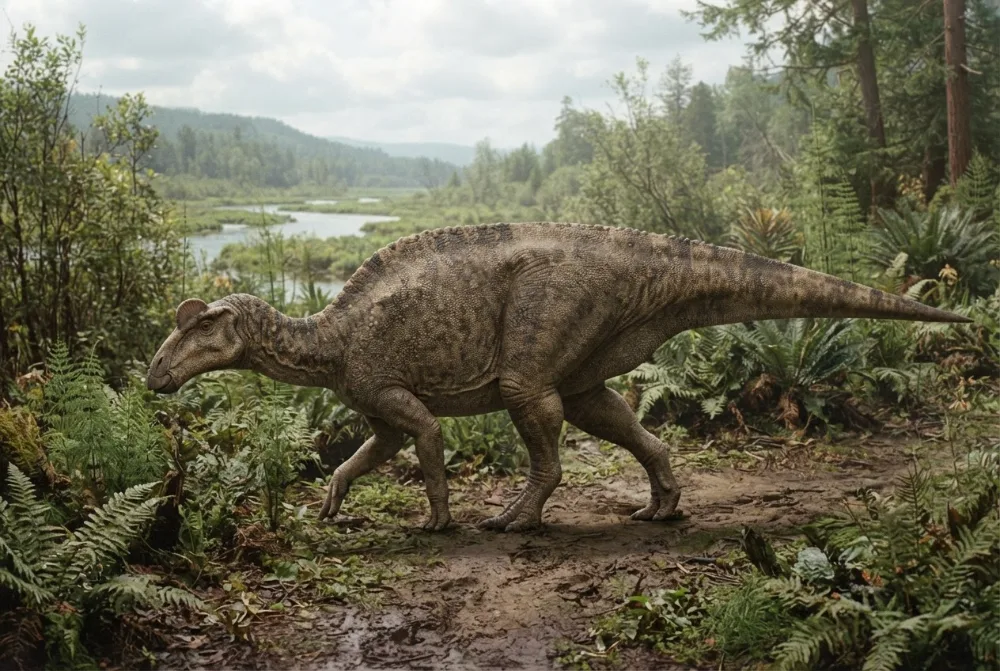
Maiasaura could walk on two legs or all fours.1
Dipotso tse botswang haholo ka Maiasaura
?How big was Maiasaura?
About 9 metres (30 feet) long and weighed up to 4 metric tons (4.4 short tons).4
?What did Maiasaura eat?
It was a herbivore, eating plants. It had a horny beak and rows of hundreds of teeth for chewing tough plant material.1
?When did Maiasaura live?
It lived during the Late Cretaceous Period, about 80 to 75 million years ago.1
?Where was Maiasaura found?
Fossils have been found in Montana, USA, and Alberta, Canada. A famous nesting site was discovered in Montana in 1978.42
?Why is Maiasaura called the good mother lizard?
Because fossils show that adults cared for their young in nests, which was rare for dinosaurs. The name means 'good mother lizard'.14
?Did Maiasaura live in herds?
Yes. Hundreds of skeletons found together in one ash bed suggest they lived in large herds, possibly up to 10,000 individuals.4
?Could Maiasaura walk on two legs?
Yes, it could walk on two legs or all fours. Young Maiasaura walked mostly on two legs, while adults walked more on all fours.14
?How fast could Maiasaura run?
Scientists are not sure, but like other large hadrosaurs, it probably could run fairly fast to escape predators, though no exact speed is known.4
Bakeng sa ditsebi tsa didinosaure
- Lebitso la saense
- Maiasaura
- E rehilwe ke
- Horner and Makela 19795
- Sehlopha
- Melomo ya letata
- Lelapa / leloko
- Hadrosauridae5
- Tlhophiso
- Ornithischia > Ornithopoda > Iguanodontia > Hadrosauridae5
- Dilemo tsa mafika
- dilemo tse dimilione tse 84 ho isa ho 72 (Campanian)5
- Dibopeho tsa mafika
- Two Medicine5
- Dinaha
- Amerika5
- Direkoto tsa difosili
- 7 ho The Paleobiology Database5
- Ho sibollwa
- Maiasaura was named by Jack Horner and Robert Makela in 1979 after a nesting site was found in the Two Medicine Formation near Choteau, Montana.52
Moo dintlha di tswang teng
- Maiasaura | Natural History Museum (nhm.ac.uk)
- Maiasaura | Herbivorous, Nesting, Cretaceous | Britannica (britannica.com)
- Maiasaura | Earth and Atmospheric Sciences | Research Starters | EBSCOhost (ebsco.com)
- Maiasaura (Wikipedia) (Wikipedia)
- Maiasaura in The Paleobiology Database (CC BY 4.0): dilemo, dibaka, dibopeho tsa mafika, tlhophiso.
Ntlha e nngwe le e nngwe leqepheng lena e na le nomoro e supang mohlodi wa yona. Haeba re fositse ho hong, re kopa tshwarelo, re balatedi ba didinosaure, ha re koranta ya saense. Re bolelle ho [email protected] mme re tla e lokisa.
 Rex o lapile! Dino Wiki ke projeke ya ntate bakeng sa mora wa hae ya ratang didinosaure, ke mahala, ha ho dipapatso, ha ho disebedi. Batho ba baholo ba ka fepa Rex seneke ho thusa hore e dule e le inthaneteng.Fepa Rex
 Parasaurolophus
 Edmontosaurus
 Saurolophus
 Hypacrosaurus
 Corythosaurus
 Kritosaurus
 Tyrannosaurus
 Triceratops
 Velociraptor
 Spinosaurus
 Ankylosaurus
 Pteranodon