 Kwisi: O dinosaure efe?
 Ntwa ya didinosaure
 Peiso ya didinosaure
 Dipapadi tse nyane tsa didinosaure
 Albamo ya ditikara
 Manane a TOP a didinosaure
 Nkgethele!
E phetse neng?

E ne e le kgolo hakae?
E ne e le telele hakae?
E ne e phahame hakae?
E ne e le boima hakae?
 telele jwaloka dikoloi tse 2.5 tse pakilweng ka mola🍌telele jwaloka dibanana tse 62 di behilwe ka mola
 boima jwaloka dintja tse 100🍉boima jwaloka mahapu a 400🎒boima jwaloka ditlelase tse feletseng tse 2.5 tsa bana ba sekolo🐻❄️boima jwaloka dibere tse tshweu tse 4🏢e phahame hoo e ka nyarelang ka fensetere mokatong wa 3🏃e ne e ka matha dimitara tse 100 ka metsotswana e 13 (motho ya lebelo ka ho fetisisa o hloka 9,6)
Mandschurosaurus e ne e le kgolo hakae ha e bapiswa le WENA?
Ke dipalo feela ho browser ya hao. Ha ho letho le bolokwang kapa le romelwang kae kapa kae.
E ne e le lebelo hakae?


Dintlha tse monate
Mandschurosaurus was the first dinosaur genus ever named from China.1
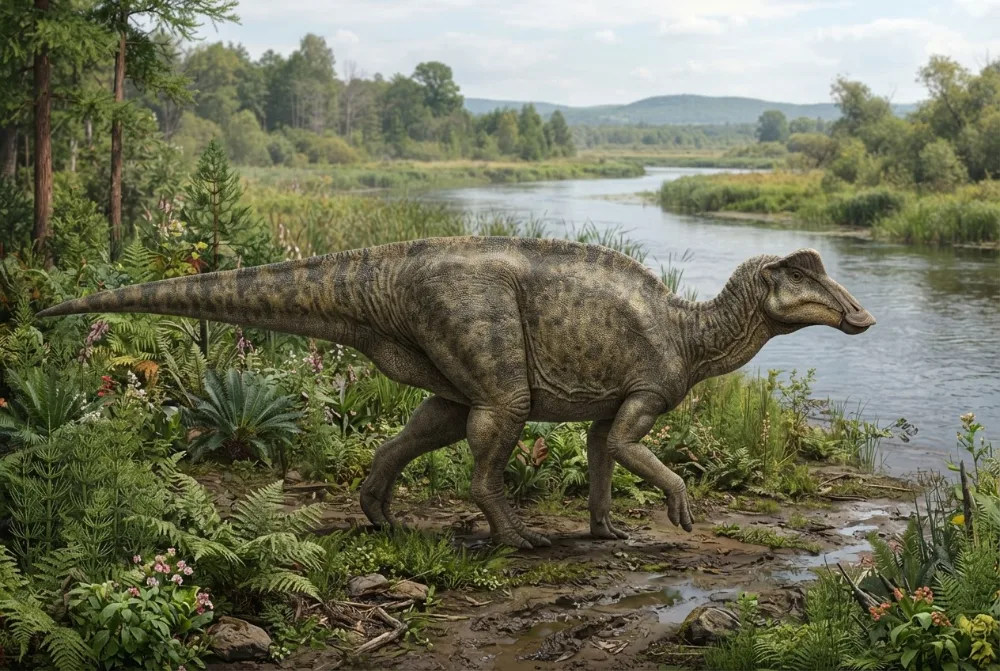
Its name means 'lizard from Manchuria' because it was found in Manchuria, a region in northeastern China.1
The skeleton on display in St. Petersburg is mostly plaster because the real bones were poorly preserved.1
Some scientists think Mandschurosaurus might not be a valid genus and call it a nomen dubium (doubtful name).1
It lived during the Late Cretaceous period, about 72 to 66 million years ago.1
The largest Mandschurosaurus could weigh as much as a small car, around 1.5 to 2 metric tons.1
Dipotso tse botswang haholo ka Mandschurosaurus
?How big was Mandschurosaurus?
The largest Mandschurosaurus was about 11.24 metres long and 6.48 metres tall, weighing around 1.5 to 2 metric tons. The smaller holotype specimen was about 8 metres long and 4.5 metres tall.1
Mosenyi wa ditshomo
Tshomo: Some people think Mandschurosaurus was a duck because of its beak.
Nnete: It was a dinosaur, not a bird. Its duck-like beak helped it eat plants.1
Bakeng sa ditsebi tsa didinosaure
- Lebitso la saense
- Mandschurosaurus
- E rehilwe ke
- Riabinin 19304
- Sehlopha
- Melomo ya letata
- Lelapa / leloko
- Hadrosauridae4
- Tlhophiso
- Ornithischia > Ornithopoda > Iguanodontia > Hadrosauridae4
- Dilemo tsa mafika
- dilemo tse dimilione tse 121 ho isa ho 66 (Aptian / Maastrichtian)4
- Dibopeho tsa mafika
- Grès supérieurs, Yuliangzi4
- Dinaha
- Laos, Tjhaena4
- Direkoto tsa difosili
- 3 ho The Paleobiology Database4
- Ho sibollwa
- Russian scientists found the first skeleton in 1914 along the Amur River in China. Anatoly Riabinin named it Mandschurosaurus amurensis in 1930.1
- E sa ntse e phehwa kgang
- Scientists still debate whether Mandschurosaurus is a valid genus or a nomen dubium (doubtful name).1
Moo dintlha di tswang teng
- Mandschurosaurus (en.wikipedia.org)
- PaleoCodex :: Mandschurosaurus (paleocodex.com)
- Mandschurosaurus Riabinin 1930 - Encyclopedia of Life (eol.org)
- Mandschurosaurus in The Paleobiology Database (CC BY 4.0): dilemo, dibaka, dibopeho tsa mafika, tlhophiso.
Ntlha e nngwe le e nngwe leqepheng lena e na le nomoro e supang mohlodi wa yona. Haeba re fositse ho hong, re kopa tshwarelo, re balatedi ba didinosaure, ha re koranta ya saense. Re bolelle ho [email protected] mme re tla e lokisa.
 Rex o lapile! Dino Wiki ke projeke ya ntate bakeng sa mora wa hae ya ratang didinosaure, ke mahala, ha ho dipapatso, ha ho disebedi. Batho ba baholo ba ka fepa Rex seneke ho thusa hore e dule e le inthaneteng.Fepa Rex
 Parasaurolophus
 Edmontosaurus
 Saurolophus
 Hypacrosaurus
 Corythosaurus
 Kritosaurus
 Tyrannosaurus
 Triceratops
 Velociraptor
 Spinosaurus
 Ankylosaurus
 Pteranodon