 Kwisi: O dinosaure efe?
 Ntwa ya didinosaure
 Peiso ya didinosaure
 Dipapadi tse nyane tsa didinosaure
 Albamo ya ditikara
 Manane a TOP a didinosaure
 Nkgethele!
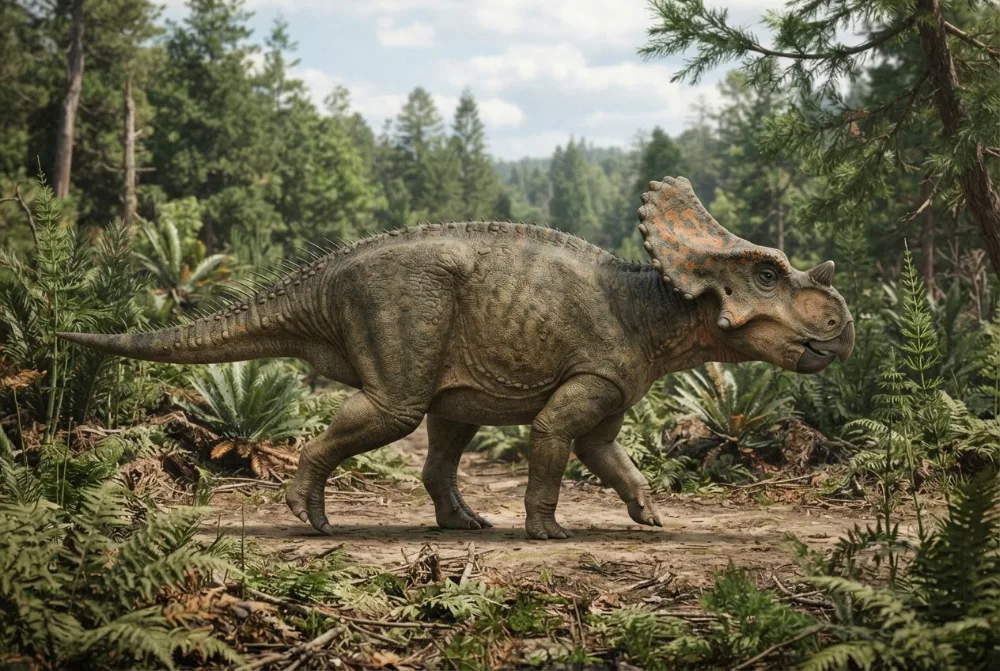
Montanoceratops
Montanoceratops was a small, plant-eating dinosaur with a beak and a bony frill on its head. It lived in North America during the Late Cretaceous, about 72 million years ago. This dinosaur is part of a group called leptoceratopsids, which were like smaller cousins of the famous Triceratops.1
E phetse neng?
E ne e le kgolo hakae?
E ne e le telele hakae?
E ne e phahame hakae?
kakanyo
E ne e le boima hakae?
 telele jwaloka dintja tse 3 ho tloha nkong ho isa mohatleng🍌telele jwaloka dibanana tse 17 di behilwe ka mola🍉boima jwaloka mahapu a 34🧸boima jwaloka bana ba kereshe ba 9🎒boima jwaloka bana ba sekolo ba 5🏃e ne e ka matha dimitara tse 100 ka metsotswana e 9.7 (motho ya lebelo ka ho fetisisa o hloka 9,6)
Montanoceratops e ne e le kgolo hakae ha e bapiswa le WENA?
Ke dipalo feela ho browser ya hao. Ha ho letho le bolokwang kapa le romelwang kae kapa kae.
E ne e le lebelo hakae?


Dintlha tse monate
Montanoceratops was first thought to be a species of Leptoceratops, but in 1951 it got its own genus name.1
The nose horn of Montanoceratops was actually a misidentified cheekbone, which fooled paleontologists for years.1
Montanoceratops lived alongside bigger horned dinosaurs, but it was smaller and had a deeper tail.1
Fossils of Montanoceratops have been found in rocks that are between 83.6 and 66 million years old.3
Montanoceratops is part of a group called leptoceratopsids, which were diverse and lived in the same habitats as the bigger ceratopsids.1
Dipotso tse botswang haholo ka Montanoceratops
?How big was Montanoceratops?
Montanoceratops was a small dinosaur, about 2.5 metres (8.2 feet) long and weighed around 170 kilograms (370 pounds).2
?What did Montanoceratops eat?
Montanoceratops was a herbivore, meaning it ate plants. It used its sharp beak to bite off leaves or needles.2
?Did Montanoceratops have a horn?
It was once thought to have a horn on its nose, but that bone was later identified as a misplaced cheek horn. So it did not have a nose horn.21
?Where did Montanoceratops live?
Montanoceratops lived in what is now Montana, USA, and Alberta, Canada, about 70 million years ago.2
Mosenyi wa ditshomo
Tshomo: Montanoceratops had a prominent nose horn like some other horned dinosaurs.
Nnete: The supposed nose horn was actually a misidentified cheekbone, so Montanoceratops likely did not have a nose horn.1
Bakeng sa ditsebi tsa didinosaure
- Lebitso la saense
- Montanoceratops
- E rehilwe ke
- Sternberg 19513
- Sehlopha
- Didinosaure tse dinaka
- Lelapa / leloko
- Leptoceratopsidae3
- Tlhophiso
- Ornithischia > Ceratopsia3
- Dilemo tsa mafika
- dilemo tse dimilione tse 84 ho isa ho 66 (Campanian / Maastrichtian)3
- Dibopeho tsa mafika
- St. Mary River, Horseshoe Canyon3
- Dinaha
- Amerika, Kanada3
- Direkoto tsa difosili
- 3 ho The Paleobiology Database3
- Ho sibollwa
- Barnum Brown and Erich Schlaikjer described the first fossil in 1942, but they called it Leptoceratops cerorhynchos. In 1951, Charles M. Sternberg realized it was different and named it Montanoceratops.1
- E sa ntse e phehwa kgang
- Scientists still debate exactly how Montanoceratops is related to other horned dinosaurs, especially because some fossils were misidentified.1
Moo dintlha di tswang teng
- M is for Montanoceratops | National Geographic (nationalgeographic.com)
- Montanoceratops (en.wikipedia.org)
- Montanoceratops in The Paleobiology Database (CC BY 4.0): dilemo, dibaka, dibopeho tsa mafika, tlhophiso.
Ntlha e nngwe le e nngwe leqepheng lena e na le nomoro e supang mohlodi wa yona. Haeba re fositse ho hong, re kopa tshwarelo, re balatedi ba didinosaure, ha re koranta ya saense. Re bolelle ho [email protected] mme re tla e lokisa.
 Rex o lapile! Dino Wiki ke projeke ya ntate bakeng sa mora wa hae ya ratang didinosaure, ke mahala, ha ho dipapatso, ha ho disebedi. Batho ba baholo ba ka fepa Rex seneke ho thusa hore e dule e le inthaneteng.Fepa Rex
 Triceratops
 Protoceratops
 Ojoceratops
 Tatankaceratops
 Psittacosaurus
 Centrosaurus
 Tyrannosaurus
 Velociraptor
 Spinosaurus
 Ankylosaurus
 Parasaurolophus
 Pteranodon