 Kwisi: O dinosaure efe?
 Ntwa ya didinosaure
 Peiso ya didinosaure
 Dipapadi tse nyane tsa didinosaure
 Albamo ya ditikara
 Manane a TOP a didinosaure
 Nkgethele!
Sinocalliopteryx
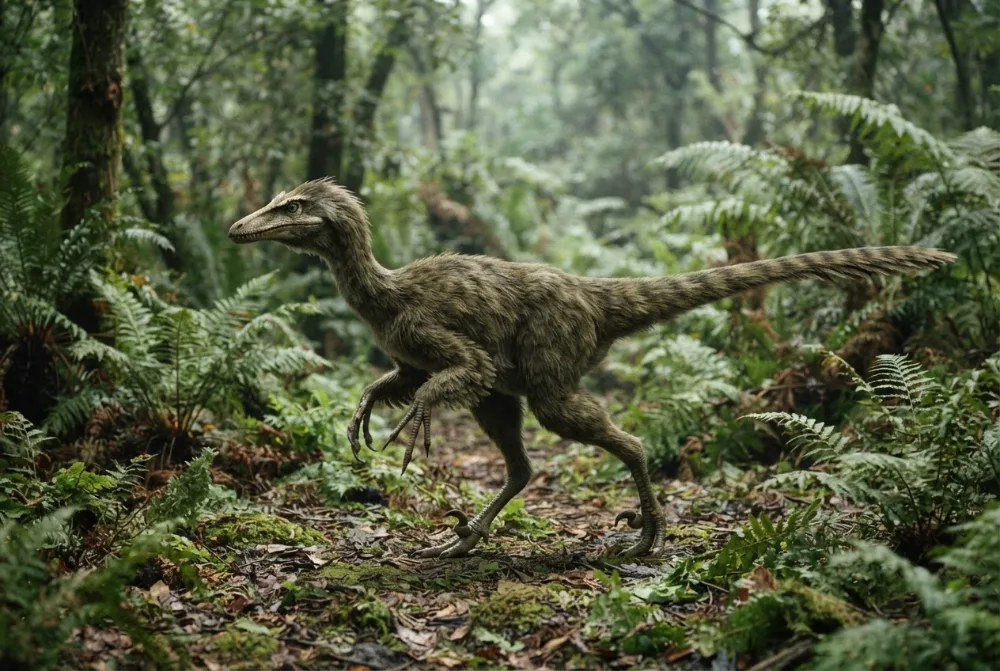
Sinocalliopteryx was a fast, feathered hunter that lived in what is now China. It had long legs and arms, and its body was covered in simple, hair-like feathers. This dinosaur was a fierce predator that could even catch birds on the ground.21
E phetse neng?
E ne e le kgolo hakae?
E ne e le telele hakae?
E ne e phahame hakae?
kakanyo
E ne e le boima hakae?
 telele jwaloka dikatse tsa lapeng tse 5 ho tloha nkong ho isa mohatleng🍌telele jwaloka dibanana tse 13 di behilwe ka mola🍉boima jwaloka mahapu a 4🏃e ne e ka matha dimitara tse 100 ka metsotswana e 8.4 (motho ya lebelo ka ho fetisisa o hloka 9,6)
Sinocalliopteryx e ne e le kgolo hakae ha e bapiswa le WENA?
Ke dipalo feela ho browser ya hao. Ha ho letho le bolokwang kapa le romelwang kae kapa kae.
E ne e le lebelo hakae?


Dintlha tse monate
Sinocalliopteryx was the largest known compsognathid dinosaur when it was discovered in 2007.2
One Sinocalliopteryx fossil had the leg of a dromaeosaurid dinosaur inside its stomach, showing it ate other predators.21
Another fossil contained the bones of at least two Confuciusornis birds in its belly, suggesting it hunted birds.2
Sinocalliopteryx had long protofeathers on its hips, tail, and thighs, some up to 10 centimeters (4 inches) long.2
It also had protofeathers on its feet, which is unusual for a dinosaur that was not closely related to birds.2
The stomach acid in one fossil had etched a bone for about 13 days, showing Sinocalliopteryx had a high metabolism.2
Dipotso tse botswang haholo ka Sinocalliopteryx
?How big was Sinocalliopteryx?
About 2.4 metres (7.8 feet) long and weighed around 20 kilograms (44 pounds).21
?Did Sinocalliopteryx have feathers?
Yes, it was covered in simple, hair-like protofeathers, with the longest ones on its hips, tail, and thighs.21
Bakeng sa ditsebi tsa didinosaure
- Lebitso la saense
- Sinocalliopteryx
- E rehilwe ke
- Ji et al. 20075
- Sehlopha
- Didinosaure tse jang nama
- Lelapa / leloko
- Compsognathidae5
- Tlhophiso
- Theropoda > Compsognathidae5
- Dilemo tsa mafika
- dilemo tse dimilione tse 126 ho isa ho 120 (Barremian / Aptian)5
- Dibopeho tsa mafika
- Yixian5
- Dinaha
- Tjhaena5
- Direkoto tsa difosili
- 2 ho The Paleobiology Database5
- Ho sibollwa
- Sinocalliopteryx was named in 2007 by Ji Shu'an, Ji Qiang, Lü Junchang, and Yuan Chongxi. The first fossil was found at Hengdaozi, in Sihetun, Liaoning Province, China.21
- E sa ntse e phehwa kgang
- Scientists are not sure if the stones found in the first Sinocalliopteryx fossil were swallowed on purpose to help digestion or by accident.2
Moo dintlha di tswang teng
- Sinocalliopteryx | Natural History Museum (nhm.ac.uk)
- Sinocalliopteryx (en.wikipedia.org)
- PBDB Taxon (paleobiodb.org)
- Abdominal Contents from Two Large Early Cretaceous Compsognathids (Dinosauria: Theropoda) Demonstrate Feeding on Confuciusornithids and Dromaeosaurids | PLOS One (journals.plos.org)
- Sinocalliopteryx in The Paleobiology Database (CC BY 4.0): dilemo, dibaka, dibopeho tsa mafika, tlhophiso.
Ntlha e nngwe le e nngwe leqepheng lena e na le nomoro e supang mohlodi wa yona. Haeba re fositse ho hong, re kopa tshwarelo, re balatedi ba didinosaure, ha re koranta ya saense. Re bolelle ho [email protected] mme re tla e lokisa.
 Rex o lapile! Dino Wiki ke projeke ya ntate bakeng sa mora wa hae ya ratang didinosaure, ke mahala, ha ho dipapatso, ha ho disebedi. Batho ba baholo ba ka fepa Rex seneke ho thusa hore e dule e le inthaneteng.Fepa Rex
 Allosaurus
 Carnotaurus
 Dilophosaurus
 Giganotosaurus
 Compsognathus
 Paronychodon
 Stegosaurus
 Iguanodon
 Archaeopteryx
 Microraptor
 Deinonychus
 Baryonyx